Why do tractors have flashing amber lights
In this guide
- What a flashing amber light on a tractor means
- The core safety reasons tractors use amber beacons
- The Irish rules that matter most
- When to use a tractor amber beacon on the road
- Amber beacon vs hazard warning lights
- Common mistakes that increase risk
- Choosing the right amber beacon for your tractor
- A practical “road ready” lighting setup
- Quick road safety checklist before you pull out
- FAQs
- A summary of why do tractors have flashing amber lights
Road safety and visibility
Why do tractors have flashing amber lights
This article answers the question: why do tractors have flashing amber lights.
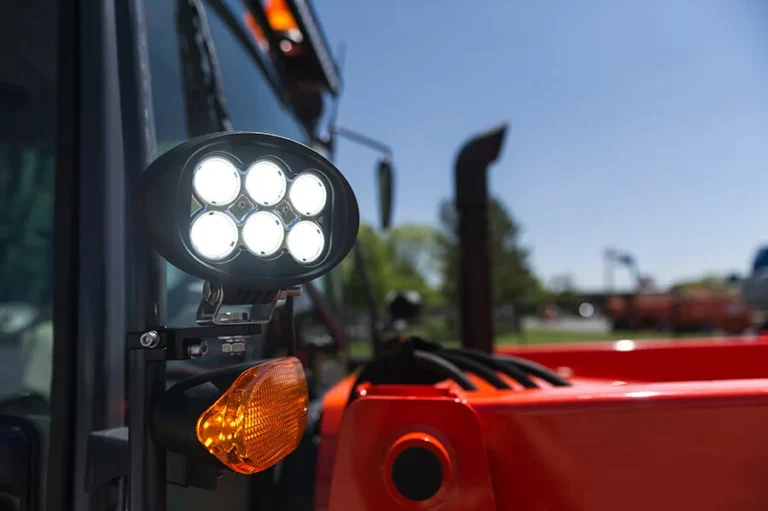
A tractor’s flashing amber light is a warning beacon that signals caution to other road users.
- Shop amber beacons
- Irish roads
- 360° visibility
- LED and mounting
What a flashing amber light on a tractor means
Treat the beacon as a “slow hazard” cue for other drivers.
A caution signal for slow or unusual road use
A flashing amber beacon means a vehicle presents a potential hazard because it moves slowly, stops often, runs wide, or carries an abnormal load. In Ireland it is also the law: every tractor must show one on a public road.
You use the beacon to increase conspicuity, so drivers spot you earlier and adjust their approach.
The beacon signals “caution, closing speed, and space needed”.
The core safety reasons tractors use amber beacons
The beacon reduces surprise, which reduces late braking and poor overtakes.
🏁
Speed difference and closing speed risk
A car at 100 km/h closes on a 30 to 40 km/h tractor fast.
Drivers misjudge that closing speed on bends, crests, and in rain.
An amber beacon creates an early “slow hazard” cue that headlamps alone do not always create.
↔️
Width, implements, and overhang
A tractor plus implement can exceed a car lane width in seconds.
Mudguards, loaders, mowers, hedge cutters, and wrapped bales change your working width and rear overhang.
The beacon warns drivers to avoid tight passes and late squeezes.
⤴️
Junctions, bends, crests, and limited sight lines
A tractor turns slower and needs more road to swing in and out.
You often sit partly across the road while you line up gates and field entrances.
The beacon signals caution before other drivers see your indicator or trailer angle.
🌧️
Poor visibility, spray, and low sun
Rain spray, fog, dusk, and glare reduce contrast against hedges and dark cabs.
Mud on lenses reduces light output and makes signals hard to read.
The beacon provides a bright, high mounting point that cuts through clutter.
The Irish rules that matter most
Treat this as practical guidance, and check the RSA for edge cases.
Beacon fitted and switched on, on every public road
Since 1 January 2016, every agricultural tractor and self-propelled agricultural machine in Ireland must be fitted with a flashing amber beacon.
The beacon must be switched on whenever the vehicle is in use on a public road, whatever its speed, width or the type of road. The only exception is vintage tractors used solely for rallies or display.
The requirement comes from the Road Traffic (Lighting of Vehicles) Regulations 1963, as amended by S.I. No. 249 of 2014 and S.I. No. 639 of 2020. Where possible the beacon goes on the roof, on the centre line of the vehicle, with no part of the lit surface less than 1.27 m from the ground. Amber beacons are limited to 36 watts.
Treat this article as practical guidance, and always check the current RSA guidance on agricultural vehicle lighting for edge cases. This is a big difference from the UK, where a beacon is only required in limited cases.
Keep your road lights correct, and avoid glare that hides brake lamps and indicators.
When to use a tractor amber beacon on the road
Switch it on before you leave the yard, and keep it on until you are off the public road.
On for every road trip, however short
In Ireland the beacon goes on whenever the tractor is on a public road, day or night, on a quiet local road as much as a busy national route.
Switch it on before you pull out of the yard or field gate, and keep it on until you are back off the road.
On dual carriageways and motorways, fast traffic closes on slow vehicles with little warning time, so the beacon matters most there.
Tractors are not banned from Irish motorways, but a vehicle that cannot reach at least 50 km/h may not enter one.
Road scenarios where the beacon earns its keep
- Field to field moves on local and regional roads with bends and blind summits.
- Any run that forces cars to brake sharply or queue behind you.
- Approaching right turns into gates where you must slow and swing wide.
- Towing a trailer that hides your rear cluster from close following cars.
- Carrying or towing wide kit that risks mirror strikes or lane intrusion.
- Running during poor light, heavy rain, fog, or winter grime.
- Moving self-propelled machinery over 3.5 m wide, which also needs an escort vehicle and a “CAUTION, WIDE LOAD FOLLOWING” sign.
Amber beacon vs hazard warning lights
Use indicators for intent, and use the beacon for presence and caution.
An amber beacon warns of your vehicle as a hazard because of speed, size, or load.
The beacon signals caution around a slow or unusual vehicle.
Hazard lights warn of a temporary stop or immediate danger. They do not replace the beacon, which must stay on while the tractor is on the road.
Use hazards when you stop in a risky position or when you must warn of an immediate obstruction.
Use indicators for intent, and use the beacon for presence and caution.
Common mistakes that increase risk
Most mistakes reduce meaning, reduce visibility, or create glare.
🔁
Beacon left off
You leave the beacon off for a short run on a quiet road. In Ireland that breaks the rules, and it is often on the quiet roads that drivers least expect a tractor.
🧭
No true 360-degree warning
You fit a cheap unidirectional amber strobe that does not give true 360-degree warning.
⬇️
Mounted too low
You mount the beacon too low, and trailers or loads block it from behind. Irish rules set a minimum of 1.27 m from the ground to the lit surface.
🌟
On-road glare
You run a bright rear work light on-road and cause glare that hides brake lights. RSA guidance says work lamps must be off on the public road, and rear white lights are banned.
🔌
Intermittent electrics
You tow with dirty lenses, weak earths, and intermittent trailer plugs.
🚛
Blocked at angles
You rely on one light source when the load blocks it at angles.
Choosing the right amber beacon for your tractor
Prioritise reliability, 360-degree coverage, and proper mounting over raw brightness.
Buying principle
Pick a beacon that drivers can see clearly from distance, in rain, and through spray.
Prioritise reliability, 360-degree coverage, and proper mounting over raw brightness.
Compliance and visibility
Aim for 360-degree visibility around the vehicle and the load.
If the load blocks the beacon from some angles, add a second beacon or reposition it.
Avoid unidirectional amber lamps for on-road warning use.
💡
LED vs halogen
LED beacons start fast and hold output under vibration.
Halogen rotating beacons still work, but they need more maintenance and draw more power.
Choose LED for daily road moves and winter work where grime and vibration hit hardest.
🧲
Mount type
Magnetic mount suits occasional use and shared machines, but cables snag on doors and mirrors.
Permanent mount suits frequent road travel and reduces the risk of loss and water ingress.
🔋
Power and connectors
Match voltage and connector type to the tractor and any auxiliary switch panel.
Check cable routing and fuse protection, and avoid loose cigar plugs if you bounce along rough local roads.
⬆️
Mounting position
Mount it high, on the roof and on the centre line where possible, and keep it clear of loaders, tanks, and high loads.
Add a second beacon if the load blocks sight from behind or from the right-hand side.
A practical “road ready” lighting setup
Treat lighting as part of safe transport, not just a compliance tick box.
Run the beacon with clean, working headlamps, tail lamps, brake lamps, and indicators.
Keep reflectors intact and visible, especially on trailers and trailed kit.
Add higher-mounted rear indicators and brake lamps on trailers if following traffic often misses them.
Treat lighting as part of safe transport, not just a compliance tick box.
Quick road safety checklist before you pull out
This takes two minutes and prevents most visibility failures.
- Check beacon works and gives clear 360-degree warning.
- Check trailer plug connection and confirm indicators and brake lamps under load.
- Wipe lenses, number plate, and reflectors, because mud kills visibility fast.
- Check the load does not block the beacon from behind or from the right-hand side.
- Check mirrors and cameras, and plan pull-ins so you do not invite risky overtakes.
If you cannot guarantee 360-degree visibility, add a second beacon or change the mounting point.
FAQs
Short answers that match real road questions.
Do tractors have to use flashing amber beacons in Ireland
Yes. Since 1 January 2016 every agricultural tractor and self-propelled agricultural machine must be fitted with a flashing amber beacon, switched on whenever it is on a public road. Only vintage tractors used solely for rallies or display are exempt.
When should I turn on my amber beacon
Turn it on before you go onto a public road and keep it on for the whole time you are on the road, whatever the speed, time of day or type of road.
Is an amber beacon the same as hazard warning lights
An amber beacon signals caution around a slow or unusual vehicle.
Hazard lights signal a temporary stop or immediate danger.
Can I use a beacon at night
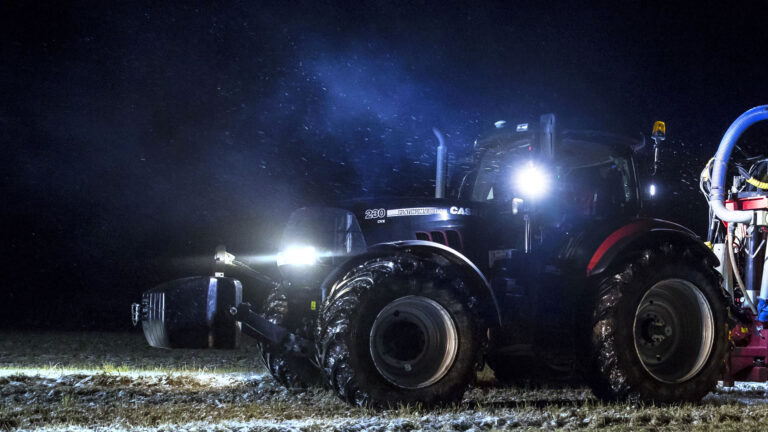
Yes, and in Ireland you must. The beacon stays on day and night on the road, alongside your full road lighting, and you still need to avoid glare from work lamps.
Why do some tractors run two beacons
Two beacons help when a load, cab, or implement blocks 360-degree visibility from one mounting point.
What beacon should I buy
Buy a 360-degree amber warning beacon, mount it high, and choose a robust LED unit if you travel on roads often.
Need help choosing
Tell us your tractor voltage, your mount type, and whether you tow wide kit.
A summary of why do tractors have flashing amber lights
Tractors have flashing amber lights because they need a clear warning signal that they present a slow moving or unusual road hazard.
The beacon gives drivers earlier recognition time, which reduces harsh braking and risky overtakes.
Use the beacon with clean, working road lights, and choose a true 360-degree unit mounted where the load cannot block it.