Do LED Lights Interfere with GPS and Auto-Steer Systems

In this guide
- The Problem of LED Interference on Modern Tractors
- Why LED Drivers Generate Radio Frequency Noise
- Which Tractor Systems Get Disrupted
- Symptoms of LED Interference on a Tractor
- ECE R10 EMC Approval Explained
- How to Identify EMC Compliant LEDs Before Buying
- How to Fix LED Interference on a Working Tractor
- Buying Recommendations for GPS-Safe LEDs
- Final Thoughts
LED lights interfere with tractor GPS and auto-steer when the LED driver emits radio frequency noise on the same bands as the GNSS receiver. Cheap, uncertified LED work lights and light bars are the most common cause of lost GPS signal, dropped RTK correction, and auto-steer dropouts on modern tractors. The fix is to specify EMC compliant LED lights, identified by an ECE R10 approval mark, and to wire and shield them correctly.
Modern precision farming relies on GPS accuracy down to 2 cm with RTK. A €35 LED light bar from an unknown supplier can knock that accuracy down to 5 m or remove the signal entirely. The cost of one missed half-day in spring drilling outstrips the price difference between a non-compliant and a compliant lamp.
The Problem of LED Interference on Modern Tractors
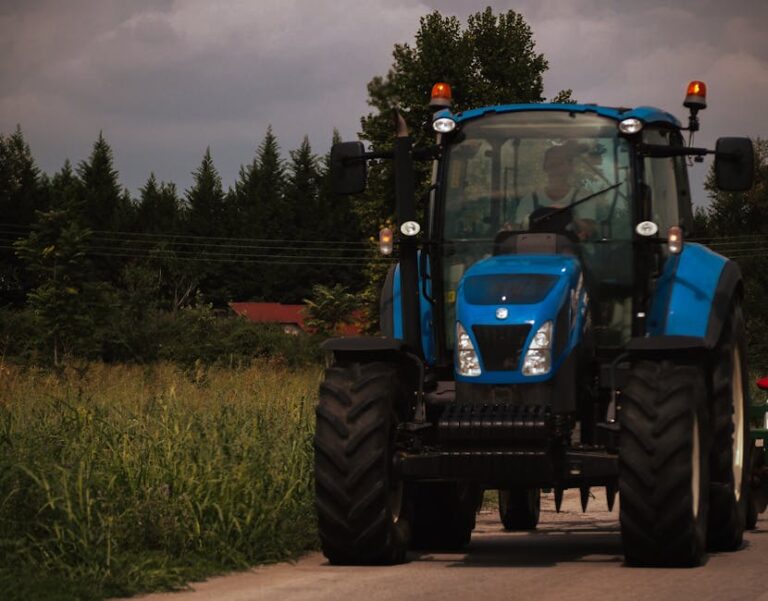
LED interference is the unwanted disruption of GNSS, CAN-bus, ISOBUS, and radio systems caused by electromagnetic emissions from LED lighting. The problem affects new and recent tractors most because they carry more electronics. A 1990s tractor with manual steering does not care if its work lights generate radio noise. A 2024 John Deere 7R with StarFire receiver, AutoTrac, and ISOBUS implements cares a lot.
Three trends drove the problem to where it is today:
- LED light prices fell, and farms upgraded entire fleets to LED work lights and beacons within five years
- Precision agriculture spread, and most tractors over 100 hp now carry GNSS receivers
- Cheap imported LEDs entered the market without EMC testing or compliance documentation
The result is widespread, intermittent interference on farms where compliant and non-compliant lights have been mixed across a fleet over time.
Why LED Drivers Generate Radio Frequency Noise
An LED driver converts the tractor’s 12 V or 24 V DC supply into the regulated current that the LEDs need. The conversion uses a switching circuit that turns on and off thousands of times a second, often at frequencies between 100 kHz and 2 MHz. The switching action produces electromagnetic harmonics across a wide band, from 30 MHz up to 1 GHz.
GPS L1 (the main civilian GNSS frequency) sits at 1,575.42 MHz. GPS L2 sits at 1,227.6 MHz, and other constellations use nearby bands. RTK corrections arrive by UHF radio, mobile data, or L-band satellite (around 1.5 GHz), so they can be hit too. Harmonics from a low-quality LED driver can reach these frequencies and either swamp the receiver or raise the noise floor enough to lose the signal.
Pulse-width modulation, used to dim LEDs, makes the problem worse. PWM at 200 Hz to 1 kHz creates a square wave with very fast edges. The edges generate harmonics that ride up into the radio band and radiate from the LED wiring loom, which acts as an antenna.
A properly designed LED light has filtering on both the input and output sides of the driver, plus a shielded housing that confines the radiation. A budget light bar has neither. The driver is a bare PCB inside an aluminium shell, and the wiring leaves the housing through an unshielded grommet.
Which Tractor Systems Get Disrupted
Cheap LED lights disrupt every radio-frequency-dependent system on a modern tractor. The most commonly affected are:
- GPS receiver (StarFire, Trimble, AGCO, Topcon, John Deere): loss of signal, reduced accuracy, position drift
- RTK correction: dropped correction signal, reverting to autonomous mode, accuracy falling from 2 cm to 30 cm
- Auto-steer (AutoTrac, AutoGuide, IntelliSteer): line wobble, lost lines, sudden disengagement
- ISOBUS implements: communication errors, sprayer section control glitches, seeder dropouts
- CAN-bus networks: dashboard error codes that clear when lights are off
- VHF and UHF radios: static and dead air during transmission
- Telematics modems (JDLink, AFS Connect): dropped data, failed file uploads
- Bluetooth and Wi-Fi in the cab: connection drops
If a tractor reports any of these symptoms intermittently, and the timing correlates with switching on work lights or a beacon, LED interference is the likely cause.
Symptoms of LED Interference on a Tractor
The symptoms appear most often after dark, because work lights only run at night. The classic signs are:
- GPS accuracy degrades or signal drops the moment work lights switch on
- Auto-steer disengages randomly during night drilling, ploughing, or harvest
- RTK reverts to SBAS or autonomous, then recovers when lights are off
- ISOBUS implement throws random fault codes only at night
- VHF radio sounds noisy or unusable when lights are on
- Tractor display flashes CAN errors when a beacon is running
Two diagnostic tests confirm LED interference quickly:
- Switch-off test: With the tractor stationary and GPS locked, switch each LED light off in turn. If accuracy improves and signal recovers, that light is the source.
- Daylight comparison: GPS performs normally during daytime work and degrades only after lights come on. The pattern points to the lighting circuit.
If the symptom appears with the engine running but no lights on, the cause is something else: a faulty alternator, a poorly bonded GPS antenna mount, or a different aftermarket accessory.
ECE R10 EMC Approval Explained
ECE Regulation 10 (R10) is the United Nations standard for electromagnetic compatibility of road vehicles, vehicle systems, and aftermarket electrical components. R10 covers both radiated emissions (the noise the device puts out) and immunity (how the device handles noise from elsewhere).
A light approved under R10 carries an E-mark: a letter E in a circle with the number of the country that issued the approval (E11 is the United Kingdom, E24 is Ireland), followed by an approval number that starts with 10R and the series of amendments, for example E11 10R-06 1234. The 10R shows the regulation and the remaining digits identify the approval.
R10 radiated emission limits cover roughly 30 MHz to 1 GHz. GNSS bands sit above 1 GHz, so an R10 mark is a good baseline but not a full guarantee of GPS-safe behaviour. A compliant light has emissions below the limit lines defined in the regulation, which means it is much less likely to interfere with on-board electronics when fitted correctly.
CISPR 25 is the related standard used by some manufacturers as a higher-tier specification. It includes limits for the GNSS bands, and CISPR 25 Class 5 is the strictest grade, intended for vehicles with sensitive on-board receivers including GNSS. Many premium agricultural LEDs are tested to CISPR 25 Class 5 in addition to ECE R10.
For related reading, see our guide on IP rating for agricultural LED lights and the LED vs halogen vs xenon comparison.
How to Identify EMC Compliant LEDs Before Buying
Buy LED lights with documented ECE R10 or CISPR 25 approval. Three checks confirm compliance before money changes hands:
- Look for the E mark on the product (housing label, lens, or moulded into the body). The mark must show “10R” alongside the country code.
- Ask for the EMC test certificate. A reputable manufacturer can supply a PDF certificate within minutes. A supplier who cannot is selling untested product.
- Check the spec sheet for explicit reference to ECE R10, CISPR 25, or “EMC compliant for use with GNSS”. Marketing copy that says “tested” without naming a standard means nothing.
Avoid these warning signs:
- LED light bars with no manufacturer named on the packaging
- Spec sheets listing only IP rating, lumens, and voltage with no EMC line
- Prices that look too good to be true (a very cheap lamp with no stated EMC approval has probably not been tested)
- Generic imports labelled “for off-road use only” (the disclaimer often means the product has no road approval and may not be EMC tested)
When you choose LED work lights or LED beacons, check the product listing for the R10 mark before you buy.
How to Fix LED Interference on a Working Tractor
The fix depends on whether the LED light is replaceable or whether the layout can be improved without buying new lamps. Three remedies, in order of effectiveness:
1. Replace the offending light with an EMC compliant alternative. This is the only fix that solves the underlying cause. A new light costs less than a service callout for an “auto-steer fault” that turns out to be RFI from a €35 light bar.
2. Re-route the LED wiring loom away from the GPS antenna and its cable. Distance is the cheapest mitigation. Keep the LED feed at least 50 cm from the antenna coax. Run the antenna cable along a different chassis path, ideally on the opposite side of the cab.
3. Add ferrite chokes and shielded cable. Ferrite chokes clip over the LED supply cable and block high-frequency noise from radiating along the wire. The chokes do not fix radiation from the lamp housing but help when the wiring loom is the antenna. Shielded cable with the shield bonded to chassis at one end provides further reduction.
For severe cases, fit an EMC-rated power filter on the input side of the LED light. The filter is wired in series with the supply and removes high-frequency noise before it reaches the LED driver. Filters cost €25 to €45 and work, but only on lights where the radiation comes from the wiring rather than the lamp body.
If the GPS antenna mounting bracket is loose or unbonded, fix that first. A poor antenna ground makes any RFI problem ten times worse.
Buying Recommendations for GPS-Safe LEDs
Buy from agricultural lighting specialists, not generic automotive retailers. The agricultural market expects EMC compliance and stocks accordingly. The automotive aftermarket sells a much higher proportion of non-compliant product because cars rarely use precision GPS.
Established makers that publish EMC approvals for their ranges include:
- Hella
- Nordic Lights
- LED Autolamps
- Britax
- Wesem
- Vignal
- Truck-Lite
Check the approval for the specific model, because EMC performance varies within a range. Lights with documented R10 or CISPR 25 approval, fitted correctly, rarely cause GPS interference.
For complete protection across a fleet, replace any light over five years old with current-generation EMC-rated units when refit happens. Mixed fleets where new compliant lights share a circuit with old non-compliant ones still have problems, because the old lights remain the source of noise.
For more on choosing the right LED for the job, read What are LED work lights and why are they replacing halogen and LED work lights: how to choose the right one for your application.
Final Thoughts
LED interference with GPS is preventable. The technology exists, the standards exist, and the marks on compliant products tell you everything you need. The reason farms still see auto-steer dropouts in 2026 is the choice between a €35 light and an €80 light, repeated across a working fleet over a decade.
The economics favour compliant lighting. Five hours of dropped auto-steer at harvest costs more than a complete LED upgrade. Specify ECE R10 lights, fit them correctly, and the GPS keeps locked.
If you need help auditing a fleet for EMC-safe lighting or selecting compliant replacements for a specific tractor, contact our team at Agri Lighting on +44 1522 440522 or [email protected]. We can match EMC-approved LED lights to your machine and your guidance system.