Tractor Beacons Buying Guide: LED, Rotating and Magnetic Beacons

In this guide
- What is a tractor beacon and when do you need one?
- LED or halogen tractor beacons?
- Flash patterns
- ECE R65 and R10 approval
- Mounting: DIN pole, flexi, magnetic or bolt-on
- 12V, 24V or multi-volt?
- IP rating and build quality
- Single beacon or beacon bar?
- Brand or unbranded?
- Tractor beacon buying checklist
- Which beacon do I need? Quick recommendations
- Frequently asked questions
The right tractor beacon for most farms is an amber LED beacon with ECE R65 and R10 approval, matched to your tractor’s voltage (or multi-volt 12/24V), on a mount that suits how you use it: DIN pole or flexi DIN for a permanent cab fit, magnetic for a beacon that moves between machines. Halogen rotating beacons cost less to buy, but use more power, have parts that wear, and at 55W or 70W they are over the 36 watt limit Irish rules set for amber beacons.
This guide works through each decision in turn: the law, LED or halogen, flash patterns, R65 classes, mounting, voltage, IP rating, and single beacons versus beacon bars, with a checklist and a comparison table at the end.
What is a tractor beacon and when do you need one?
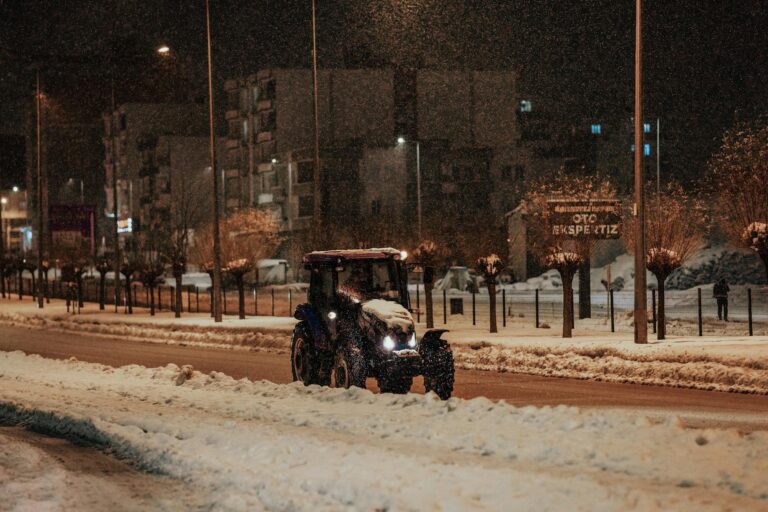
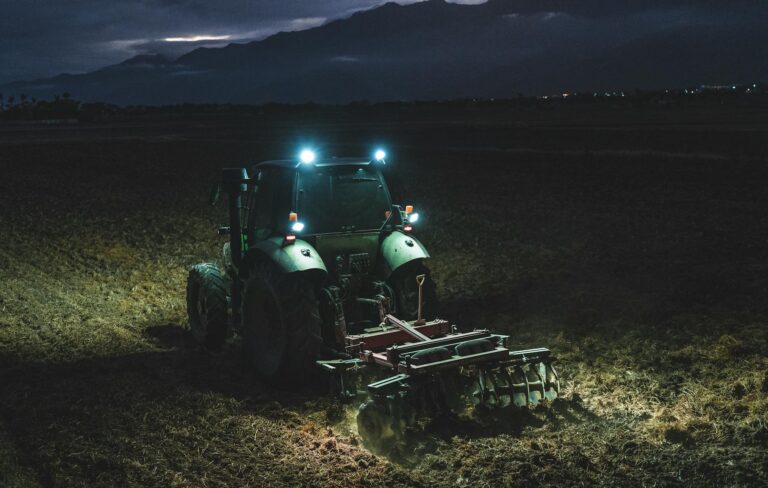
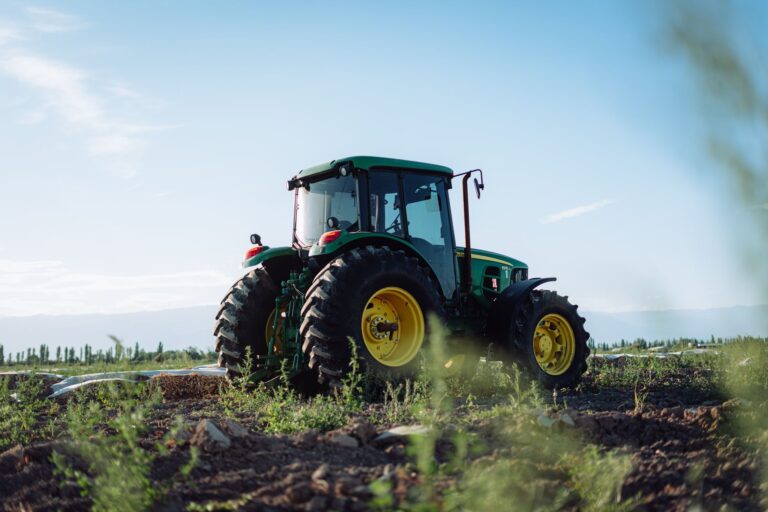
A tractor beacon is an amber warning lamp that flashes or rotates through 360 degrees to warn other road users of a slow, wide or working vehicle. It is usually mounted on the cab roof.
In Ireland you always need one. Since 1 January 2016, every agricultural tractor and self-propelled agricultural machine must be fitted with a flashing amber beacon, and it must be switched on whenever the vehicle is in use on a public road (Road Traffic (Lighting of Vehicles) (Amendment) Regulations 2014, S.I. No. 249 of 2014, retained by S.I. No. 639 of 2020). That applies whatever the tractor’s speed, width or the type of road. The only exception is vintage tractors used solely for vintage rallies or display.
The Irish regulations also set how the beacon is fitted:
- Mounted on the roof, on the vehicle’s centre line, where possible.
- No part of the illuminated surface less than 1.27 m from the ground.
- Light-emitting area within a 230 mm square.
- Amber lamps limited to 36 watts.
- Amber, for farm vehicles. Blue is only for the Gardaí, fire, ambulance and a short list of other emergency services. There is no Irish provision for green beacons.
For what amber means to other drivers, see our guide to amber beacon meaning. Our full amber tractor beacons range is the starting point for any farm vehicle.
LED or halogen tractor beacons?
LED is the better choice for most new and replacement tractor beacons. Halogen rotating beacons are cheaper to buy, but check the wattage before using one on an Irish road.
LED beacons
An LED beacon uses fixed LEDs switched by an electronic driver to create the flash. It has no bulb to blow and no motor to wear, draws a fraction of the current of a halogen unit, and usually offers several flash patterns. Most are sealed units, so they resist vibration, dust and water well. The trade-off is that a failed LED driver means replacing the beacon, and cheap units with poor drivers can cause radio and GPS interference. Browse LED tractor beacons.
Halogen rotating beacons
A halogen rotating beacon uses an H1 bulb (55W on 12V, 70W on 24V) with a motor-driven reflector that sweeps the light round. It gives the familiar rotating sweep, costs less to buy, and the bulb is cheap and easy to replace. But it draws about 5A on 12V, the bulb and motor wear, and vibration on rough tracks shortens bulb life. A 55W or 70W bulb is also over the 36 watt limit the Irish regulations set for amber lamps, so a halogen beacon suits off-road or yard use rather than the public road. Browse halogen tractor beacons.
| Feature | LED beacon | Halogen rotating beacon |
|---|---|---|
| Light source | Fixed LEDs, electronic flash | H1 bulb with rotating reflector |
| Current on 12V | Low, usually under 2A (check label) | About 5A (55W bulb plus motor) |
| Moving parts | None | Motor, belt or gears |
| Flash patterns | Often several, selectable | Rotating sweep only |
| Voltage | Often multi-volt 12/24V | 12V or 24V specific |
| Servicing | Sealed, replace if driver fails | Bulb and sometimes motor replaceable |
| Purchase price | Higher | Lower |
| Best for | Daily use, modern tractors, low battery drain | Budget or like-for-like replacement |
Flash patterns
LED beacons offer a choice of flash pattern, which is useful because different jobs suit different signals. Common patterns are:
- Rotating simulation: the LEDs light in sequence to mimic a rotating beacon. Other drivers read it instantly as a slow vehicle.
- Single flash: a regular pulse, clean and easy to read at distance.
- Double or triple flash: bursts of 2 or 3 flashes, with more attention value for working near traffic.
Whatever the pattern, the beacon must flash. ECE R65 beacons are designed to flash at 2 to 4 Hz (120 to 240 per minute), and approved beacons are tested in their approved patterns, so check that the pattern you plan to use on the road is one of them. Some beacons also have a steady or low-intensity mode; save those for off-road or site use.
ECE R65 and R10 approval
ECE R65 is the UN regulation for special warning lamps, and the R65 mark is the best single sign that a beacon is properly made. The Irish regulations set the colour, wattage and mounting but not an intensity standard, so the R65 mark is what shows the colour, light output at set angles and flash behaviour have been tested by an approval authority.
Class 1 vs Class 2
R65 has 2 intensity classes:
- Class 1: one level of intensity.
- Class 2: two levels of intensity, a brighter day setting and a dimmer night setting, which is the more demanding test.
Many amber beacons are Class 1. Class 2 is worth paying for when visibility in bright sunshine matters, such as hedge cutting or working on busy roads, as long as you or an automatic sensor switch it to night mode after dark so you do not dazzle other drivers.
Reading the mark
The approval mark is an E in a circle with a country number, plus a code. On beacons this code combines a letter for the lamp type (T for an all-round rotating or flashing beacon), a letter for colour (A for amber, B for blue) and the class number, so TA1 is an amber Class 1 beacon. Look for an R10 mark as well, which covers electromagnetic compatibility and matters on tractors with GPS, auto-steer and ISOBUS. Our guide to ECE R65 beacons goes deeper.
Mounting: DIN pole, flexi, magnetic or bolt-on
Choose the mount by how the beacon will be used. Our guide to beacon mounting options covers fitting each type.
- DIN pole: the beacon fits on a tube that clamps into a holder on the cab roof. It is quick to remove for storage or low buildings, and many tractors have a holder from the factory. Check the tube size and holder before you buy.
- Flexi DIN pole: as above, with a flexible section that bends when the beacon hits a branch or door frame. A good choice on hedge-lined lanes and low sheds.
- Magnetic: a magnet base holds the beacon on a flat steel surface, usually with a coiled lead and cigarette lighter plug. Ideal for contractors moving between machines, trailers or loads. Make sure the roof is steel, flat and clean.
- Bolt-on (1-bolt or 3-bolt): fixed directly to the roof or a bracket. The most secure fit and the lowest profile, but permanent.
Whatever the mount, keep the beacon on the roof and at least 1.27 m above the ground, as the Irish rules require.
12V, 24V or multi-volt?
Match the beacon to the machine’s system voltage. Almost all tractors are 12V; many trucks, some telehandlers and loaders, and larger plant are 24V. A halogen beacon is made for one voltage only, and a 12V halogen beacon on 24V will blow its bulb. Many LED beacons are multi-volt (marked 12/24V or 10 to 30V), which is the safest choice if the beacon may move between machines. Browse 12V tractor beacons or 24V tractor beacons.
IP rating and build quality
The IP rating tells you how well the beacon is sealed against dust and water. For a farm beacon:
- IP66: dust-tight and protected against powerful water jets. A sensible minimum for a cab roof.
- IP67: dust-tight and protected against temporary immersion.
- IP69K: protected against high-pressure, high-temperature washdown. Worth having on machines that are pressure washed regularly.
Also look at the lens (polycarbonate resists impacts better than acrylic), the base (cast or reinforced), the cable entry seal and how the lead is protected. A beacon on a cab roof takes vibration, branches, frost and UV all year.
Single beacon or beacon bar?
A single beacon is enough for most tractors. A beacon bar (a light bar with several warning modules in one housing) suits wider vehicles and jobs where the warning needs to be seen across the full width.
- Single beacon: one unit, cheap, easy to fit, fine for a standard tractor on the road.
- Twin beacons: one at each side or at front and rear. Useful when the cab roof or a trailer load blocks the view of a single beacon from behind.
- Beacon bar: a low, wide unit for telehandlers, combines and highways vehicles. It shows width and sits lower than a tall beacon.
Brand or unbranded?
Established warning-light brands publish their approval details and stand behind them. Unbranded beacons vary: some are good, but some carry marks they have not earned or have noisy drivers that upset GPS and radios. Whatever the brand, check for a moulded R65 mark with an approval number and an R10 mark. For one long-established brand, see our Britax beacons guide.
Tractor beacon buying checklist
- Colour: amber for any farm or contractor vehicle.
- Voltage: 12V, 24V, or multi-volt if it may move between machines.
- Technology: LED for low current, no moving parts and staying under the 36 W limit; check the wattage of any halogen unit.
- Approval: moulded ECE R65 mark (Class 1 or 2) plus R10.
- Mount: DIN pole, flexi DIN, magnetic or bolt-on, checked against what is on your cab.
- Connection: bare leads, factory socket plug or cigarette lighter plug, to suit your wiring.
- Height and visibility: can it sit on the roof with its lit surface at least 1.27 m high, and be seen all round, including past any trailer?
- Sealing: IP66 minimum, IP69K if you pressure wash.
- Flash pattern: at least one approved road pattern you are happy with.
Which beacon do I need? Quick recommendations
| Situation | Suggested beacon |
|---|---|
| Standard tractor, permanent fit | Amber LED, R65 and R10, on a DIN or flexi DIN pole |
| Tractor on narrow, hedge-lined lanes | Amber LED on a flexi DIN pole, or a low-profile bolt-on |
| Contractor moving between machines | Multi-volt amber LED magnetic beacon |
| Trailer or load hides the cab beacon | Second beacon on the trailer or a magnetic beacon at the rear |
| Combine, wide sprayer, telehandler | Beacon bar or twin beacons |
| Hedge cutting or work beside fast traffic | R65 Class 2 LED beacon or beacon bar |
| Like-for-like replacement on an older tractor | LED beacon on the same voltage and mount (a 55W or 70W halogen is over the Irish 36 W limit) |
Frequently asked questions
What is the best tractor beacon?
For most farms the best tractor beacon is an amber LED beacon with ECE R65 and R10 marks, IP66 or better, multi-volt or matched to the tractor’s voltage, on a flexi DIN pole or magnetic base. The best choice for you depends on your mount and how you use the beacon.
Are LED tractor beacons legal?
Yes. LED beacons are legal on Irish roads as long as they are amber, fitted to a vehicle allowed to show amber (tractors and self-propelled agricultural machines are on that list), mounted on the roof where possible with the lit surface at least 1.27 m high, and no more than 36 watts. An R65 approval mark shows the beacon has been tested.
Do tractor beacons need to be E-marked?
The Irish regulations do not name R65, but RSA guidance is to fit type-approved lamps with an E or e mark, and an R65 mark is the best proof of performance. Buy an approved beacon.
Will a 12V beacon work on a 24V tractor?
Only if it is marked as multi-volt, such as 12/24V or 10 to 30V. A 12V-only beacon on 24V will blow a halogen bulb or damage an LED driver.
Can I use a magnetic beacon on a tractor?
Yes, on a flat, clean steel roof. Because the beacon must be on whenever the tractor is on a public road, a magnetic unit has to go on before every road trip. Magnetic beacons suit spare tractors and moving between machines, but on a plastic or aluminium roof you will need a pole or bolt-on mount instead.