ECE R65 Beacons: What the Regulation Means for Irish Tractors
In this guide
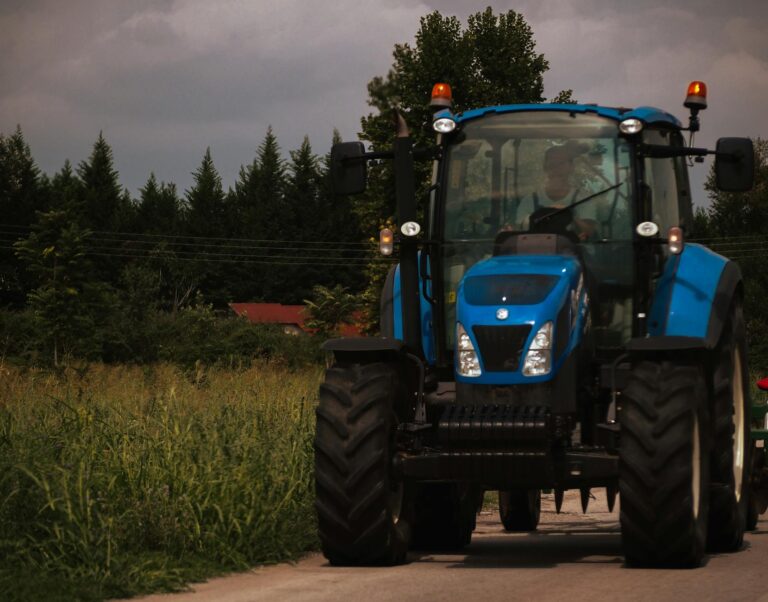
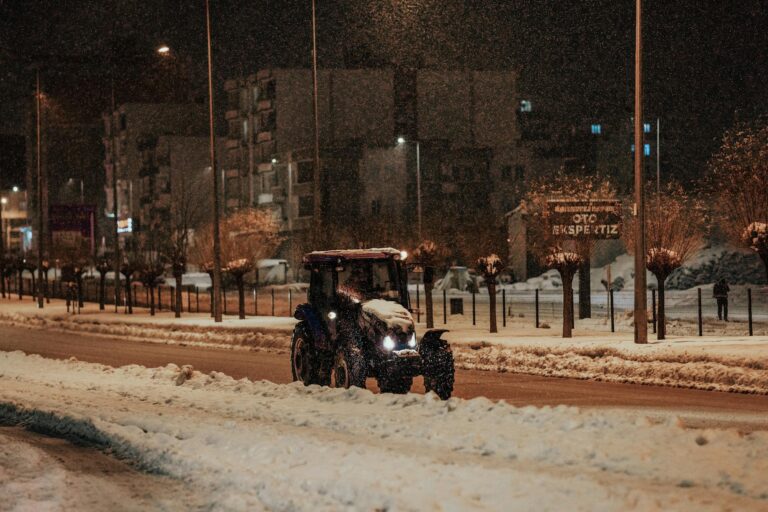
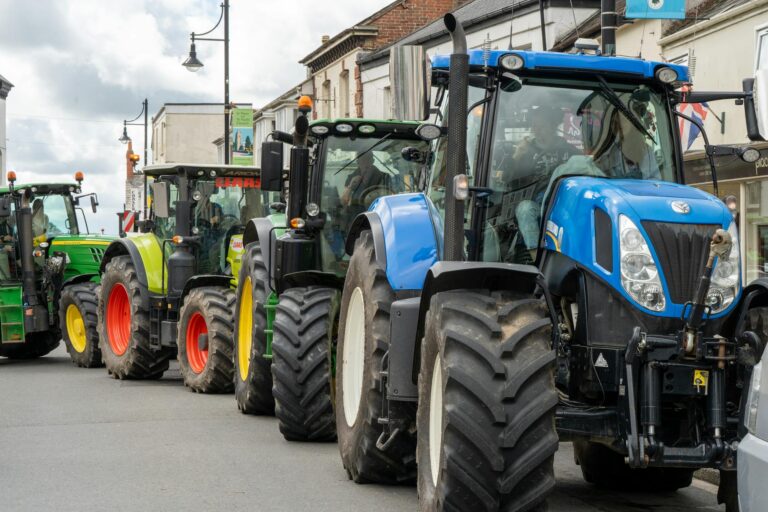
An ECE R65 beacon is a vehicle warning light approved against United Nations Regulation No. 65, the international standard for special warning lamps fitted to road-going vehicles. The regulation sets the flash rate, light intensity, colour, photometric pattern and approval marking that a rotating or flashing amber beacon must meet. In Ireland this matters more than almost anywhere else, because since 1 January 2016 every agricultural tractor and self-propelled agricultural machine must have a flashing amber beacon fitted and switched on whenever it is on a public road. Most beacons sold for farm use carry “ECE R65” on the housing or product page. Few buyers know what the mark guarantees, what the difference between Class 1 and Class 2 means in practice, or how to check that the approval is genuine. This guide explains the regulation in plain English, breaks down the photometric classes, decodes the approval mark, sets out the Irish beacon rules, and finishes with a buying checklist.
What an ECE R65 Beacon Is
An ECE R65 beacon is a special warning lamp certified to UNECE Regulation No. 65. The regulation, issued by the United Nations Economic Commission for Europe, defines the technical requirements for “special warning lamps for motor vehicles”. It is the type-approval reference for amber rotating and flashing warning beacons fitted to tractors, harvesters, telehandlers and other machines.
The regulation covers 4 things: the colour of the emitted light, the photometric performance (how bright and how evenly spread the beam is around the vehicle), the flash rate, and the approval marking that proves the lamp passed the test. A beacon without an ECE R65 mark has no proof that it meets any of those 4 requirements. RSA guidance repeatedly advises fitting type-approved lamps showing the E or e mark, so an unmarked beacon is a poor choice for a vehicle that must run one every time it goes on the road.
ECE R65 sits alongside ECE R10, the EMC regulation that governs electromagnetic interference. Most modern agricultural beacons carry both marks. R65 covers what the lamp emits as light. R10 covers what the lamp emits as radio noise into surrounding electronics. For the broader regulatory picture, see the tractor lighting regulations guide.
What the Regulation Specifies
ECE R65 sets 5 measurable requirements that every approved beacon must meet.
| Requirement | Specification |
|---|---|
| Light colour | Amber, blue or red. Amber is the standard for agricultural vehicles. |
| Flash rate | 2 to 5 Hz (120 to 300 flashes per minute) |
| Class 1 minimum intensity | 50 cd horizontal |
| Class 2 minimum intensity | 100 cd horizontal |
| Approval mark | E-in-circle, country code, R65 reference, approval number |
Light Colour
ECE R65 recognises 3 beacon colours, but which colour a vehicle may actually show is set by national law. In Ireland, amber is used by agricultural tractors and self-propelled machines and a short list of other vehicles, blue is reserved for the Gardaí and other emergency services, and the Rules of the Road says you must not fit blue or red flashing lights to your vehicle. Irish farms and contractors use amber R65 beacons, and the chromatic limits in the regulation define exactly how “amber” is measured against the CIE colour diagram. A beacon that drifts into yellow or orange under load fails the test.
Flash Rate
The flash rate sits between 2 and 5 Hz, which translates to 120 to 300 flashes per minute. A rotating beacon meets the rate by spinning at a fixed RPM that produces the right number of light pulses through its lens segments. An LED beacon meets the rate by switching the chip electronically. Outside that window, a beacon fails approval whether it flashes too slowly (looks faulty) or too fast (causes visual confusion).
Photometric Performance
The regulation tests light intensity at multiple horizontal and vertical angles around the lamp. The beacon must produce a minimum candela (cd) value at each tested angle. Class 1 beacons meet a 50 cd minimum at the horizontal plane. Class 2 beacons meet a 100 cd minimum. Both classes have additional minimums above and below the horizontal so that the warning is visible to a tall lorry driver and a low-slung car driver alike.
Approval Marking
Every approved beacon carries a permanent mark on the housing or lens. The mark shows which country issued the approval, which class the lamp meets, and its approval number. The mark format is described in the section below.
Class 1 vs Class 2 Beacons
ECE R65 splits beacons into 2 photometric classes. The split decides where the beacon can effectively be used.
| Class | Minimum horizontal intensity | Typical use | Visibility |
|---|---|---|---|
| Class 1 | 50 cd | Daytime use only | Adequate in daylight, washes out in bright sun |
| Class 2 | 100 cd | Daytime and night use | Effective in all conditions |
Class 1 Beacons
A Class 1 beacon meets the 50 cd minimum and passes daytime visibility tests. Class 1 lamps are smaller, cheaper and draw less current. They are common on light commercial vehicles, low-power LED beacons and low-spec halogen rotating units. Class 1 suits a machine that only works in daylight inside the farm.
Class 2 Beacons
A Class 2 beacon meets the 100 cd minimum and passes both daytime and night visibility tests. Because an Irish tractor must run its beacon every time it is on a public road, day or night, Class 2 is the sensible standard for any tractor or self-propelled machine that goes on the road. Silage runs into the evening, slurry spreading in the spring and drawing bales in winter all put tractors on the road in poor light.
The choice rule for farm vehicles is clear. Fit Class 2 beacons on any vehicle that goes on a public road. Class 1 is only worth considering where the vehicle stays inside the farm gates. The cost difference is small (roughly €10 to €35 per lamp), and the safety case for Class 2 is strong on a working farm.
How to Read an ECE R65 Approval Mark
An ECE R65 approval mark contains 4 elements that decode the lamp’s certification. The mark is moulded into the housing or printed on the lens, and it should stay visible after fitting.
A typical mark reads: E11 65R 0001234
| Element | Example | Meaning |
|---|---|---|
| E in a circle | E11 | The lamp was approved by a UNECE signatory country. The number identifies the country (E11 = United Kingdom; E1 = Germany; E2 = France; E24 = Ireland). |
| Regulation number | 65R | Indicates approval against ECE Regulation No. 65 |
| Class identifier | T (Class 1) or X (Class 2) | Some marks use T for Class 1 and X for Class 2; others mark “1” or “2” directly |
| Approval number | 0001234 | A sequential reference for traceability |
A lamp showing 65R with no number, a partial mark, or a sticker rather than a moulded mark is a counterfeit or a non-approved item. For high-spec beacons used on commercial fleets, the manufacturer can supply the full type-approval certificate on request.
The country code does not have to be Irish for the lamp to be valid in Ireland. Ireland is an EU member state, so EU approvals (e marks) and UNECE approvals (E marks) from any country are recognised. A beacon approved in Germany (E1), France (E2), Italy (E3), the UK (E11) or any other UNECE country is just as good. Ireland’s own number is 24, but you will rarely see it, because most lamps are approved elsewhere.
ECE R65 and ECE R10: Why You Need Both
ECE R10 is the companion regulation that governs electromagnetic compatibility. R10 controls the radio noise a beacon emits into surrounding electronics. Modern tractors run sensitive CAN bus networks, GPS auto-steer, ISOBUS implements and precision farming controllers, all of which are vulnerable to electrical interference from a non-compliant beacon.
A beacon marked R65 has correct light output. A beacon marked R10 has clean EMC. A beacon marked R65 R10 has both. Modern agricultural beacons usually carry both marks because the manufacturer tests them together. Cheap import beacons sometimes carry R65 alone, which means the light output is approved but the EMC has never been tested.
The risk on a CAN bus tractor is real. An EMC-noisy beacon can cause GPS drift, ISOBUS dropout, dashboard warning lights or intermittent loss of auto-steer. The beacon itself works; the rest of the tractor stops working correctly while the beacon is on. In Ireland, where the beacon must be on for every road journey, that is a bigger problem than in countries where beacons are used occasionally. The fix is to specify R65 and R10 marks together on every beacon purchase for any tractor newer than 2010. For more on EMC and lighting on modern tractors, see the LED lights and GPS interference article when it goes live.
Irish Legal Context for ECE R65 Beacons
ECE R65 defines what an acceptable beacon is. Irish law defines when a beacon must be fitted and used, and how it must be mounted. The rules are in the Road Traffic (Lighting of Vehicles) Regulations 1963, as amended by S.I. No. 249 of 2014 (which brought in the tractor beacon requirement from 1 January 2016) and S.I. No. 639 of 2020 (which replaced the blue and amber lamp rules from 1 January 2021).
| Situation | Beacon required? | Class |
|---|---|---|
| Agricultural tractor or self-propelled agricultural machine on a public road | Yes, flashing amber, fitted and switched on, regardless of speed, width or road type | Class 2 recommended |
| Self-propelled machine over 3.5 m wide on a public road | Yes, flashing amber beacons, plus an escort vehicle and a “CAUTION, WIDE LOAD FOLLOWING” sign | Class 2 recommended |
| Vintage tractor used solely for vintage rallies or display | Exempt | Either |
| Field or yard work on private land | No road requirement | Either |
This is the biggest difference from the UK, where a beacon is only legally required in limited cases such as slow vehicles on fast dual carriageways. In Ireland it is mandatory on every tractor and self-propelled agricultural machine, and it must be switched on whenever the vehicle is on a public road. Read more in our guide to tractor road legal lights.
Irish Mounting and Wattage Rules
Under Article 52(18), as replaced by S.I. No. 639 of 2020, an amber beacon must be mounted:
- where possible on the roof, on the vehicle’s longitudinal (centre) axis;
- so that no part of the illuminated surface is less than 1.27 m from the ground;
- with the light-emitting area within a 230 mm square.
Amber lamps are limited to 36 watts. A typical LED beacon drawing 0.5 to 1.5 A at 12V sits well inside that. Older halogen rotating beacons can draw 4 to 8 A, which is well over 36 W, so check the rating before fitting a halogen unit on an Irish tractor. The same applies to long amber light bars, which may not fit within the 230 mm square.
Who Else May Show Amber
Amber beacons are not a free-for-all in Ireland. Apart from agricultural tractors and self-propelled machines, they are allowed on breakdown vehicles, road-clearance vehicles (snow, ice, frost, hedge and verge cutting, sweeping), road works vehicles, local authority refuse vehicles, telephone, gas and electricity vehicles (only at the scene of operations) and Customs and Excise patrols. The RSA says private cars may not use amber strobes. So a farm jeep or pickup should not carry a working amber beacon just because the tractor does.
Enforcement
Beacon rules are enforced by An Garda Síochána. No separate fixed charge was found for beacon offences, so a missing or switched-off beacon would be dealt with as a breach of the Lighting Regulations, which can mean a court appearance. Do not rely on UK fine figures; they do not apply here.
How to Buy an ECE R65 Compliant Beacon
A buying decision for an ECE R65 beacon for an Irish tractor comes down to 7 checks. Each one is visible on the product listing or the lamp itself.
1. Confirm the Approval Mark
Look for “E[number] 65R” on the housing or lens. A photograph of the mark on the product page is the quickest check. No mark, no purchase. A lamp described as “R65 style” or “R65 compatible” without an actual mark is not an approved beacon.
2. Confirm the Class
Class 2 is the standard for farm road use. Many product pages now list the class explicitly (“Class 2”, “X-rated” or “100 cd”). Where the class is not stated, contact the seller before buying. A beacon of unknown class is not safe to assume as Class 2.
3. Confirm the EMC Mark
For any tractor newer than 2010, specify a beacon that also carries the ECE R10 mark. The product listing should show both R65 and R10 either as separate marks or as a combined approval. A beacon marked R65 alone is a higher EMC risk on modern electronics.
4. Check the Wattage
Irish rules limit amber beacons to 36 watts. LED beacons comfortably meet this. Check the wattage on any halogen beacon before buying.
5. Match the Voltage
ECE R65 beacons are sold in 12V, 24V and multi-voltage (12-24V) variants. Match the beacon voltage to the tractor system. A 12V beacon on a 24V system burns out within minutes. A 24V beacon on a 12V system runs at half brightness or fails to flash at the correct rate.
6. Choose the Mounting Type
ECE R65 beacons fit through 4 common mounting methods: DIN pole, flexi-DIN pole, magnetic base and 3-bolt fixed mount. The choice depends on the tractor’s existing mounting points and whether the beacon needs to come on and off (for example, when storing in a shed with low headroom). Magnetic and flexi-DIN options trade some rigidity for convenience. Whatever the mount, the beacon should sit on the roof centre line where possible and at least 1.27 m off the ground.
7. Choose LED or Halogen
LED R65 beacons have replaced halogen as the default in agricultural use. LED units draw 0.5 to 1.5A versus 4 to 8A for halogen, last 30,000 to 50,000 hours versus 500 to 1,000 hours for halogen, and survive vibration without filament failure. For an Irish tractor that runs its beacon on every road trip, the long life and the 36 W limit both point to LED. For the full comparison, see LED vs halogen beacons when published, alongside the existing tractor beacon lights guide.
Common ECE R65 Buying Mistakes
Four buying mistakes come up again and again with farm warning beacons. Each is avoidable.
Mistake 1: Buying on Price Alone
A cheap import beacon (often under €20) can carry a printed sticker rather than a moulded approval mark, no traceable approval number, and no R10 EMC test. The lamp may flash at the right rate and look the right colour, but it has no proof of compliance, and it often needs replacing within 2 to 3 years from vibration failure. On a tractor that must show a beacon every time it leaves the yard, a dead beacon means the tractor should not go on the road.
Mistake 2: Assuming “Class 1 Will Do”
A Class 1 beacon meets the 50 cd minimum and washes out in bright sun, fog or rain. Class 2 (100 cd) is the safe default for any farm vehicle that travels on a road. The small saving on Class 1 is wiped out the first time the beacon fails to be seen by a following driver.
Mistake 3: Ignoring R10 EMC
A modern tractor with GPS auto-steer, ISOBUS or any precision farming function needs every electrical accessory to be EMC-compliant. A non-R10 beacon can cause auto-steer drift, GPS lock loss and ISOBUS communication errors while the beacon is operating. The risk grows on tractors built since 2015 as the electronic content has increased.
Mistake 4: Ignoring the Irish Mounting Rules
A beacon stuck on a mudguard or hidden behind a loader frame does not meet the Irish requirement to mount it on the roof centre line where possible, at least 1.27 m from the ground. A high-wattage halogen unit may also breach the 36 W limit.
ECE R65 Compliance Checklist
Use this checklist when specifying or fitting an amber warning beacon on a farm vehicle in Ireland.
- Beacon carries a moulded “E[number] 65R” mark
- Mark includes a sequential approval number, not just “65R style”
- Class 2 confirmed (or Class 1 explicitly accepted for farm-only use)
- ECE R10 mark also present for tractors newer than 2010
- Beacon rated at 36 watts or less
- Voltage matches the tractor system (12V or 24V)
- Mounted on the roof centre line where possible, lit surface at least 1.27 m from the ground
- LED preferred for new builds (lower current, longer life)
- Beacon flash rate confirmed at 120 to 300 flashes per minute on installation
- Beacon visible at 360 degrees with no obstruction from cab roof or rear bodywork
- Beacon switched on for every road journey
- Spare beacon kept in stock at silage and harvest time
Browse the full range of warning beacons and roof-mounted lighting at Agri Lighting, including ECE R65 Class 2 LED beacons, magnetic and DIN pole mounts, flexi-DIN options, and combined R65/R10 approved units suitable for modern CAN bus tractors. Orders ship from Lincolnshire, with free delivery to the Republic of Ireland on orders over €150. For fitment advice, call +44 1522 440522 or email [email protected]. For the broader context, see the pillar guide to tractor beacon lights, the introductory article on amber beacon meaning, and the wider tractor lighting regulations reference.