When Are Amber Beacons Legally Required on Tractors in Ireland
In this guide
- The General Rule for Amber Beacons on Irish Roads
- The Legal Source: The Irish Lighting Regulations
- Why There Is No Speed Threshold in Ireland
- Dual Carriageways and Motorways
- Vehicles That Must or May Show an Amber Beacon
- Vehicles That Do Not Need a Beacon
- Mounting: Where the Beacon Must Go
- Enforcement and Penalties
- Best Practice for Irish Farmers
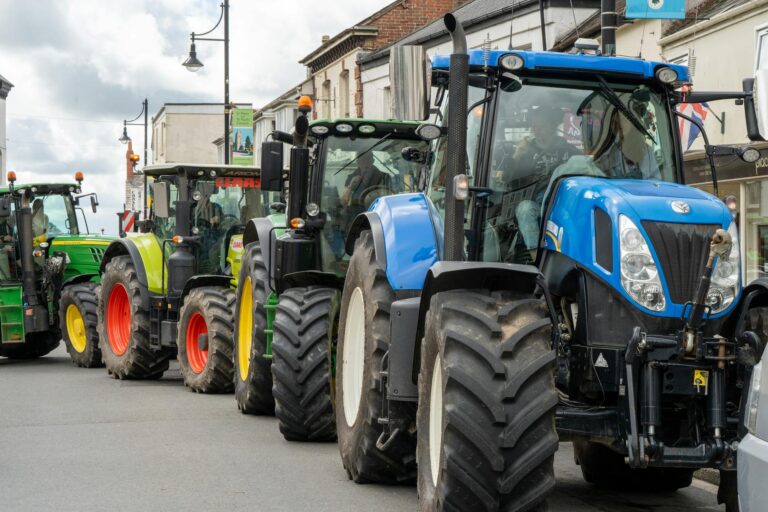
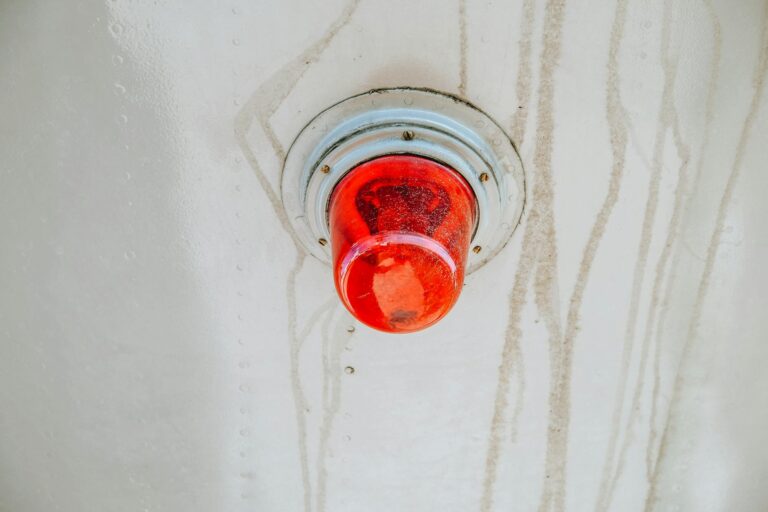
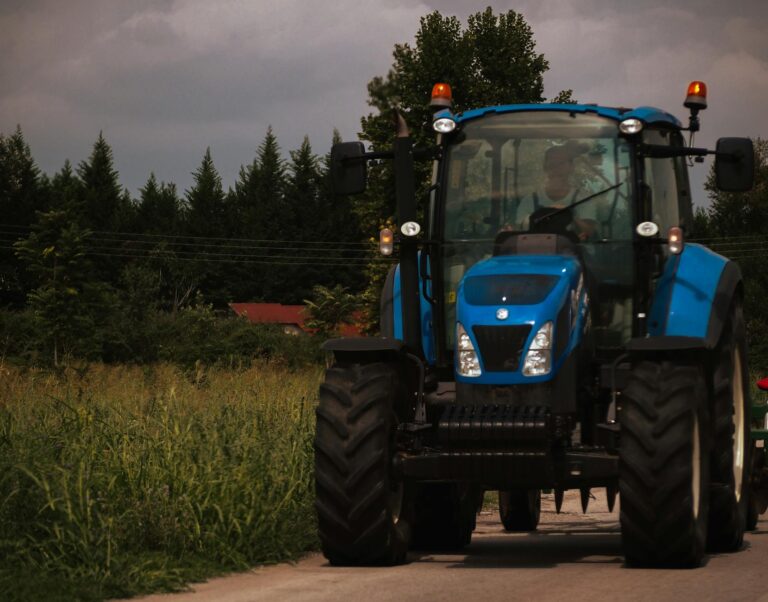
In Ireland, every agricultural tractor and self-propelled agricultural machine must be fitted with a flashing amber beacon, and it must be switched on whenever the vehicle is in use on a public road. That has been the law since 1 January 2016, and it applies regardless of the tractor’s speed, its width or the type of road. The only exception is for vintage tractors used solely for vintage rallies or display. The rule comes from the Road Traffic (Lighting of Vehicles) Regulations 1963, as amended by S.I. No. 249 of 2014 and S.I. No. 639 of 2020.
This is very different from the UK, where a beacon is only legally required in limited cases (such as slow vehicles on fast dual carriageways). If you have read a British guide that says a beacon is optional on country roads, it does not apply here. This guide explains the Irish rule in plain English, covers which vehicles must and may show amber, the mounting rules, motorways and dual carriageways, and what happens if you get it wrong.
The General Rule for Amber Beacons on Irish Roads
The rule is simple: an amber beacon must be fitted and switched on whenever a tractor or self-propelled agricultural machine is on a public road. That covers a short hop down a county road to the next field just as much as a long drive with a silage trailer.
The beacon is part of the full lighting system that Irish tractors and self-propelled machines must carry since 2016, alongside side lamps, headlamps, rear lamps, stop lamps, direction indicators and number plate lighting. That system must be in place at all times, not just during lighting-up hours. So the beacon is on in broad daylight as well as at night.
There is no speed test, no road-type test and no width test for the basic requirement. A modern 50 km/h tractor needs a beacon just as much as an older 30 km/h machine. RSA guidance puts it plainly: the beacon must be on whenever the vehicle is on a public road.
For wider context on Irish lighting law, see tractor lighting regulations.
The Legal Source: The Irish Lighting Regulations
The Road Traffic (Lighting of Vehicles) Regulations 1963 (S.I. No. 189 of 1963) are the main Irish lighting regulations. Article 52(18) deals with warning beacons. Two amendments matter for beacons:
- S.I. No. 249 of 2014, in force from 1 January 2016, added agricultural tractors and self-propelled agricultural machines to the beacon rules and made the beacon compulsory on them, switched on whenever they are on a public road.
- S.I. No. 639 of 2020, in force from 1 January 2021, replaced the blue and amber lamp rules in Article 52(18). It keeps agricultural tractors on the amber list and sets the mounting and wattage rules.
The RSA explains the rules on its lighting and visibility laws for agricultural vehicles page. RSA pages are general information rather than legal advice, so check the regulations themselves if you need the exact wording.
The beacon itself should meet the UNECE technical standard ECE R65, with ECE R10 for electromagnetic compatibility. As an EU member state, Ireland recognises E and e marked approvals from any country. See ECE R65 beacons explained for the technical detail.
Why There Is No Speed Threshold in Ireland
UK guides spend a lot of time on a 25 mph design-speed threshold. That threshold has no part in the Irish beacon rule. In Ireland, every agricultural tractor and self-propelled agricultural machine needs a beacon, whatever its design speed.
Speed does still matter for other Irish rules. Tractors first registered on or after 1 January 2016 must carry a speed disc at the rear showing the design speed in km/h (older tractors need one only if capable of more than 40 km/h). Tractors with a design speed over 40 km/h are “fast tractors”, and those used for non-exempt work such as local authority work, construction or quarrying need a CVRT test. A W licence covers tractors up to 40 km/h. None of these changes the beacon requirement.
Dual Carriageways and Motorways
Because the beacon must be on everywhere on the public road, there is no special dual carriageway rule to worry about. No tractor ban on Irish dual carriageways was found; normal rules apply, with the beacon on.
Motorways are different from the UK. Tractors are not banned from Irish motorways. The Rules of the Road lists who must not enter a motorway, including vehicles incapable of a speed of at least 50 km/h, learner permit holders, vehicles of 50 cc or less, cyclists, pedestrians and animals. A Minister confirmed in the Dáil in November 2023 that modern tractors with a design speed over 50 km/h can use motorways. The RSA says an agricultural combination must be able to keep up at least 50 km/h, and a towed trailer must also be designed for 50 km/h or more (shown on its authorisation plate and speed disc).
There has been lobbying to ban tractors from motorways, but this had not become law in the sources we checked. If a tractor does use a motorway, the beacon must be on, as on any public road.
Vehicles That Must or May Show an Amber Beacon
Irish law lists the vehicles allowed to show amber warning lamps (S.I. No. 342 of 2006 and S.I. No. 639 of 2020). For agricultural vehicles the beacon is compulsory; for the others it is permitted for their duties:
- Agricultural tractors: compulsory, switched on whenever on a public road.
- Self-propelled agricultural machines (harvesters, self-propelled sprayers, forage harvesters and similar): compulsory, switched on whenever on a public road.
- Breakdown vehicles.
- Road-clearance vehicles: snow, ice and frost clearance, hedge and verge cutting, sweeping.
- Road works vehicles.
- Local authority refuse vehicles.
- Telephone, gas and electricity vehicles: only at the scene of operations.
- Customs and Excise patrols.
Self-propelled machinery over 3.5 m wide needs an escort vehicle, flashing amber beacons and a “CAUTION, WIDE LOAD FOLLOWING” sign, according to the RSA’s weights and dimensions leaflet.
The RSA says private cars may not use amber strobes, and commercial vehicles may only fit amber lamps for a listed duty. A farm jeep or pickup is not on the list, so it should not run an amber beacon just because the tractor does. For tractor-specific fitment options, see tractor beacon lights.
Vehicles That Do Not Need a Beacon
The exemptions in Ireland are narrow:
- Vintage tractors used solely for vintage rallies or display are exempt from the beacon requirement.
- Machines working only on private land (fields, yards, farm roads that are not public roads) are outside the road rules altogether, although a beacon is still a good idea in a busy yard.
There is also a separate exemption from the full lighting system for older tractors used only in daylight (manufactured or first registered before 1 January 1980 under S.I. No. 249 of 2014, or 30 years or more according to current RSA guidance). The beacon exemption in the regulations is worded specifically for vintage tractors used for rallies or display, so if you run an older tractor on the road for farm work, fit a beacon and check the current position with the RSA.
A modern tractor doing ordinary farm work on a public road has no exemption. The beacon goes on every time.
Mounting: Where the Beacon Must Go
Since 1 January 2021, Article 52(18) (as replaced by S.I. No. 639 of 2020) sets out how an amber beacon must be mounted:
- where possible, on the roof of the vehicle, on its longitudinal (centre) axis;
- no part of the illuminated surface less than 1.27 m from the ground;
- the light-emitting area within a 230 mm square;
- amber lamps limited to 36 watts.
On a tractor, the centre of the cab roof is the natural location. On a harvester, the centre of the cab roof or a mast at the rear of the cab gives the clearest signal. The beacon should give a clear all-round warning. A beacon partly hidden by an exhaust stack, a GPS dome or a roof-mounted air conditioner is not doing its job; a second beacon on the other side of the obstruction solves that. If you are considering an amber light bar instead, check it fits within the 230 mm square and the 36 W limit. See beacon light bars for guidance.
The beacon must work when it is required to be on, which in Ireland means every road journey. A beacon that is fitted but does not flash does not meet the requirement.
Enforcement and Penalties
Beacon rules are enforced by An Garda Síochána, with RSA Vehicle Inspectors carrying out roadside roadworthiness checks, often alongside the Gardaí. No separate fixed charge was found for beacon offences, so a missing or switched-off beacon would be dealt with as a breach of the Lighting Regulations, which can mean a court appearance. Do not rely on UK fine figures; they do not apply in Ireland.
Insurance can also be affected. A claim arising from a collision involving a tractor without a working beacon may be harder to settle, because the tractor was not equipped as the law requires. Check your farm policy wording.
The most expensive penalty is rarely the fine itself. Being stopped during silage or harvest takes a tractor and driver out of the field for hours, costing far more in lost time than any penalty. A spare beacon or bulb in the cab and a quick check before leaving the yard are cheap insurance.
For a full road-legal lighting overview, see tractor road legal lights.
Best Practice for Irish Farmers
The legal minimum in Ireland is already high, but three habits make it easier to stay on the right side of it:
- Make the beacon part of the start-up routine: switch it on with the lights before you leave the yard, every time. Some operators wire a tell-tale on the dash so a dead beacon is obvious.
- Keep a spare: a beacon that fails mid-season leaves a tractor that should not be on the road. A spare magnetic or DIN-pole beacon in the shed gets you going again in minutes.
- Use it in gateways and junctions too: oncoming and following traffic spots the tractor sooner when the amber flash is on, particularly on bends and narrow local roads in winter.
A modern LED beacon costs roughly €70 to €175 and lasts 30,000 to 50,000 hours, and LED units sit comfortably within the 36 W limit. For a tractor that has to run its beacon on every road trip, that long life matters. Fitting a quality LED beacon on every tractor in the yard costs less than one lost afternoon at silage.
For the full warning lights range and fitment support, see Agri Lighting directly. We ship to the Republic of Ireland from Lincolnshire, with free delivery on orders over €150.