LED Headlamp Conversions in Ireland: Upgrading from Halogen to LED
In this guide
- What an LED Headlamp Conversion Means
- Two Conversion Paths: Retrofit Bulb or Full Lamp Unit
- Are LED Headlamp Conversions Legal in Ireland?
- Mechanical and Electrical Fit
- Beam Pattern and Cut-Off
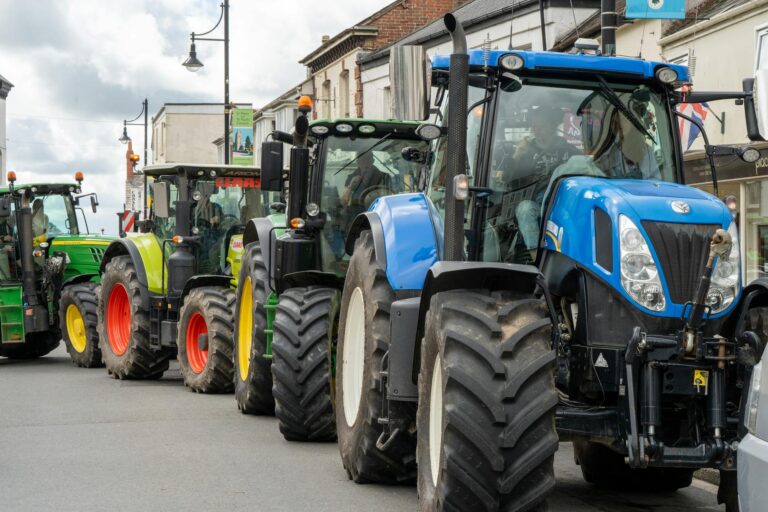
- H4, H7 and H1 LED Conversions for Tractors
- Cost, Output and Lifespan
- How to Convert a Tractor Headlamp Step by Step
- LED Headlamp Conversion Summary
An LED headlamp conversion replaces a tungsten halogen bulb with a light-emitting diode equivalent inside an existing headlamp body, or replaces the headlamp body itself with a factory LED unit. LED bulbs are sold on claims of much higher lumen output, lower power draw and far longer life than halogen. The catch in Ireland is that RSA guidance says LED bulbs are legal only if they are type-approved, fitted to a compatible vehicle and do not dazzle, and an unapproved or incompatible retrofit is an NCT failure on a car. Ordinary tractors (design speed 40 km/h or less) do not take a periodic test, so nobody checks the headlamps every year, but a tractor on a public road must still be roadworthy and its lamps must not dazzle. A retrofit LED bulb in a halogen reflector is still fitted in large numbers on Irish farms, so it is worth knowing where you stand.
This guide explains what counts as a conversion, what works mechanically, what Irish rules and RSA guidance say, and how to convert an H4 or H7 tractor headlamp without losing the beam pattern.
What an LED Headlamp Conversion Means
An LED headlamp conversion is any change that swaps the halogen light source in a vehicle’s main forward-facing lamp for an LED light source. The change can be made at the bulb level (a drop-in LED with the same H-code base) or at the lamp level (a complete LED headlamp body designed to LED specification from new).
A halogen H4 or H7 bulb produces light by heating a tungsten filament until it glows white. The reflector and lens around the bulb are designed for that single-point light source, with a precise filament position and beam pattern. An LED bulb produces light from one or more semiconductor dies on a flat substrate. The light emission pattern, the heat dissipation requirements and the thermal mass are all different from a halogen filament.
A successful LED conversion has to do three things: produce a usable beam in the original reflector, manage its own heat without melting the lamp body, and deliver enough output to justify the swap. Cheap retrofit bulbs often fail at the first hurdle. Better-quality kits get all three right but still sit outside the headlamp’s original ECE type approval.
Two Conversion Paths: Retrofit Bulb or Full Lamp Unit
Two distinct paths exist for fitting LED forward lighting to a tractor or agricultural vehicle: an LED retrofit bulb in a halogen reflector, or a complete LED headlamp unit.
Retrofit bulb path. An LED bulb with a matching H-code base (H4, H7, H1, H3, H11) plugs into the existing halogen lamp body. The bulb has its own driver electronics and a fan or finned heatsink to manage heat. Cost is roughly €30 to €105 per bulb. Installation takes 10 to 30 minutes. The original lamp body, lens and wiring all stay in place.
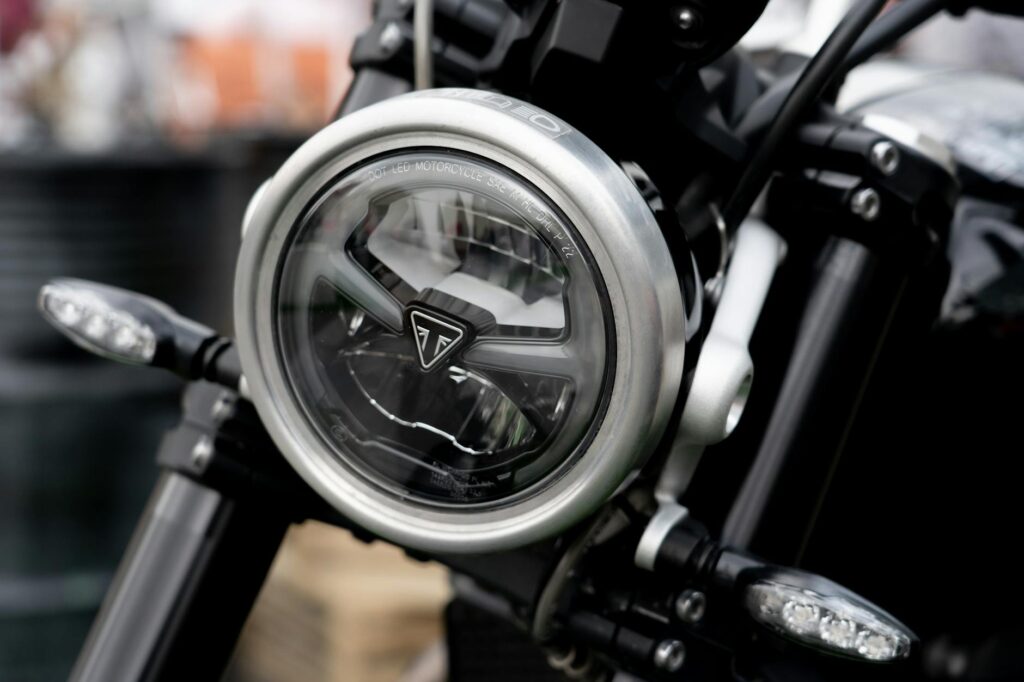
Full unit path. The complete halogen headlamp body is removed and replaced with a purpose-built LED headlamp. The replacement unit holds an integrated LED light engine, a designed-for-LED reflector or projector, and a dedicated driver. Cost is roughly €105 to €700 per unit for popular ag fitments such as approved 7-inch round and rectangular LED headlamp units from the major lighting brands. Installation may need a wiring adapter or a CAN bus bypass.
The retrofit bulb path is fast, cheap and reversible. The full unit path is more expensive, more involved, and almost always road legal because the new unit holds its own ECE approval and carries an E or e mark.
Are LED Headlamp Conversions Legal in Ireland?
Vehicle lighting in Ireland is governed by the Road Traffic (Lighting of Vehicles) Regulations 1963 (S.I. No. 189 of 1963), as amended, alongside EU type-approval rules. For headlamps and bulbs, the approval framework comes from the UNECE regulations (R37 for filament bulbs, R98 for HID headlamps, R112 for halogen and LED headlamps, R128 for LED light sources, and R149 on newer approvals).
A halogen headlamp is approved as a lamp (under ECE R112, or older R1, R8 or R20, and now R149) for use with a specified filament bulb approved under ECE R37. The approval covers the specific filament position, wattage and beam pattern. Replacing the bulb with an LED of the same H-code does not carry that approval over to the new light source.
The RSA’s guidance on retrofit HID and LED bulbs makes three points:
- Retrofit HID or LED bulbs are not always compatible with the vehicle or the headlamp.
- LED bulbs are legal only if they are type-approved, fitted to a compatible vehicle, and the beam does not dazzle.
- A car fails the NCT if it has an approved kit on an incompatible vehicle, an unapproved kit, or HID bulbs retrofitted into ordinary halogen headlamps.
The NCT applies to cars, and the CVRT to commercial vehicles. Ordinary tractors with a design speed of 40 km/h or less do not need a periodic roadworthiness test. Fast tractors (design speed over 40 km/h) need a CVRT test and a Certificate of Roadworthiness only if they are used for non-exempt work such as local authority work, construction or quarrying. Normal farming use is exempt.
No test does not mean no rules. A tractor on a public road must be roadworthy at all times, and the 1963 Regulations (Article 48) say no lamp may be fitted that is capable of dazzling or misleading other road users. A cheap retrofit that throws light above the cut-off into oncoming traffic is exactly what that rule is aimed at. Enforcement falls to the Gardaí and to RSA Vehicle Inspectors at roadside checks. Prosecutions specifically for LED retrofit bulbs in tractor headlamps are rare, but an unapproved retrofit in a halogen reflector does not meet RSA guidance, and the Rules of the Road advises telling your insurer about lighting changes.
A full LED headlamp unit holds its own ECE headlamp type approval (R112, or R149 on newer approvals) and is road legal on any vehicle for which it is sold. For a tractor that uses Irish roads, the cleanest answer is a complete approved LED unit, not a bulb retrofit. See the RSA guidance on HID and LED lights for the official wording.
For a wider treatment of lighting law, see tractor lighting regulations.
Mechanical and Electrical Fit
LED retrofit bulbs need to fit the lamp body, sit in the right filament position, and play nicely with the vehicle’s electrical system. Three areas cause most fitment failures.
Physical clearance. An LED bulb has a heatsink or fan behind the base that does not exist on a halogen. The heatsink can foul on the headlamp dust cover or on the reflector wall. Measure the depth from the rear of the lamp body to the inside of the dust cover before ordering, and check the LED bulb specifications against that depth. Typical H4 and H7 LED retrofit depths run 50 to 80 mm from the base flange.
Filament position. The LED chip must sit at the same axial point where the halogen filament would have been, otherwise the beam pattern shifts. Quality kits position the LED dies precisely; cheap kits do not. Even a small shift in chip position can move the cut-off line noticeably, which puts dipped beam onto oncoming drivers.
Electrical compatibility. Older tractors run a simple 12V or 24V supply with no electronic monitoring. LED retrofits drop in cleanly. Newer tractors with CAN bus electrical systems may flag a “bulb out” warning because LED draw is too low for the bulb-monitoring circuit to detect. A CAN bus decoder or load resistor (50W, 6 ohm) cures the warning.
Polarity. Some LED bulbs are polarity-sensitive and need to be plugged in one way round. If the bulb stays dark on first try, reverse the connector and try again.
For 24V agricultural fitments, only buy LED retrofits rated 12V to 24V multivoltage or 24V specifically. A 12V-only LED in a 24V circuit burns out instantly.
Beam Pattern and Cut-Off
Beam pattern is the most-overlooked factor in LED conversions, and it is the factor that decides whether the lamp dazzles. A halogen reflector or projector is designed around the geometry of the halogen filament. An LED chip array is not the same shape, and that changes how light reflects off the reflector wall.
A correctly designed H4 or H7 LED retrofit bulb places its LED chips on a flat plane that matches the cylindrical projection of the original filament, with the same axial offset for dipped beam shielding. The beam pattern stays close to the original. A poorly designed bulb scatters light upward into oncoming traffic and forward into a glaring hot spot directly in front of the vehicle.
Two checks reveal bulb quality before purchase. First, look for anti-glare or OEM beam pattern claims backed by side-by-side beam pattern photos in the listing. Second, treat any claim of ECE or DOT approval on a retrofit H4 or H7 LED bulb with caution, and ask the seller for the approval certificate. A retrofit bulb without beam pattern evidence is almost always poorly patterned.
After fitting, aim the headlamp on a wall at 10 m to confirm the cut-off line sits where it should: typically 1 to 2 percent below the lamp centre height (about 100 to 200 mm at 10 m, or the maker’s figure), no light cast above the cut-off, and no scatter to the right of centre (Ireland drives on the left, so the kick-up of the beam should be to the left).
H4, H7 and H1 LED Conversions for Tractors
Most tractors built between 1985 and 2010 use H4 or H7 dipped beam, with H1 or H3 in fog and auxiliary positions. Each code has a different conversion profile.
H4 LED. Dual-filament conversions are the trickiest because one LED bulb has to deliver both dipped and main beam. A good H4 LED uses two stacked LED chip groups: lower chips for main beam, upper chips for dipped beam, with a small shield between them to mimic the halogen dip filament cap. Packaging often claims 4,000 to 8,000 lumens combined, but the usable output in a halogen reflector is usually much lower. Best for older British and European tractors with original H4 reflectors that still have clean lenses.
H7 LED. Single-filament conversions are easier to engineer because the LED chips replace one filament, not two. Packaging often claims 5,000 to 12,000 lumens per bulb, but real output in the reflector is usually much lower. Modern tractors with twin-bulb headlamps (one H7 dip, one H7 main) benefit most because each LED replaces a single function. Many newer Fendts, John Deeres and Case IH machines built after 2000 fall into this category.
H1 and H3 LED. Simpler again because these are mostly used in auxiliary lamps where beam pattern is less critical. A 4,000 to 6,000 lumen LED H1 in a driving lamp or auxiliary main beam works well. H3 LED retrofits in fog lamps are less successful because fog lamp beam patterns are tighter and harder to replicate.
For a tractor-by-tractor fitment list, see the tractor light fitment guide.
Cost, Output and Lifespan
LED retrofit bulbs cost more than halogen up front but pay back over the operating life. The five-year cost picture is decisive on any vehicle that runs more than 200 hours per year on lights. Euro figures below are approximate.
| Item | Halogen H7 (5 years) | LED H7 retrofit (5 years) |
|---|---|---|
| Initial cost (pair) | €19 | €95 |
| Replacement bulbs | €57 (3 sets) | €0 |
| Energy used | 290 kWh | 60 kWh |
| Estimated downtime | €70 | €0 |
| 5-year total | €146 | €95 |
| Output (per pair) | 3,000 lm | 8,000 to 16,000 lm claimed (real output usually lower) |
| Lifespan | 800 hours | 30,000+ hours |
The maths shifts further in favour of LED on tractors that work harvest, silage and winter jobs with lights on most of the day. A combine running 12 hours a day for a 30-day harvest sees 360 hours per season, which means halogen replacement annually but LED replacement once every 80 years on paper.
For purchase, see the LED headlamp range at Agri Lighting, including complete LED headlamp units. Orders ship from Lincolnshire, with free delivery to Ireland on orders over €150.
How to Convert a Tractor Headlamp Step by Step
A typical H4 or H7 LED retrofit takes 15 to 30 minutes per side on a tractor. The process is the same across most makes.
- Park the tractor on a level surface and switch off the master battery isolator.
- Open the bonnet or remove the engine cover to access the rear of the headlamp.
- Pull off the rubber dust cover at the back of the lamp.
- Disconnect the bulb connector by squeezing the release tab and pulling straight back.
- Release the spring clip or twist-lock retainer holding the bulb in the reflector.
- Remove the halogen bulb. Avoid touching the glass with bare fingers if it is a fresh bulb you are saving.
- Fit the LED bulb into the same socket. Match the orientation tabs.
- Refit the spring clip or twist-lock retainer.
- Plug the connector onto the LED driver.
- If the LED bulb has a separate driver box, fix it with the supplied tape or bracket somewhere clear of the engine heat.
- Refit the dust cover. Some LED bulbs need a flexible rubber boot supplied with the kit, because the heatsink protrudes too far for the original cover.
- Reconnect the battery and switch the headlights on.
- Aim the beam against a wall at 10 m. Adjust the headlamp height screws until the cut-off line sits about 1 to 2 percent below the lamp centre height (roughly 100 to 200 mm at 10 m), or to the maker’s figure.
- Repeat on the other side.
Two final checks: verify the high beam works as well as dipped, and verify there is no flickering at idle. Flickering at idle usually means a CAN bus issue (load resistor needed) or a marginal earth.
For a wider electrical context, see LED vs halogen tractor lights and the halogen to LED upgrade guide.
LED Headlamp Conversion Summary
LED headlamp conversion sits between two clear poles. A retrofit LED bulb in a halogen reflector is fast, cheap and effective for off-road and farm use, but it does not meet RSA guidance for road use: on a car it fails the NCT, and on a tractor it is still not an approved headlamp even though no periodic test checks it. A complete LED headlamp unit is more expensive but holds its own ECE type approval and stays road legal. For a working tractor in 2026, the right answer depends on road usage. A machine that never uses a public road can take a retrofit. Any machine that goes on the road, and especially a contractor’s machine on national and regional roads several times a week, should have the full unit. For fitment advice, call +44 1522 440522 or email [email protected].
For halogen bulb identification before conversion, see halogen headlamp bulb types.