Amber Flashing Beacon on a Dual Carriageway in Ireland: Which Vehicles?
In this guide
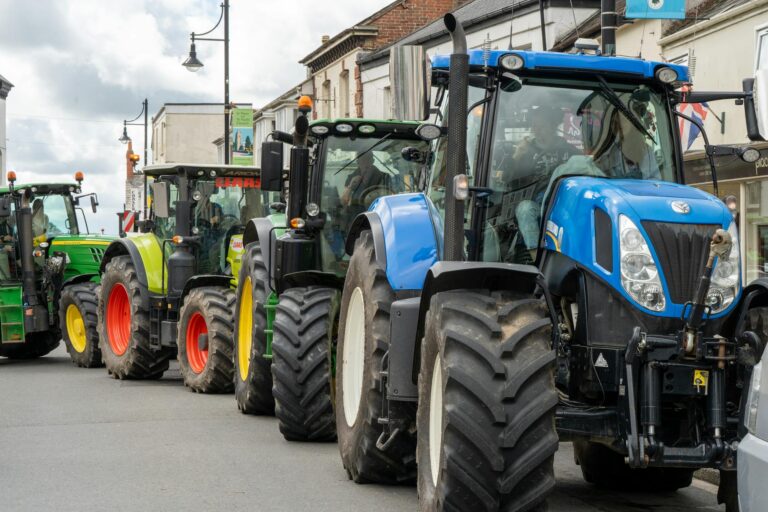
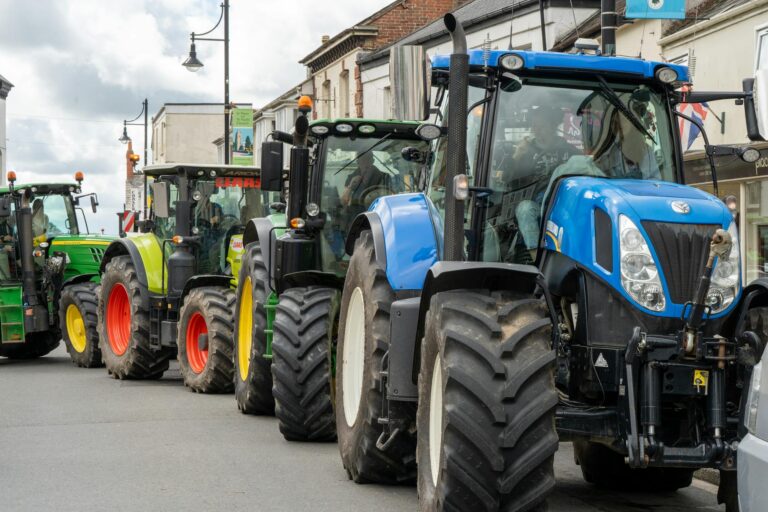
A vehicle showing an amber flashing beacon on an Irish dual carriageway is usually a tractor or self-propelled farm machine, or a working vehicle such as a gritter, road works lorry or breakdown truck. In Ireland every agricultural tractor and self-propelled agricultural machine must have an amber beacon fitted and switched on whenever it is on a public road, so you will see them on dual carriageways, national roads and county roads alike. Expect to close on them quickly.
Irish rules here are quite different from the UK, where the beacon is only compulsory for slow vehicles on fast dual carriageways. Below is what the Irish law says, which vehicles may show an amber beacon, and what to do when you come up behind one.
What type of vehicle uses an amber flashing beacon on a dual carriageway?
In Ireland, only certain vehicles are allowed to show an amber warning beacon at all. If you see one on a dual carriageway, it will usually be a slow or working vehicle.
Vehicles you may see with an amber beacon on an Irish dual carriageway:
- Agricultural tractors, with or without trailers, slurry tankers or other towed equipment
- Combine harvesters, self-propelled sprayers and forage harvesters moving between fields during silage or harvest
- Road clearance vehicles, such as gritters, snow ploughs, sweepers and hedge and verge cutters
- Road works vehicles and local authority refuse vehicles
- Breakdown and recovery vehicles
- Telephone, gas and electricity vehicles, but only at the scene of their work
What does it mean when a moving vehicle is showing a flashing amber beacon?
It is a warning that the vehicle may be moving slowly, stopping, turning or working on the road, so approach with caution. It is not an emergency vehicle. Emergency vehicles in Ireland use blue lamps, and you do not need to pull over for an amber beacon.
What does the Irish law say?
Vehicle lighting in Ireland is governed by the Road Traffic (Lighting of Vehicles) Regulations 1963 (S.I. No. 189 of 1963), as amended. The big change for farm vehicles came with the Road Traffic (Lighting of Vehicles) (Amendment) Regulations 2014 (S.I. No. 249 of 2014), in force since 1 January 2016.
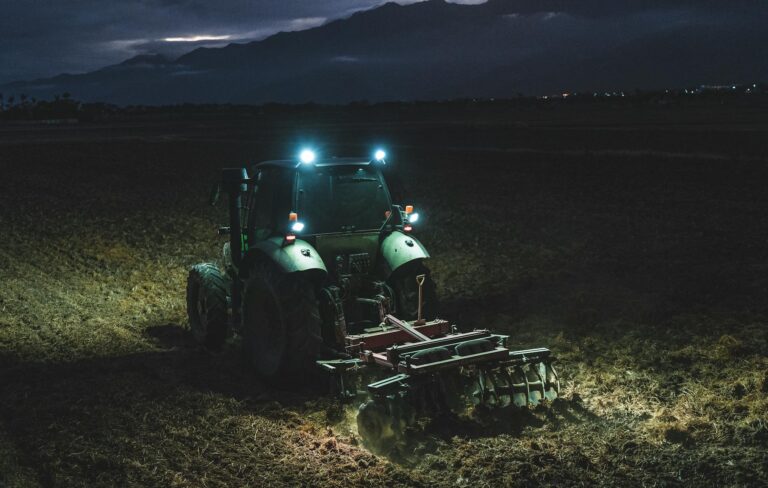
Since that date, every agricultural tractor and self-propelled agricultural machine must be fitted with a flashing amber beacon, and it must be switched on whenever the vehicle is in use on a public road. This applies regardless of the vehicle’s speed, its width or the type of road. The rule was kept when the blue and amber lamp rules were replaced by S.I. No. 639 of 2020. RSA guidance on lighting and visibility laws for agricultural vehicles says the same in plain English.
| Point | What the rule says | Source |
|---|---|---|
| Which vehicles | Every agricultural tractor and self-propelled agricultural machine | S.I. 249/2014; S.I. 639/2020 |
| Which roads | All public roads, not only dual carriageways | S.I. 249/2014; RSA |
| Must it be on? | Yes, switched on whenever the vehicle is in use on a public road | S.I. 249/2014; RSA |
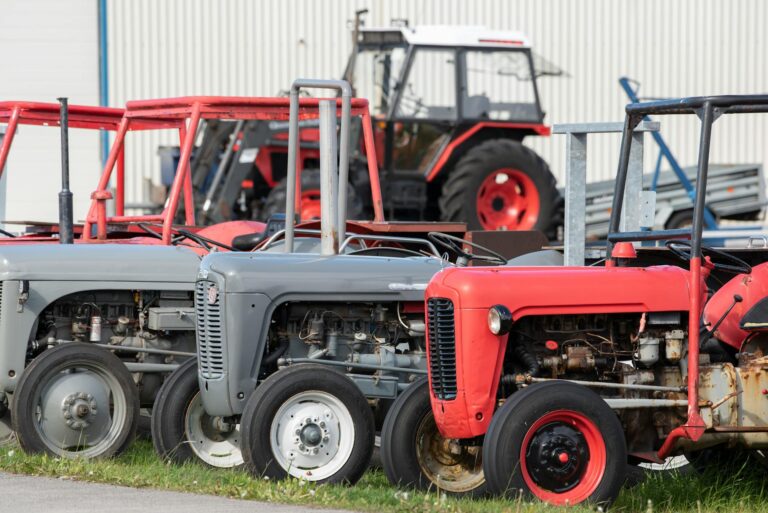
| Exemptions | Vintage tractors used solely for vintage rallies or display | S.I. 249/2014; S.I. 639/2020 |
| Mounting | Where possible on the roof, on the centre line of the vehicle; no part of the lit surface less than 1.27 m from the ground | Art. 52(18), as replaced in 2020 |
| Lamp limits | Light-emitting area within a 230 mm square; amber lamps no more than 36 watts | Art. 52(18), as replaced in 2020 |
Does the rule apply on all dual carriageways?
Yes, and on every other public road too. Ireland has no special dual carriageway beacon rule like the UK’s. The beacon must be on whenever a tractor or self-propelled machine is on a public road, whether that is a dual carriageway, a national primary road or a narrow county road. There is no tractor ban on dual carriageways, so normal rules apply with the beacon on.
How is this different from the UK rule?
Many drivers know the UK theory test answer: in Great Britain, a vehicle with a maximum speed of 25 mph or less must show an amber beacon on a dual carriageway with a speed limit over 50 mph, and the beacon is otherwise optional. None of that applies in Ireland. Here:
- The beacon is compulsory on every tractor and self-propelled agricultural machine, not just slow ones.
- It must be on on every public road, not only fast dual carriageways.
- There is no speed threshold. A 50 km/h fast tractor needs a beacon just as much as a 40 km/h one.
Speed still matters for following drivers. Most tractors have a design speed of 40 km/h, and the general limit for any vehicle towing a trailer or other attachment is 80 km/h under the Rules of the Road. On a 100 km/h dual carriageway a car closes on a 40 km/h tractor at 60 km/h, which is over 16 metres every second. The beacon gives drivers behind the early warning they need to slow down and change lanes in good time.
Can tractors use Irish motorways?
Tractors are not banned from Irish motorways as they are in the UK. The Rules of the Road bars vehicles that cannot reach at least 50 km/h, so a standard 40 km/h tractor cannot go on, but a modern tractor and trailer combination designed for 50 km/h or more can. If you do, the beacon must be on, as on any other public road.
What should you do when you see one?
Treat an amber beacon on a dual carriageway as a vehicle you will reach far sooner than you expect.
- Check your speed and mirrors early. Judge the closing speed, not just the distance.
- Move to the right-hand lane in good time if it is clear, rather than braking hard at the last moment.
- Watch for wide machines. Combines, flotation tyres and wide implements can come close to the lane line or over it. Self-propelled machines over 3.5 m wide must travel with an escort vehicle.
- Expect slip road and gap movements. Tractors often join, leave or cross the carriageway at farm gaps and minor junctions.
- Do not stop or pull onto the hard shoulder as you might for an emergency vehicle.
Advice for tractor drivers on dual carriageways
Check the beacon works before you leave the yard, and switch it on before you pull out onto any public road, not just the dual carriageway. Make sure it can be seen: a high bale trailer or a tall load can hide a cab-mounted beacon from drivers behind. A second beacon on the trailer, or a magnetic beacon on the rear of the load, helps with that. Remember the rest of the full lighting system (headlamps, side and rear lamps, stop lamps, indicators and number plate lighting) must be fitted and working at all times too, not just during lighting-up hours. Browse our amber tractor beacons or the full tractor beacons range.
For the full meaning of amber beacons on any road, see our guide to amber beacon meaning. To compare amber with blue and the other colours, see beacon colours explained. For more on beacon rules for farm vehicles, see when amber beacons are required on tractors.
Frequently asked questions
Which vehicles must use a flashing amber beacon on a dual carriageway in Ireland?
Every agricultural tractor and self-propelled agricultural machine must have an amber beacon fitted and switched on whenever it is on a public road, including dual carriageways. The only exception is vintage tractors used solely for rallies or display. Other vehicles such as gritters, road works and breakdown vehicles may also use amber beacons for their duties.
Should a flashing amber beacon be used on all dual carriageways?
For tractors and self-propelled farm machines, yes. Irish law requires the beacon to be on on every public road, whatever the speed limit. There is no separate dual carriageway rule as there is in the UK.
Does a tractor crossing a dual carriageway need a beacon?
Yes. In Ireland the beacon must be on whenever the tractor is in use on a public road, so it should be on while crossing, as it should be on the farm roads and county roads either side.
Can the beacon be on the trailer instead of the tractor?
The Irish rule requires the beacon on the tractor or self-propelled machine itself, mounted on the roof on the centre line where possible. You can add an extra beacon on a trailer or load so it can be seen from behind, but it does not replace the one on the tractor.