Hazard Warning Flashers: How They Work and the Rules in Ireland
In this guide
A hazard warning flasher is the amber indicator system on a road-going vehicle that flashes all four corners at the same time to warn other road users that the vehicle is stationary, broken down, or temporarily obstructing traffic. In Ireland direction indicators are part of the obligatory lighting system on every agricultural tractor and self-propelled agricultural machine, and on agricultural trailers, so the indicators the hazard system depends on must be fitted and working. Trailers have no hazard switch of their own; their indicators flash with the towing vehicle. The system shares its bulbs and flasher relay with the direction indicators, switched by a separate dashboard control that overrides the indicator stalk and lights all four lamps in phase. This article covers what a hazard warning flasher does, the Irish position on use, the situations where the system is appropriate, the situations where it is not, the electrical sharing with the direction indicator circuit, the tractor and trailer fitment, and the common faults that take the system out of action.
What a Hazard Warning Flasher Does
A hazard warning flasher uses the same amber indicator lamps as the direction indicator system, but switches all four corners on at the same time, in phase, to signal that the vehicle is stationary and presents a hazard to other road users. The driver activates the hazard system through a dedicated dashboard switch (usually a red triangle icon) that overrides the steering column stalk.
The system differs from the direction indicator in four ways.
- All four lamps flash together. The indicator switches one side at a time; the hazard switches all four corners.
- Switched by a dashboard button, not by the steering stalk. The dedicated button locks on until pressed again to release.
- Operates with the ignition off. Hazard warning works without the engine running and without ignition, drawing current straight from the battery so the warning continues after a breakdown.
- Carries a separate audible click. Most hazard relays click at a slightly higher pitch than the indicator relay, and on many vehicles a louder dashboard buzzer signals operation.
Modern cars, vans and tractors leave the factory with a hazard switch as part of their type-approved lighting installation. The lamps themselves and the bulbs in them are the same units as the direction indicators.
For the wider context on direction indicators, see Flasher Lamps and Indicators: How They Work and Common Faults.
Irish Rules on Hazard Warning Lights
Vehicle lighting in Ireland is governed by the Road Traffic (Lighting of Vehicles) Regulations 1963, as amended, and the RSA publishes driving guidance in the Rules of the Road. UK guides quote UK rules on hazard lights, which do not apply in Ireland, so check the current Rules of the Road for the RSA’s own wording on when hazard warning lights may be used.
Three points are clear from the Irish rules we rely on.
- The indicators must be there. Direction indicators are obligatory on every tractor and self-propelled agricultural machine since 1 January 2016, and on agricultural trailers and interchangeable towed equipment. A hazard system with a dead corner usually means a dead indicator, and missing prescribed lamps carry a €60 fixed charge.
- Lamps must not mislead. Article 48 of the 1963 Regulations bans any lamp capable of misleading other traffic. Hazards used while driving along in normal traffic tell other drivers you are stopped when you are not, which is exactly that kind of confusion.
- Misuse is a general lighting offence. No specific fixed charge for hazard light misuse was found, so it would be dealt with as a contravention of the Lighting Regulations or as part of a wider driving offence. We do not quote a fine amount for it.
The same approach applies to cars, vans, lorries, tractors and agricultural trailers on a public road. On private farm roads and in the yard the road rules do not apply in the same way, but the safety reasons still do.
For the wider lighting law framework, see tractor lighting regulations: what farmers need to know.
When You Should Use Hazard Lights
Hazard warning lights are for situations where the vehicle is stationary or presents a temporary obstruction. The system is designed for short-term warning, not for long-term parking or as a substitute for proper signalling. Good practice covers four situations.
- Breakdown on a public road. Switch on the hazards immediately after stopping, especially on a fast road, to warn following traffic of the stopped vehicle.
- Temporary obstruction during loading or unloading. Most often used by delivery drivers, post vans, and farm vehicles unloading at a roadside or in a lay-by.
- Stopped traffic ahead on a motorway or dual carriageway. Drivers often switch on the hazards briefly to warn following traffic, then switch off once the warning has been seen. Check the current Rules of the Road for the RSA’s guidance on this.
- Awaiting recovery after a collision. Keep the hazards on while waiting for the Gardaí, recovery, or breakdown services. Other road users need clear notice that the vehicle is out of action.
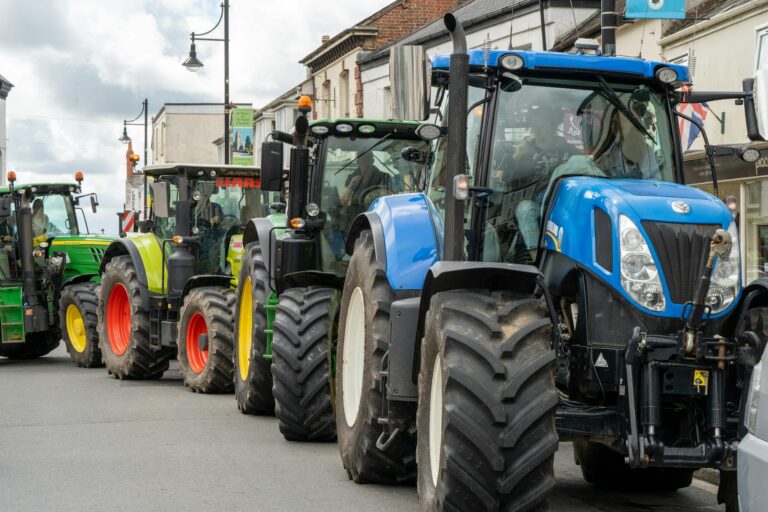
Slow tractors and wide implements on the move are not a reason for hazards. The correct warning for a tractor or self-propelled machine on an Irish road is the amber beacon, which must be fitted and switched on whenever the vehicle is on a public road. Self-propelled machinery over 3.5 m wide also needs an escort vehicle, flashing amber beacons and a “CAUTION, WIDE LOAD FOLLOWING” sign.
When You Should Not Use Hazard Lights
Hazard warning lights are inappropriate in five common situations where drivers regularly misuse them. The misuse confuses other road users and reduces the urgency value of the system when it is needed.
- As a substitute for proper indicators. Hazard lights do not signal direction. A driver pulling in to the left must use the left indicator, not the hazards.
- To excuse illegal parking. Hazard lights do not make parking on double yellow lines, footpaths or bus stops legal.
- In heavy rain, fog, or spray. Hazards mask the indicator signal that would otherwise warn following drivers of a turn or a lane change. Use dipped headlights, and rear fog lamps only in dense fog or falling snow, as the Rules of the Road says.
- While driving in normal traffic. Hazards on a moving vehicle tell other drivers you are stopped, which misleads them and can contribute to a collision.
- Instead of the beacon on a tractor. In Ireland the amber beacon, not the hazards, is the legal warning for a tractor on the move, and it must be on for every road journey.
The point of restraint is the value of the system. A warning that signals only “stationary hazard ahead” loses its meaning if it appears every time the driver brushes the switch. Reserving the lamps for true stops keeps the signal clear.
How the Hazard Circuit Shares the Flasher Relay
The hazard warning circuit shares the same four amber lamps and the same flasher relay as the direction indicator system, but uses a separate switch and a separate power feed that operates with the ignition off. The shared hardware reduces parts count and simplifies wiring on every road vehicle.
Four shared and separate components define the circuit.
- Shared lamps. The same four amber lamps (front and rear on each side) are used by both systems. No vehicle carries a dedicated hazard lamp separate from the indicators.
- Shared bulbs. The same P21W, PY21W, or W21W bulbs work for both functions. A failed indicator bulb fails the hazard lamp on the same corner.
- Shared flasher relay. The same relay pulses the circuit at 60 to 120 flashes per minute under both indicator and hazard operation. A failed relay disables both functions.
- Separate switch and feed. The hazard switch is wired directly to the battery through its own fuse, so the system operates with the ignition off. The indicator stalk is wired through the ignition switch and works only with the ignition on.
The shared flasher relay means LED bulb upgrades affect both functions in the same way. Fitting LED bulbs without a load resistor or an electronic relay gives a fast flash (hyperflash) on an electronic flasher, or a slow or absent flash on an older thermal flasher, on both indicator and hazard operation. For the fix, see the LED section of Flasher Lamps and Indicators.
The separate power feed has a practical implication: a hazard warning system left on after engine stop continues to draw current from the battery. A typical filament hazard system draws around 7 amps while the four lamps are lit (about half that on average as they flash), so it can flatten a healthy battery overnight. LED hazard lamps draw far less and last much longer.
Tractor and Trailer Hazard Warning Fitment
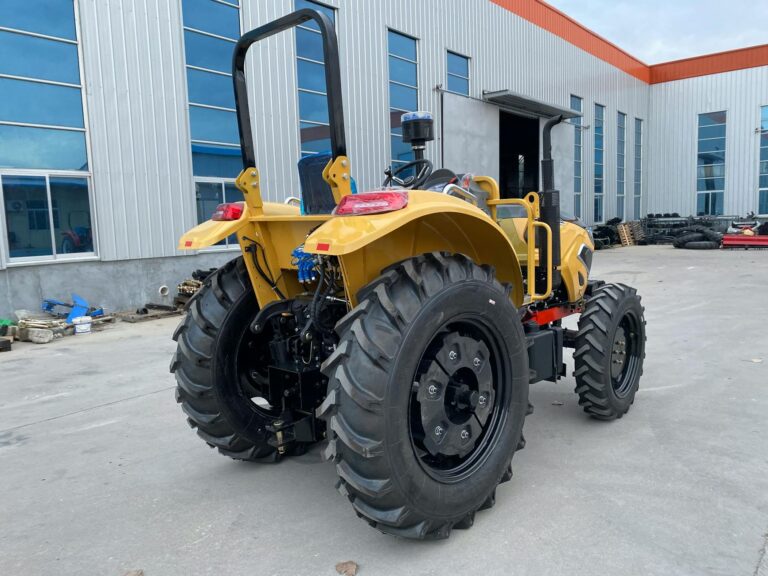
Hazard warning fitment on tractors and trailers works the same way as on a car, with practical differences in the position and the wiring. In Ireland every tractor and self-propelled agricultural machine must have direction indicators, and agricultural trailers must have them too, so any trailer flashes with the tractor through the trailer plug.
Three differences from car fitment apply.
- Switch position. The tractor hazard switch sits on the dashboard cluster, on the right-hand side console, or on the steering column. The icon is the same red triangle symbol as on a car.
- Trailer wiring. The trailer plug (7-pin 12N or 13-pin Jaeger) carries the left and right indicator feeds. The hazard signal goes down both feeds simultaneously, so the trailer rear lamps flash with the tractor lamps without any separate trailer circuit.
- Implement and load width. Towed equipment that hides the tractor’s lamps needs a lighting board, and the indicators on the board flash with the hazards through the same plug. Side marker lamps on combinations over 10 m are separate and are not part of the hazard system.
A trailer left coupled to a parked tractor uses the same hazard system. The tractor hazard switch lights the trailer lamps through the trailer plug, drawing current from the tractor battery. Trailers stored uncoupled do not carry a hazard system because there is no battery on the trailer.
For trailer-specific lighting law, see Agricultural Trailer Lighting Requirements.
Common Hazard Warning Faults and Fixes
Hazard warning faults fall into five common patterns, and most overlap with direction indicator faults because the two systems share hardware. The starting point is always the indicator function, because a working indicator usually means the bulbs and the flasher relay are fine.
- Indicators work, hazards do not. Cause: failed hazard switch or open circuit in the dedicated hazard feed. Fix: test the switch with a multimeter, then trace the feed to the relay.
- Hazards work, indicators do not. Cause: failed direction indicator switch on the steering column. Fix: replace the column switch.
- Both work but only on one side. Cause: failed bulb on the dead side. Fix: replace the bulb, check the holder for corrosion.
- Both work but flash too fast. Cause: a failed bulb, or an LED bulb upgrade without compensation on an electronic flasher. Fix: replace the failed bulb, or fit load resistors or an LED-compatible electronic flasher unit.
- Hazards switch on by themselves. Cause: failed switch contact stuck closed, water in the switch, or shorted wiring near the switch. Fix: replace the switch, dry the wiring, check for chafed insulation.
A working hazard warning system clicks audibly with every flash and lights all four corners in phase. The fastest diagnostic is a walk-around with the hazards on: any corner that does not flash points to a bulb or holder fault on that corner. On a car or van, a dead indicator is a failure item at the NCT or CVRT, and on a tractor it is a missing prescribed lamp.
For wider electrical fault diagnosis on agricultural vehicles, see How to Troubleshoot Tractor Lighting Problems.
Frequently Asked Questions
When should I use hazard lights?
When the vehicle is stationary and presents a temporary obstruction or hazard, such as a breakdown, a roadside stop to load or unload, or while waiting for recovery. Check the current Rules of the Road for the RSA’s guidance on brief use on motorways and dual carriageways.
Is it illegal to use hazard lights when driving?
Using hazards on a moving vehicle in normal traffic misleads other drivers, and the 1963 Lighting Regulations ban lamps capable of misleading other traffic. Keep them for when you are stopped, and on a tractor use the amber beacon, which must be on whenever you are on a public road.
Do hazard lights drain the battery?
Yes. Filament hazard lamps draw around 7 amps while lit and can flatten a healthy battery overnight. LED hazard lamps draw far less and last much longer.
Why are my hazard lights not working?
The most common causes are a failed hazard switch, a blown hazard fuse, or a failed flasher relay. If indicators still work, the fault sits in the dedicated hazard switch or feed.
Can I be fined for misusing hazard lights?
No specific fixed charge for hazard light misuse was found in the Irish fixed charge rules. Misuse could still be dealt with as a breach of the Lighting Regulations or as part of a wider driving offence, so we do not quote a figure. A tractor or trailer with missing prescribed lamps, such as a dead indicator, can get a €60 fixed charge.