Licence Plate Lights in Ireland: Rules, Replacement and LED Upgrades
In this guide
- What a Licence Plate Light Does
- Irish Rules for Number Plate Lights
- Bulb Types and Fitment
- Replacing a Licence Plate Bulb
- LED Number Plate Light Upgrades
- Are LED Number Plate Lights Legal in Ireland
- Number Plate Lights and the NCT and CVRT
- Fitment on Tractors and Agricultural Trailers
- Troubleshooting a Licence Plate Light That Does Not Work
- Choosing the Right Licence Plate Light
What a Licence Plate Light Does
A licence plate light illuminates the rear registration plate so that it can be read at night. The lamp shines white onto the surface of the plate, not directly toward following drivers, and reflects off the plate’s retroreflective coating. The combined effect makes the registration number legible to following vehicles, Garda cameras, and toll and parking systems after dark.
The licence plate light goes by several names: number plate light, number plate lamp, plate light, registration plate lamp. In Irish law the term is “identification mark lighting”, which is the wording used in the Road Traffic (Lighting of Vehicles) Regulations 1963. Each name refers to the same component: the white lamp mounted above or beside the rear plate.
A licence plate light is a passive component. It does not flash, it does not change colour, and it does not signal to other road users. It exists purely to keep the registration plate readable. The lamp wires to the same circuit as the rear sidelights, so it comes on whenever the operator switches on dipped beam, main beam, or parking lights.
Irish Rules for Number Plate Lights
The Road Traffic (Lighting of Vehicles) Regulations 1963 (S.I. No. 189 of 1963), as amended, require vehicles and trailers to be equipped with identification mark lighting. On farm vehicles, the 2014 amendment (S.I. No. 249 of 2014), in force since 1 January 2016, lists number plate lighting among the lamps every tractor, self-propelled agricultural machine, agricultural trailer and interchangeable towed equipment must have. For tractors and self-propelled machines, that full lighting system must be fitted at all times, not just during lighting-up hours.
Three practical rules apply. The light must show white only (never amber, blue, or coloured); the 1963 Regulations allow no light to the rear except red, with number plate lamps among the listed exceptions. The light must illuminate the plate so the number can be read in the dark. The light should come on with the rear sidelights and stay on throughout dipped and main beam use.
Using a vehicle or trailer not equipped with prescribed lamps and identification mark lighting carries a €60 fixed charge (Road Traffic Act 2010 (Part 3) (Fixed Charge Offences) Regulations 2024). The rule covers cars, vans, lorries, tractors on public roads and agricultural trailers. Only vintage trailers are exempt from the plate lighting requirement, and older tractors (pre-1980, or 30+ years old according to current RSA guidance) used only in daylight are exempt from the full lighting system.
Irish tractors must display registration plates at the front and rear on a public road (RSA). The lighting requirement applies to the rear plate. The RSA directs plate queries to Revenue, which handles vehicle registration. See the RSA page on agricultural tractors for more.
Bulb Types and Fitment
Most licence plate lights use a C5W festoon, W5W capless, or T10 wedge bulb. The three bulb types fit different lamp housings and the wrong replacement will not seat in the holder.
A C5W festoon bulb is a 5W incandescent bulb with two spring-loaded metal end caps. Festoon bulbs come in several lengths (commonly around 36 mm to 41 mm), so measure the old bulb. The lamp holder grips both end caps and the bulb sits horizontally across the housing. C5W festoons are common on older European cars and on many agricultural trailers built before 2010.
A W5W capless bulb is a 5W incandescent bulb with a glass-stem base that pushes into a plastic socket. W5W bulbs appear in most modern car number plate lamps, in trailer lamps from 2010 onwards, and in many universal lamp bodies.
A T10 wedge bulb is the same physical fitment as a W5W but the term covers both filament and LED variants. T10 LED replacements use the same wedge base as a W5W filament bulb but draw 0.5W to 1W and emit cool white light from a cluster of surface-mount LEDs. The vehicle bulb types article covers the full bulb classification system.
A small number of older vehicles use BA9s or BA15s bayonet bulbs in the plate lamp. These pre-date the move to capless and festoon types and are now found mainly on classic cars and on heritage tractors built before 1980.
Replacing a Licence Plate Bulb
Replace a licence plate bulb by removing the lens cover, pulling out the failed bulb, and pushing in a matching replacement. The job takes two to five minutes on most vehicles and needs only a small Phillips screwdriver or a flat trim tool.
Step one: locate the lamp housing. The licence plate lamp sits above or beside the rear plate. Two small Phillips screws or two plastic clips hold the lens cover in place. Some lamps recess into the bumper or boot lid trim and need a trim removal tool to release the clips.
Step two: remove the lens cover. Unscrew or unclip the cover and lift it away from the housing. Behind the cover sits the bulb in its holder. A C5W festoon sits in two spring-loaded clips. A W5W capless sits in a friction-grip socket.
Step three: remove the failed bulb. Pull the C5W festoon straight out from one clip and slide it sideways out of the other. Pull the W5W capless straight out of its socket. Check the contacts for corrosion or staining. Clean any green deposit with a cotton bud dipped in contact cleaner.
Step four: fit the replacement. Push the new bulb into the holder in the same orientation as the old one. Test the light by switching on the rear sidelights. Refit the lens cover and tighten the screws or push home the clips.
LED Number Plate Light Upgrades
LED licence plate bulbs replace filament bulbs with 0.5W to 1W LEDs that last 30,000 hours. The upgrade swaps a 5W incandescent bulb for an LED cluster in the same physical base. The lamp housing stays the same, the wiring stays the same, and the lens stays the same.
The visible difference is the colour and the brightness. A filament licence plate bulb produces 2,700K to 3,000K warm white light. An LED replacement produces 5,000K to 6,500K cool white light. The cooler colour reflects more brightly off the retroreflective plate coating and makes the number legible from a longer distance.
The hidden difference is the power draw. A filament 5W bulb draws 0.4A at 12V. An LED 0.5W bulb draws 0.04A. A pair of LED plate bulbs cuts the sidelight circuit load by 0.7A, which matters on older tractors with marginal alternators or on trailers running long umbilical cables.
LED licence plate bulbs also survive vibration better than filament bulbs. The LED has no fragile tungsten filament to fracture under the constant shake of a working agricultural trailer or the bumps of a pot-holed county road. Most LED plate bulbs carry a CANbus-friendly resistor or capacitor inside the base to prevent the car’s lighting control module from registering a bulb failure warning.
Are LED Number Plate Lights Legal in Ireland
A complete LED number plate lamp carrying an E or e mark is road legal in Ireland. EU (e) and UNECE (E) approval marks are both recognised, and RSA guidance is to replace lamps like for like with type-approved units. LED replacement bulbs fitted into a lamp designed for a filament bulb are a grey area: an LED bulb is only strictly approved if it carries an approval mark as an approved substitute for that bulb type (ECE Regulation 37 covers filament bulbs and ECE Regulation 128 covers LED light sources, including approved LED substitutes for some bulb types).
In practice, the NCT and CVRT look at whether the plate lamp works, lights with the position lamps and lights the plate properly. Cheap unbranded LED plate bulbs often fall down on colour or even coverage, which can lead to a test failure or trouble at a Garda checkpoint.
Three additional rules apply. The LED must show white only (no blue tint, no purple cast, no coloured edge effect). The LED must illuminate the plate evenly (no dark patches between LED dots on the plate surface). The LED must not project light backward toward following drivers (the housing must shield the LED from direct rear view).
Check the packaging carefully: some LED bulbs from well-known brands are sold for off-road use only. Cheap online imports often fail one or more of these rules and have no approval mark stamped on the base.
Number Plate Lights and the NCT and CVRT
Cars take the NCT and commercial vehicles (and fast tractors used for non-exempt work) take the CVRT. At both, a fitted lamp that does not work is a failure item, and the number plate lamp is no exception.
Failure condition one: the lamp does not illuminate when the sidelights are switched on. The tester switches on the rear lights and checks whether the plate is illuminated. A blown bulb, a broken wire, or a corroded earth all cause this failure.
Failure condition two: the lamp is insecure or damaged. A lamp hanging off its screws, a cracked lens letting in water, or a lamp throwing direct white light to the rear can all be picked up. At the CVRT, defects are graded minor, major or dangerous, and a fail must be retested within 21 days.
Ordinary tractors (design speed 40 km/h or less) and agricultural trailers that are not commercial trailers have no periodic test, but must be roadworthy on a public road. A number plate lamp fault is one of the easiest to fix: a replacement bulb costs a few euro.
Fitment on Tractors and Agricultural Trailers
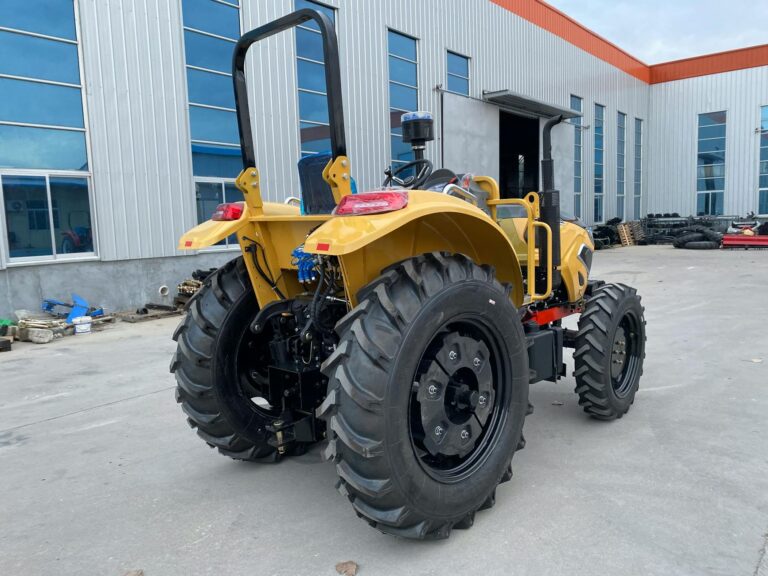
Tractor and trailer licence plate lights mount above or beside the rear plate and run from the sidelight circuit. The lamp housing on a tractor sits on the rear mudguard or on the cab rear pillar. The lamp housing on a trailer sits on the rear panel above the plate or on a small bracket beside it.
Most modern tractors carry a plate lamp at the rear right hip, integrated into the mudguard light cluster. The light shines downward and forward onto the plate face. The same circuit feeds the sidelight, the position lamp, and the plate lamp through a single trailer-compatible loom. The tractor number plate lights article covers tractor-specific fitment in detail.
Agricultural trailers fit a plate lamp on the rear cross-member or on a dedicated bracket above the plate holder. The trailer plug carries the tail light feeds on pin 5 (brown, right-hand tail) and pin 7 (black, left-hand tail) of a 7-pin 12N plug, and on pin 5 (brown) of a 13-pin ISO 11446 plug, which feeds the right-hand tail and number plate lamps. Pin 3 (white) is the earth. The plate lamp wires into this feed alongside the rear sidelights.
A lighting board used on towed equipment that hides the tractor’s rear lamps should carry a plate lamp too. A retrofit plate light kit for older trailers includes a lamp body, two stainless steel screws, a 200mm wire tail, and a Scotchlok connector. Fitting takes 15 minutes per trailer once the existing wiring run is identified. LED kits cost roughly €10 to €18. Filament kits cost roughly €5 to €10.
Troubleshooting a Licence Plate Light That Does Not Work
A licence plate light that does not work usually has a blown bulb, a corroded earth, or a broken sidelight fuse. Check the three causes in that order: bulb, earth, fuse.
Bulb first. Pull the bulb from the housing and inspect the filament or LED. A blackened filament glass or a snapped tungsten coil means the bulb has blown. Fit a fresh bulb of the same type (C5W, W5W, T10) and test.
Earth second. The plate lamp earth runs through the lamp body to the vehicle chassis or trailer chassis. Corrosion at the contact point blocks the earth and stops the light working even with a fresh bulb. Unbolt the lamp, clean both the lamp body and the chassis face with a wire brush, and refit with a fresh stainless steel bolt or screw.
Fuse third. The sidelight fuse on most cars sits in the engine bay fuse box or the dashboard fuse box rated at 10A. Pull the fuse and inspect the wire bridge inside the plastic body. A broken bridge means the fuse has blown. Replace with a fuse of the same rating (never higher) and test.
If all three checks fail to restore the light, the lamp wiring has an open circuit between the fuse box and the lamp itself. Trace the wire with a multimeter set to continuity mode, working from the bulb holder back toward the fuse box. Common break points include the boot lid hinge, the tailgate harness grommet, and the trailer plug connector.
Choosing the Right Licence Plate Light
Choose a licence plate light by matching the lamp housing to the vehicle and the bulb to the housing. A flush-fit lamp suits modern cars and trailers with a recessed cutout in the rear panel. A surface-mount lamp suits older trailers and tractors without a pre-cut hole. A bracket-mount lamp clips onto the existing plate frame and saves drilling new holes.
The bulb specification follows the lamp housing. Check the housing’s existing bulb (C5W, W5W, or T10) and order a matching replacement. If upgrading to LED, order an LED bulb with the same base type and an approval mark stamped on the body.
Look for the IP rating on the lamp housing. An IP65 rating suits a car or a covered trailer. An IP67 rating suits an open agricultural trailer exposed to slurry and pressure-washing. An IP69K rating suits a beet harvester, a manure spreader, or any vehicle pressure-washed at high temperature.
The full Agri Lighting universal licence plate lamps range lists every approved lamp by mounting type, voltage, and bulb fitment, with free delivery to Ireland on orders over €150. A working licence plate light is one of the cheapest and easiest road-legal components to fit, and a dead one is an easily avoided reason for a test failure or a €60 fixed charge. Keep a spare C5W and a spare W5W in the cab toolbox and the problem rarely lasts more than five minutes.