Tractor Number Plate Lights in Ireland: Fitment, Regulations and Replacements
In this guide
- What a Tractor Number Plate Light Does
- Irish Legal Requirements for Number Plate Lighting
- Where Number Plate Lights Are Fitted on Tractors
- Bulb Types, Voltages, and Specifications
- How to Replace a Tractor Number Plate Light
- LED Number Plate Light Upgrades
- Trailer and Implement Number Plate Lights
- Common Faults and How to Fix Them
- Choosing the Right Number Plate Light Set-Up
A tractor number plate light is a small white lamp fitted at the rear of an agricultural tractor to light the registration plate so it can be read at night. In Ireland the legal term is “identification mark lighting”. The Road Traffic (Lighting of Vehicles) Regulations 1963, as amended, require it on vehicles and trailers, and the RSA lists number plate lighting as obligatory on every tractor and agricultural trailer. The lamp draws under 1 amp on a filament bulb and far less on LED, takes a 5 W festoon or wedge bulb on many tractors, and bolts into a moulded housing above or beside the registration plate. This guide covers the Irish legal requirement, the common fitment positions, the bulb types that fit, the replacement procedure, the LED upgrade path, and the trailer-side variants used on agricultural trailers and large implements.
What a Tractor Number Plate Light Does
A tractor number plate light lights the rear registration plate so it can be read at distance during lighting-up hours (half an hour after sunset to half an hour before sunrise). The lamp emits white light only. It throws light forward onto the plate face, not rearward into the eyes of following drivers, so a correctly fitted number plate lamp produces no visible glow when viewed from behind, only a lit plate.
Three jobs sit on the lamp. First, plate legibility at distance so the Gardaí, cameras and other road users can read the registration. Second, road-legal compliance so the tractor meets Irish lighting law when used on a public road. Third, identification when the tractor is parked at the roadside at night with sidelights on.
The lamp is wired into the same circuit as the rear position lamps (the small red rear lights, also called sidelights or tail lights). When the headlight switch is at position 1 (sidelights) or position 2 (dipped beam), the number plate lamp lights with the rest of the rear lighting. The lamp does not have its own switch on any mainstream tractor.
A tractor number plate light differs from a car number plate lamp mainly in its housing. It uses a more dust-and-water-tight housing than a car lamp, because tractors operate in field conditions where dust and pressure-washer cleaning are routine. Most tractors run their lighting at 12 V, but some machines use 24 V, so always check the voltage marked on the existing bulb before buying a replacement.
For the wider road-legal lighting picture, see Tractor Lighting Regulations and The Complete Guide to Tractor Lighting.
Irish Legal Requirements for Number Plate Lighting
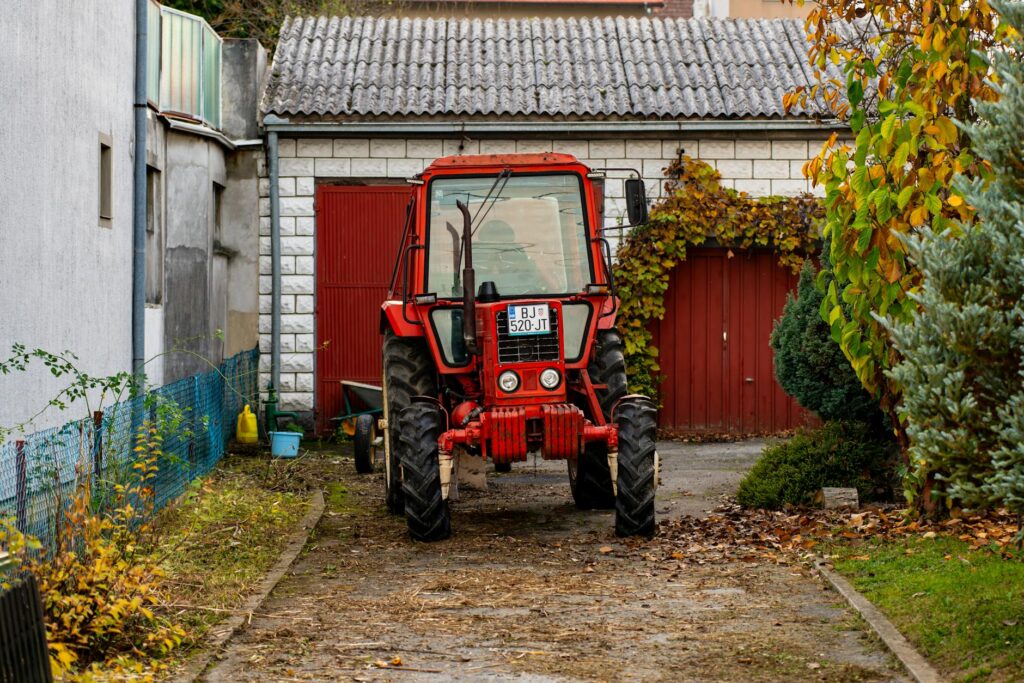
Tractors must display registration plates at the front and rear when used on a public road, according to the RSA. Vehicle registration itself is handled by Revenue, so plate queries go there. The rear plate must be lit: the 1963 Lighting Regulations require identification mark lighting on vehicles and trailers, and since the agricultural lighting changes of 1 January 2016 (S.I. No. 249 of 2014) number plate lighting is part of the full lighting system that every tractor and self-propelled agricultural machine must carry.
Specific legal points for tractor operators in Ireland. The full lighting system, including number plate lighting, must be fitted and in place at all times, not just during lighting-up hours. The lamp must light the plate in white, and Article 41 of the 1963 Regulations allows a number plate lamp as one of the few exceptions to the rule that only red light may show to the rear, so it must light the plate and not shine white light back at following traffic. RSA guidance generally advises replacing lamps like for like with type-approved units showing an E or e mark.
There is one exemption: tractors, machinery and their trailers manufactured or first registered before 1 January 1980 do not need the full lighting system if they are used only in daylight. The RSA’s current web page words this as “30 years ago”, so check with the RSA if your tractor is near the line. Any lamp that is fitted must still work.
Ordinary tractors with a design speed of 40 km/h or less have no periodic roadworthiness test in Ireland, but they must be roadworthy every time they are on the road. Fast tractors over 40 km/h used for non-exempt work, such as construction or local authority work, need a CVRT test and a Certificate of Roadworthiness, and a non-working lamp is a failure item at that test.
Using a vehicle or trailer not equipped with the prescribed lamps and identification mark lighting carries a fixed charge of €60 under S.I. No. 227 of 2024. These lighting offences do not appear on the RSA’s penalty points chart, so treat them as a fixed charge without penalty points. A failed plate lamp usually comes to light at a Garda checkpoint or roadside check.
The regulations do not set a minimum lumen output, wattage or intensity for the lamp in the sources we rely on. In practice, a correctly aimed 5 W filament bulb lights a plate well, and a good LED replacement gives a whiter light at lower current draw.
For more on Irish tractor lighting law, see tractor lighting regulations and Tractor Road Legal Lights.
Where Number Plate Lights Are Fitted on Tractors
Tractor number plate lights are fitted in 1 of 3 positions: above the plate (the most common), to one or both sides of the plate, or below the plate (rare). The position depends on the tractor model, the rear bodywork shape, and whether the plate is mounted on the rear linkage frame, the back of the cab, or a fender bracket.
Above-plate fitment, the standard position. Many tractors fit a single number plate lamp on a moulded housing directly above the plate, on the rear cab panel or rear fender. The lamp angles down so the light hits the plate face. A single lamp at this position lights a standard rectangular plate evenly.
Side-fitment, twin lamps. Some tractors fit two lamps, one on each side of the plate. Twin lamps spread light evenly across the plate width.
Below-plate fitment, single lamp. Less common but found on some compact and utility models. The lamp sits below the plate and angles upward.
Mounting brackets and removable plates. Many tractors carry a removable rear linkage that holds the registration plate. The plate lamp is fitted to the plate carrier itself, with a 2-pin or 3-pin connector that disconnects when the linkage is dropped. The connector is most often a Superseal, Deutsch DT, or AMP Junior Power Timer.
Plate position when implements are fitted. If a rear-mounted implement or trailer hides the tractor’s rear plate, it is general practice to fit a plate showing the tractor’s registration at the rear of the trailer or implement, lit by its own plate lamp, so the registration can still be read from behind. The detailed Irish rules on trailer plates for agricultural trailers are worth checking with Revenue or the RSA, but the trailer must have identification mark lighting either way.
For implement and trailer plate lamps in detail, see Agricultural Trailer Lighting Requirements and Agricultural Trailer Lights.
Bulb Types, Voltages, and Specifications
Tractor number plate lights use 4 common bulb types and 2 voltages. The right replacement bulb depends on the lamp housing, which depends on the tractor manufacturer and year of build.
Common bulb types on tractors. Festoon C5W (12 V, 5 W), a tube-shaped bulb that clips between spring contacts. Wedge W5W (12 V, 5 W, T10 size), a capless bulb that pushes into a holder. BA15s bayonet (12 V or 24 V, 5 W or 10 W), found on many older tractors. BA9s small bayonet (12 V, 4 W), found on some older tractors. The bulb fitted to your lamp is printed on the old bulb or listed in the operator’s handbook.
Voltages. Most tractors run 12 V lighting. Some heavy-duty and older commercial-derived machines run 24 V. The bulb code can be the same at both voltages; the voltage rating is different, so match it to the tractor. A 12 V bulb on a 24 V system blows almost at once, and a 24 V bulb on a 12 V system runs very dim.
Bulb glass shape and contact arrangement. Festoon, a glass tube with metal end caps that contact spring terminals. Wedge, a glass envelope with two folded wires that contact spring terminals at the base. BA15s, a glass envelope with a single bayonet pin and a single contact at the base. BA9s, a glass envelope with a smaller bayonet pin and contact, half the size of BA15s.
Light output. A 5 W filament plate lamp bulb gives a modest light that is enough to read the plate when the lamp is clean and aimed correctly. A quality LED replacement gives a similar or brighter, whiter light at a fraction of the wattage.
Colour temperature. White, between 2,700 K (warm filament bulb) and 6,500 K (cool LED). The plate lamp must show white light. LEDs above 6,500 K can produce a blue tinge that draws attention at a Garda checkpoint. Stick to LEDs between 4,000 K and 6,000 K for the cleanest plate readability.
For the wider bulb code reference, see Vehicle Bulb Types Explained.
How to Replace a Tractor Number Plate Light
Number plate light replacement is a 5 to 10 minute job for the bulb alone, or a 15 to 25 minute job for the complete lamp housing. The procedure below covers both. Tools needed: a Phillips screwdriver, a 7 mm or 8 mm spanner, and a clean cloth.
Step 1, identify the lamp position. Walk to the rear of the tractor and locate the number plate lamp above, below, or beside the plate. If the tractor has twin side-mounted lamps, both can be replaced as a pair.
Step 2, remove the lens cover. Most lamps use a 2-screw lens cover. Remove the screws (typically Phillips PH2, sometimes Torx T20). Lift the lens off. The lens may be retained by a soft rubber gasket; lift carefully to avoid tearing the gasket.
Step 3, remove the failed bulb. Festoon, squeeze the spring contacts apart and pull the bulb straight out. Wedge, pull the bulb straight out (light side-to-side rocking helps). BA15s, push down and rotate anti-clockwise a quarter turn, then lift out. BA9s, same as BA15s but with a smaller-diameter pin.
Step 4, fit the new bulb. Match the bulb code exactly. For LED replacements, check polarity if marked. LED festoons and wedges only light in one orientation. Insert, test by switching headlights to position 1 (sidelights), confirm the plate is lit. If the LED does not light, reverse it and retest.
Step 5, refit the lens. Replace the lens, check the gasket sits flush, replace the screws. Hand-tighten only; over-tightening cracks the lens. Confirm the plate is lit evenly with no dark patches.
Complete lamp housing replacement (when the housing itself is cracked, water-damaged, or corroded). Step A, disconnect the rear connector (Superseal, Deutsch DT, or AMP) by squeezing the locking tab. Step B, remove the housing retaining bolts (typically 2 or 4 bolts, M6 or M8, accessed from inside the rear panel or from behind the fender). Step C, fit the new housing, refit the bolts to 8 to 12 Nm, reconnect the connector, refit the bulb, refit the lens.
For tractors where the plate carrier folds for road clearance, check the carrier hinge and connector after replacement. A loose carrier hinge can crack the plate lamp lens within a few road journeys.
For deeper electrical work, see How to Wire Tractor Lights.
LED Number Plate Light Upgrades
LED number plate lights replace the original filament bulb and deliver a brighter, whiter light at one fifth the current draw, with a 10x to 20x lifespan. The upgrade fits in 5 to 10 minutes per lamp using the same housing.
Three reasons farmers fit LED plate lights. Filament festoons fail regularly under tractor vibration, while LEDs have no filament to break and typically last much longer. The LED gives a whiter light, so the plate reads clearly at distance and on cameras. LEDs draw far less current, which matters on tractors with marginal alternator capacity or large auxiliary lighting fits.
Choosing an LED plate bulb. Match the bulb code (festoon C5W, wedge W5W, BA15s, BA9s). Pick a colour temperature between 4,000 K and 6,000 K (avoid 6,500 K and above, which can appear bluish). If the tractor monitors its lamp circuits for bulb failure, choose a CAN bus compatible LED so the low current draw does not trigger a warning or cause flicker.
Three LED pitfalls to avoid. Very cheap LEDs (under about €2 per bulb) often have inadequate dust and water sealing for tractor service and fail within months. LEDs without polarity markings only light in one orientation; choose marked LEDs for first-time fit. LEDs above 6,500 K colour temperature can produce a blue tinge, and the plate lamp has to show white light.
LED retrofit cost and value. A pair of canbus-rated LED festoon bulbs costs roughly €6 to €14. The same pair of filament festoons costs roughly €1 to €4. The LED pair usually pays back through fewer bulb changes and less downtime.
Are LED number plate lights legal in Ireland? Yes, where they show white light on the plate and do not shine white light to the rear. RSA guidance on LED lamps is that they are legal only if type-approved, fitted to a compatible vehicle and not dazzling, and the RSA generally advises replacing lamps with type-approved units showing an E or e mark. A complete E-marked LED plate lamp is the cleanest route. Many LED replacement bulbs carry only an R10 (EMC) mark, which covers radio interference, not the light output, so check what the marking covers.
For the LED versus halogen comparison in detail, see LED vs Halogen Tractor Lights and What Are LED Work Lights.
Trailer and Implement Number Plate Lights
Agricultural trailers and interchangeable towed equipment must have number plate lighting under the Irish rules, along with side lamps, rear lamps, stop lamps and direction indicators. Large rear-mounted implements that hide the tractor’s plate should carry a plate and lamp at the rearmost point, usually on a lighting board.
When a plate and lamp are needed on the trailer or implement. The tractor is towing an agricultural trailer, which must have identification mark lighting. The trailer or implement hides the tractor’s plate from a following driver. The trailer can swing so that the tractor’s plate is not always visible. As a general practice the trailer shows the towing tractor’s registration, but check the current Irish rules with Revenue or the RSA if you are unsure.
Trailer plate lamp specification. 12 V, 5 W halogen or 1 W LED, white light only, mounted above or beside the trailer plate. Most agricultural trailer manufacturers fit a moulded housing on the trailer headboard or rear panel, supplied with a 7-pin or 13-pin trailer connector that picks up the rear lighting circuit from the tractor.
Connector types on agricultural trailers. The 7-pin 12N (ISO 1724) socket is the usual road lighting connector on tractors and agricultural trailers, carrying indicators, tail lamps, stop lamps and the plate lamp circuit. The 7-pin 12S socket is a supplementary connector for auxiliary circuits. The 13-pin (ISO 11446) connector combines lighting and auxiliary circuits in one plug and is common on caravans and some newer trailers. See the 7-pin and 13-pin wiring guides before rewiring a trailer.
Common faults on trailer plate lamps. Connector pin oxidation (slow corrosion of the brass pins from condensation), broken wiring inside the trailer headboard, water getting into the lamp housing through cracked lenses or perished gaskets, and earth bonding failures where the trailer chassis loses its electrical earth path back to the tractor. Silage and slurry work in wet weather is hard on all of these.
Larger trailers often carry two number plate lamps, one either side of the plate, for redundancy. The dual-lamp arrangement keeps the plate lit even when one lamp fails, useful on long road runs.
For a wider trailer lighting overview, see Agricultural Trailer Lights and Agricultural Trailer Lighting Requirements.
Common Faults and How to Fix Them
Number plate lamp faults fall into 6 patterns. Each has a typical cause and a typical fix. Working through these in order of likelihood resolves most failures without dealer help.
Fault 1, lamp dark when sidelights are on. Cause, blown bulb. Replace the bulb. Match the bulb code on the original. Most common by a wide margin.
Fault 2, lamp flickers or strobes. Cause, loose bulb in its contacts, oxidised contacts, or LED retrofit not canbus-compatible. Remove the bulb, clean the contacts with contact cleaner and a small wire brush, refit. If a CAN-bus tractor flickers an LED, swap to a canbus-compatible LED.
Fault 3, lamp dims with engine speed. Cause, poor earth bonding between the lamp housing and the tractor body. Remove the housing, clean the mounting bolts and the contact face, refit. If the dimming continues, the alternator output is dropping under load (separate fault, requires alternator check).
Fault 4, lamp works only intermittently. Cause, broken wire inside the rear loom or a cracked solder joint at the lamp connector. Trace the wiring back from the lamp to the rear loom junction (typically inside the cab, beneath the seat or behind the rear cab panel). Look for the wire that has cracked at a flex point or has chafed against a metal edge. Repair with a butt-splice and heat-shrink, or replace the affected section.
Fault 5, water inside the lamp housing. Cause, cracked lens, perished gasket, or failed seal at the housing-to-cab joint. Replace the lens, the gasket, or both. If the housing itself has cracked, replace the housing.
Fault 6, plate lamp lights but plate appears too dim. Cause, a filament bulb near the end of its life, a dirty lens, a dirty plate face, or the wrong (lower wattage) bulb fitted by mistake. Replace the bulb and clean the lens and plate.
For deeper diagnostic guidance, see How to Troubleshoot Tractor Lighting Problems and Why Do My Tractor Bulbs Keep Blowing.
Choosing the Right Number Plate Light Set-Up
A complete number plate light upgrade for a single tractor costs roughly €4 to €30. The price depends on whether you replace only the bulb (roughly €4 to €14 per pair of LEDs), the bulb and lens gasket (roughly €10 to €22), or the complete lamp housing (roughly €22 to €70 for an aftermarket housing, €40 to €140 for a genuine OEM part). Delivery to Ireland is free on orders over €150.
Three buying checks before fitting. Check the bulb code on the original (printed on the bulb or in the tractor handbook). Check the lamp connector type (Superseal, Deutsch, AMP) if replacing the housing. Check the tractor’s CAN bus status if fitting LED retrofits.
Agri Lighting stocks a complete range of number plate lamps, festoon and wedge bulbs, LED retrofits, and complete housings for John Deere, New Holland, Massey Ferguson, Case IH, Fendt, Claas, Valtra, Kubota, and most other tractor brands sold in Ireland. The full range sits in the universal marker lamp category and the vehicle bulbs section. For fitment advice, call +44 1522 440522 or email [email protected].
For the wider rear lighting context, see Tractor Tail Lights and Rear Lighting, The Complete Guide to Tractor Lighting, and Tractor Lighting Regulations.