Position Lamps in Ireland: Front and Rear Sidelights Explained

In this guide
- What Is a Position Lamp on a Car
- Front vs Rear Position Lamps
- Front Position Lamps
- Rear Position Lamps
- Left (Nearside) and Right (Offside) Position Lamps
- Position Lamps vs Daytime Running Lights vs Dipped Beam
- Irish Rules for Position Lamps
- Position Lamps and the NCT and CVRT
- Position Lamp Bulb Types
- Position Lamp Faults
- Position Lamps on Tractors and Trailers
- Frequently asked questions
A position lamp is the sidelight on a car: a low-power lamp that shows white at the front and red at the rear to mark where the vehicle is and how wide it is. A car has 2 front position lamps and 2 rear position lamps. They come on at the first click of the light switch and stay on with dipped and main beam. Irish law calls them side lamps and rear lamps, and on tractors and agricultural trailers they have been part of the obligatory lighting system since 1 January 2016.
What Is a Position Lamp on a Car
A position lamp is a low-intensity light that marks the presence and width of a vehicle to other road users. A front position lamp shows the presence and width of a vehicle when viewed from the front, and a rear position lamp does the same when viewed from the rear. They are the dimmest exterior lamps on a vehicle, because their job is to be seen, not to light the road.
“Position lamp” is the term used in the UNECE lamp standards and in many vehicle handbooks. The same lamp goes by several other common names:
- Sidelight or side lamp: the everyday term in Ireland, and the wording used in the Irish lighting regulations and RSA guidance. “Put your sidelights on” means switch on the position lamps.
- Parking light: used more in American English, and on RSA guidance on lighting colour (“position/parking lamps”).
- Position light: used in some vehicle handbooks and European documents.
- Tail light or rear lamp: the usual names for the rear position lamps specifically.
Position lamps are separate from headlights (which light the road ahead), brake lights (which signal braking) and indicators (which signal turning). Once the lights are switched on, the position lamps stay on from the sidelight stage right through dipped beam and main beam.
Front vs Rear Position Lamps
| Feature | Front position lamp | Rear position lamp |
|---|---|---|
| Colour | White | Red |
| Number fitted | 2 | 2 |
| Usual location | Inside the headlamp unit | Inside the rear lamp cluster |
| Common bulb | W5W (501) | P21/5W (380) or R5W (207) |
| Typical wattage | 5W | 5W |
| Other names | Sidelight, side lamp, front parking light | Tail light, rear lamp, rear sidelight |
Front Position Lamps
A front position lamp is a white light fitted to each side of the front of a vehicle. Its job is to show oncoming traffic and pedestrians where the edges of the vehicle are.
On most modern cars, vans and tractors, the front position lamp sits inside the headlamp unit, using its own small bulb or LED element. On older vehicles, particularly classic tractors, the front position lamp is often a separate lamp mounted on the front mudguard or wing.
A typical front position lamp uses a 5W bulb. That is deliberately low. On many modern cars the front position lamp is combined with the daytime running light, which runs at full brightness in daylight and dims to position lamp level when the headlights come on. Our guide to daytime running lights explains how that switching works.
Rear Position Lamps
A rear position lamp is a red light fitted to each side of the rear of a vehicle. It shows following drivers the width of the vehicle in front.
Rear position lamps almost always sit in the rear lamp cluster with the brake lights, indicators, reverse light and (where fitted) rear fog lamp. The rear position lamp is the dim, constant red glow when the lights are on. The brake light is the brighter red that appears when the brake pedal is pressed. The rear position lamp runs at about 5W; a brake light filament is 21W.
On many vehicles, the rear position lamp and brake light share 1 twin-filament bulb, the P21/5W (trade code 380). The thin 5W filament powers the position lamp and the thicker 21W filament powers the brake light. That is why a fault with one of these bulbs can affect both functions.
Left (Nearside) and Right (Offside) Position Lamps
Garage paperwork and test reports describe lamps by side. RSA wording generally uses left-hand and right-hand side, and the older terms nearside and offside are still common:
- Left (nearside): the passenger side in an Irish right-hand-drive car, nearest the kerb.
- Right (offside): the driver side in an Irish car, nearest the centre of the road.
Left and right are always as if you are sitting in the driver’s seat facing forward, and the terms do not change for a left-hand-drive import. So:
| Description | Which lamp |
|---|---|
| Left (nearside) front position lamp | Front left sidelight (passenger side) |
| Right (offside) front position lamp | Front right sidelight (driver side) |
| Left (nearside) rear position lamp | Rear left tail light |
| Right (offside) rear position lamp | Rear right tail light |
The terms come from horse-drawn days: the nearside was the side nearest the kerb. If your NCT report says one of these lamps is not working, our guide to a position lamp not working walks through the fix and the retest.
Position Lamps vs Daytime Running Lights vs Dipped Beam
Position lamps are often confused with the other front lamps that come on with the engine or the light switch. The difference is what each lamp is for.
| Lamp | Purpose | When it is on | Lights the rear lamps? |
|---|---|---|---|
| Front position lamp (sidelight) | Shows the vehicle’s position and width | When the light switch is on (sidelight, dipped or main beam) | Yes, rear position lamps come on with it |
| Daytime running light | Makes a moving vehicle easier to see in daylight | Automatically with the engine, off or dimmed when headlamps are on | Not necessarily; on many cars the tail lights stay off |
| Dipped beam headlamp | Lights the road ahead without dazzling | During lighting-up hours and in poor visibility | Yes |
The practical point: DRLs are front-only, so a car running only on DRLs at dusk may have no tail lights lit at all. The RSA and the Rules of the Road advise driving with dipped headlights on during the day if your vehicle has no DRLs, and headlights must be on before dark.
Irish Rules for Position Lamps
The Road Traffic (Lighting of Vehicles) Regulations 1963 (S.I. No. 189 of 1963), as amended, set out the lamps vehicles must carry. Article 9 lists the obligatory lamps, and Article 41 sets the colours: no light to the front except white or yellow, and no light to the rear except red (with exceptions for indicators, number plate lamps and reversing lamps). RSA guidance on lighting colour lists front position and parking lamps as white and rear lamps as red.
Minimum Requirements
- 2 front position lamps (white), 1 on each side of the front
- 2 rear position lamps (red), 1 on each side of the rear
Under the European installation rules (ECE Regulation 48), position lamps on a car are mounted between 350 mm and 1,500 mm above the ground and no more than 400 mm in from the outer edge of the vehicle, so that together they mark its width.
When Position Lamps Must Be Used
- During lighting-up hours: Irish law defines lighting-up hours as the period from half an hour after sunset to half an hour before sunrise. Position lamps, rear lamps and number plate lighting must be lit during that time.
- Tractors and agricultural vehicles: since 1 January 2016, the full tractor lighting system, including side lamps and rear lamps, must be fitted and working at all times, not just during lighting-up hours.
- Parked at night: the Rules of the Road sets out when a parked vehicle must show lights. Check the current edition for the detail, and never leave a trailer or a vehicle with a projecting load on a public road at night without lights.
Penalties
Using a vehicle or trailer not equipped with the prescribed lamps carries a €60 fixed charge (Road Traffic Act 2010 (Part 3) (Fixed Charge Offences) Regulations 2024). Gardaí run lighting checkpoints, and a tractor or trailer with no rear lights on an unlit local road at night is one of the most dangerous things on a rural road. In one reported case, Gardaí stopped a tractor with no lights at night towing a slurry tanker and said proceedings would follow.
Position Lamps and the NCT and CVRT
Cars take the NCT and commercial vehicles take the CVRT, both run by the RSA. RSA guidance is that fitted lamps must work, and a position lamp that does not work is a failure item, not an advisory.
| Position lamp defect | Likely outcome |
|---|---|
| Lamp missing or not working | Fail |
| LED lamp with a large share of its light sources out | Fail |
| Defective or cracked lens | Fail |
| Red light showing to the front, or white light to the rear | Fail |
| Wrong colour (for example a strongly blue sidelight) | Defect recorded |
| Lamp not secure or likely to fall off | Defect recorded, fail if serious |
At the CVRT, defects are graded minor, major or dangerous, and a fail must be retested within 21 days. A front position lamp should be white. A strongly coloured “ice blue” LED sidelight is likely to be picked up. Rear position lamps must give a steady red light.
Position Lamp Bulb Types
The most common position lamp bulb is the W5W, a 5W capless wedge bulb also sold as 501. Most front sidelights use it, and many rear clusters and number plate lamps do too.
| Bulb | Trade code | Base | Wattage | Typical use |
|---|---|---|---|---|
| W5W | 501 | W2.1×9.5d capless wedge (often called T10) | 5W | Front sidelights on most cars and vans; some rear position lamps |
| R5W | 207 | BA15s bayonet | 5W | Older front sidelights, separate rear position lamps, trailer and tractor lamps |
| H6W | 434 | BAX9s offset-pin bayonet | 6W | Front sidelights on some European cars |
| P21/5W | 380 | BAY15d bayonet (offset pins) | 5W position / 21W brake | Combined rear position and brake lamps |
| LED | None | Built into the lamp, or an LED replacement bulb | Under 1W to a few watts | Many cars from the 2010s, LED trailer and tractor lamps |
The W5W pushes straight into its holder. The R5W pushes in and twists to lock, like a small version of a brake light bulb. The P21/5W has offset pins so it only fits one way round, which keeps the 5W filament on the position lamp circuit and the 21W filament on the brake circuit. See our guides to W5W 501 bulbs and R5W 207 bulbs for the details of each, and find replacements in our standard miniature bulbs range.
LED Sidelight Bulbs
LED W5W and R5W bulbs are widely sold. They last longer and resist vibration, but most are not type approved for use in a lamp designed for a filament bulb, and RSA guidance says LED bulbs are legal only if type-approved, compatible and not dazzling. On cars with bulb monitoring they can trigger a “bulb failure” warning unless they are CANbus compatible. If you fit one, choose a plain white bulb (not blue) and check it lights evenly through the lens. The more robust answer on trailers and tractors is a complete LED position lamp with an E or e mark.
Position Lamp Faults
A position lamp that stops working is almost always 1 of 4 things:
- Blown bulb: by far the most common. One lamp out, the others fine.
- Corroded holder: the lamp flickers, works when tapped, or the new bulb still does not light. Clean the contacts and protect them with a little dielectric grease.
- Blown fuse: on many cars, all the sidelights on one side (or all of them) go out together. Replace with the same rating; if it blows again, look for a short.
- Wiring or earth fault: more common on tractors and trailers, where vibration, chafing and rodents damage looms. A lamp that cuts out over bumps is usually a wiring fault.
If the NCT has flagged a lamp, the not-working guide linked above covers each fix step by step.
Position Lamps on Tractors and Trailers
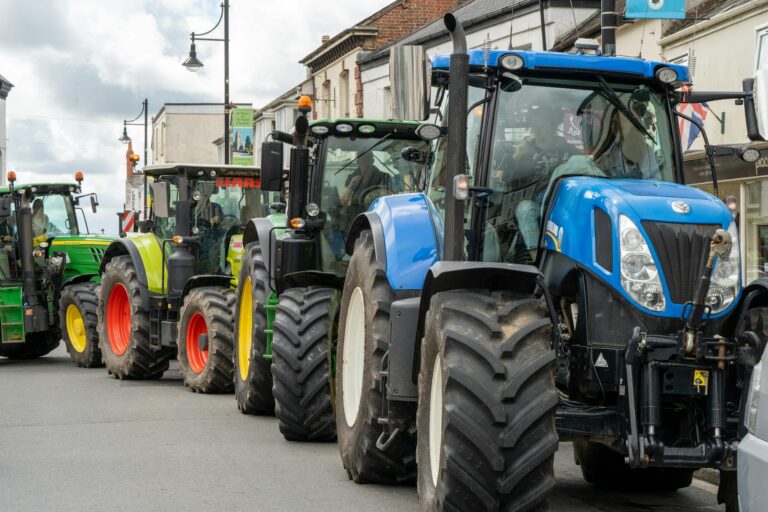
In Ireland, tractors and agricultural trailers need position lamps at all times, not only for night use. Since 1 January 2016 (S.I. No. 249 of 2014), tractors and self-propelled agricultural machines must have side lamps, headlamps, rear lamps, stop lamps, indicators, an amber beacon and number plate lighting, and agricultural trailers and interchangeable towed equipment must have side lamps, rear lamps, stop lamps, indicators and number plate lighting. Older machines (pre-1980, or 30+ years old according to current RSA guidance) used only in daylight are exempt, but any lights fitted must work.
Tractors
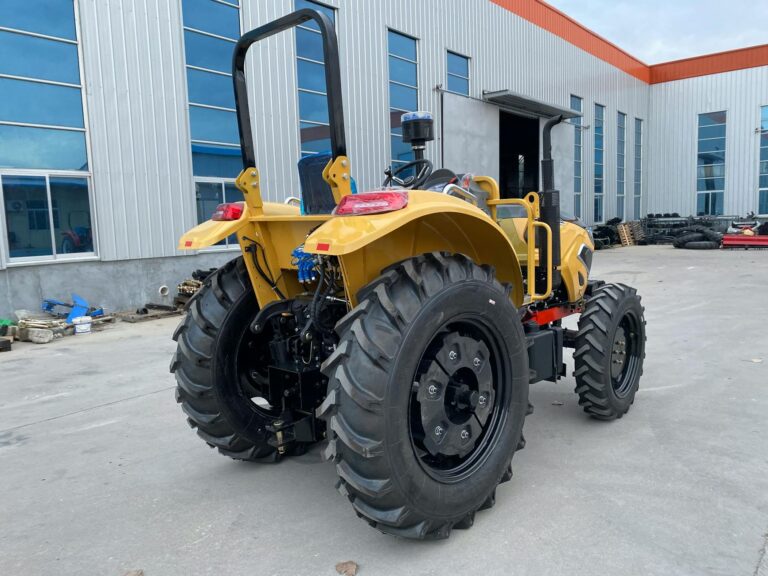
Modern tractors build the front position lamps into the headlamp or bonnet lamps and the rear position lamps into the rear lamp clusters on the mudguards. Older tractors often have separate sidelights on the front wings, which are exposed to hedges, loaders and implements and are often knocked off. Replacement universal sidelights are a simple bolt-on job.
Trailers
Agricultural trailers must have side lamps and rear lamps under the 2016 rules. If towed equipment without its own lights (a baler or a sprayer, say) hides the tractor’s lamps, a lighting board is required. On both the 7-pin 12N socket and the 13-pin socket, the rear position lamps are fed through pin 5 (right-hand side) and pin 7 (left-hand side). Trailer lamps take a beating from spray, mud, slurry and pressure washing, so LED lamps are a worthwhile upgrade. Browse our position lamps for universal front and rear units, with free delivery to Ireland on orders over €150.
Practical Tips
Position lamps on farm vehicles fail more often than on cars because of vibration, moisture and less frequent checks. Walk round before any road journey, and keep a spare W5W and P21/5W in the cab.
Frequently asked questions
What is a position lamp on a car?
It is the sidelight: a low-power white lamp at the front and red lamp at the rear that marks the vehicle’s position and width. A car has 2 at the front and 2 at the rear.
What is a front position lamp?
A front position lamp is the front sidelight, usually inside the headlamp unit, showing white. Most use a W5W (501) bulb.
What is a rear position lamp?
A rear position lamp is the tail light, the dim red light at the back that is on whenever your lights are on. It often shares a P21/5W (380) twin-filament bulb with the brake light.
Is a position lamp not working an NCT fail?
Yes. RSA guidance is that fitted lamps must work, so a missing or non-working position lamp fails the NCT, or the CVRT for commercial vehicles, until it is repaired.
Which side is the nearside position lamp?
Nearside is the left side of the vehicle (the passenger side on an Irish car). Offside is the right side, the driver side.