When to Use Fog Lights in Ireland: The Rules and Common Misconceptions
In this guide
- The Irish Rule: Dense Fog or Falling Snow Only
- What the Rules of the Road and RSA Say About Fog Lights
- Can You Use Fog Lights in Rain or Snow
- Why You Must Switch Fog Lights Off When Visibility Improves
- How to Recognise the Fog Light Symbols on the Dashboard
- Enforcement of Fog Light Misuse
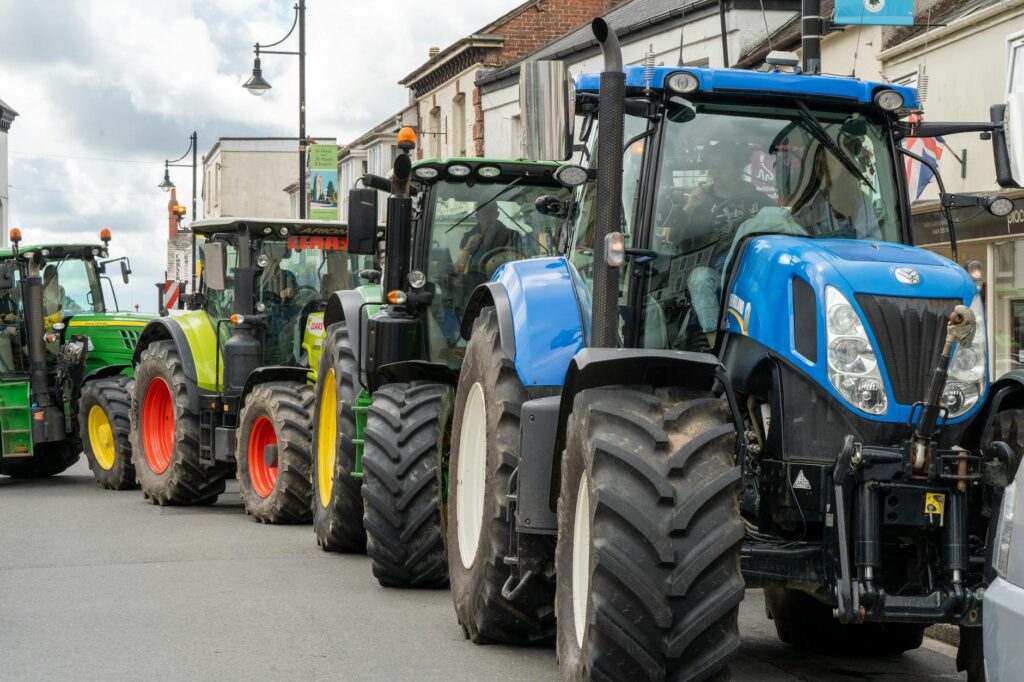
- Fog Lights on Tractors and Farm Vehicles
- Common Misconceptions About Fog Lights
- Quick Reference: Fog Light Rules at a Glance
In Ireland, fog lights may only be used in dense fog or falling snow, and must be switched off at all other times. That is the wording in the Rules of the Road, published by the Road Safety Authority (RSA), and the RSA’s own fog lights guidance says the same. There is no Irish “100 metre” test like the one in the UK Highway Code, so if you have read a British guide, forget that number. This guide covers the Irish rule, what it means in rain and snow, why fog lights must go off when the fog clears, the dashboard symbols, how the Gardaí enforce it, and how the rules apply to tractors and farm vehicles.
The Irish Rule: Dense Fog or Falling Snow Only
The Rules of the Road says: “Use fog lights only during dense fog and falling snow. You must turn them off at all other times.” That is the test for front and rear fog lamps alike.
Three points sit inside the rule. Dense fog or falling snow means fog lights may go on. Anything else means fog lights must be off. The driver judges the moment of switching based on what they can see ahead.
The Irish rule is tighter in one way than the UK version. It names the conditions (dense fog and falling snow) rather than a distance, so a heavy shower or spray from the road does not on its own justify fog lights. Light mist or patchy fog that leaves you with a good view of the road ahead does not count as dense fog.
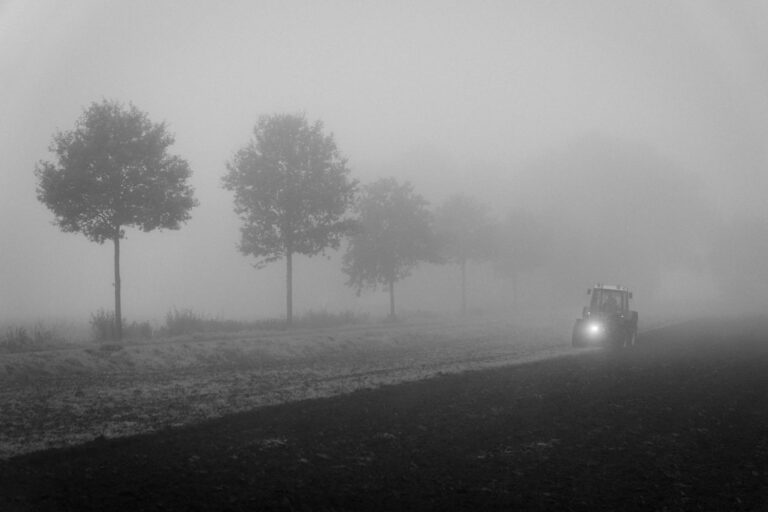
The reason is the same as anywhere else. In dense fog the road ahead can fall inside your stopping distance, and other drivers need every chance to see you. Outside those conditions, fog lamps cause more problems than they solve.
For the wider auxiliary lighting picture, see Fog Lamps Explained and Fog Lamps, DRLs, and Auxiliary Lights pillar.
What the Rules of the Road and RSA Say About Fog Lights
The Rules of the Road deals with fog lights in its sections on lighting and on driving in bad weather. The RSA’s fog lights page repeats the rule. Both apply to all road users, including farmers, contractors and drivers of agricultural vehicles.
For driving in fog, the Rules of the Road advises using dipped headlights together with fog lamps, reducing speed and keeping a safe distance from the vehicle in front.
Three obligations come out of the Irish guidance. Use dipped headlights in fog. Use fog lights only in dense fog or falling snow. Turn fog lights off when conditions improve.
Lighting rules in Ireland come from the Road Traffic (Lighting of Vehicles) Regulations 1963, as amended. The RSA cites these regulations for its lighting guidance. RSA pages describe themselves as general information rather than legal advice, so if you need the exact legal wording, check the regulations and the current edition of the Rules of the Road.
For the underlying regulations, see the Irish lighting regulations and Tractor Road Legal Lights.
Can You Use Fog Lights in Rain or Snow
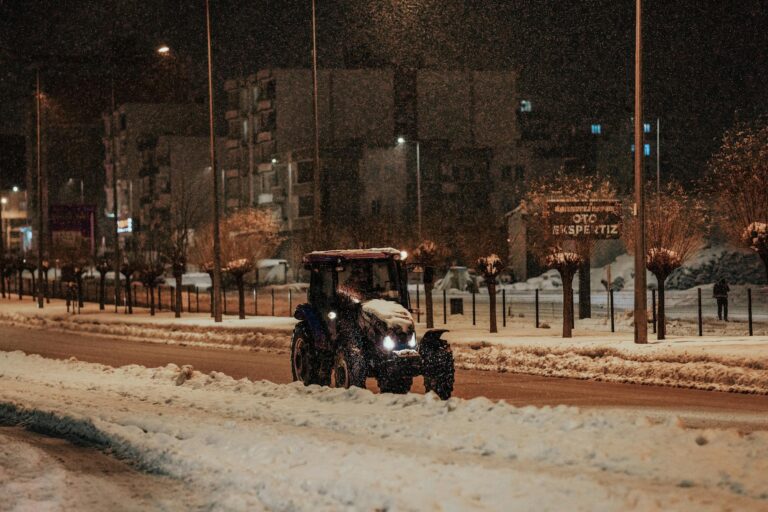
Falling snow is named in the Irish rule, so fog lights may be used while snow is falling. Rain is not named. Heavy rain on its own does not justify fog lights under the Rules of the Road wording.
The trigger is the condition, not how gloomy the day feels. Light snow drifting down counts as falling snow. A wet November evening on a county road, however grim, is not fog or snow.
Three scenarios show the rule in action. Steady drizzle on the way to the mart means fog lights stay off. Snow falling on a back road means front and rear fog lamps may switch on. Snow stopping, or fog lifting, means fog lights must switch off again.
A common driver error is switching on rear fog lamps in steady rain to “be seen better”. That is not permitted under the Irish rule. The rear fog lamp produces 150 to 300 candela of red light, bright enough to mask the vehicle’s brake lights from the driver behind. Dipped headlights and rear lamps are the right lighting in rain.
For the rear fog lamp specification, see Rear Fog Lights: Regulations and Fitment.
Why You Must Switch Fog Lights Off When Visibility Improves
The Rules of the Road is clear: you must turn fog lights off at all other times. Fog lifts in patches, and the driver who keeps fog lights on through clear stretches breaks the rule and creates a risk for others.
Three problems follow if rear fog lamps stay on in clear conditions. Drivers behind cannot tell brake lights from rear fog lamps, because the rear fog produces 150 to 300 candela compared to the brake light’s 60 to 185 candela. Drivers behind suffer glare from the high-intensity red light, which slows their reactions. And the driver in front is using a lamp outside the conditions the rule allows.
Two problems follow if front fog lamps stay on in clear conditions. Oncoming drivers get glare from the wide, low-mounted beam. The vehicle’s headlamp pattern becomes confusing, because the front fog beam adds light below the dipped beam cut-off and undoes what the dipped pattern is designed to do.
The driver should re-check conditions every 30 to 60 seconds in shifting fog. Fog in valleys and low-lying ground can clear in seconds. The rule does not allow “I might need them again in a minute” thinking. Fog lights off when the fog clears, on again only if it closes back in.
How to Recognise the Fog Light Symbols on the Dashboard
Vehicles show fog light status with two distinct dashboard symbols. The front fog symbol is a green icon showing a forward-tilted lamp with three downward wavy lines. The rear fog symbol is an amber or yellow icon showing a backward-tilted lamp with three downward wavy lines. The wavy lines represent fog cutting across the beam.
Three features distinguish the two symbols. Colour, green for front and amber for rear. Direction, the front symbol points right (forward from the driver’s view), and the rear symbol points left. Position, the front fog tell-tale sits with the headlamp indicators, and the rear fog tell-tale sits with the warning lights.
The rear fog tell-tale is a type-approval requirement. ECE Regulation 38 requires every vehicle with rear fog lamps to have an amber tell-tale visible to the driver. The tell-tale only goes off when the rear fog lamp goes off. It exists to remind the driver that the rear fog lamp is on, because it is so easy to forget after fog clears.
Front fog tell-tales follow the same logic. Most vehicles fit a green tell-tale that lights when front fog lamps are on, and most manufacturers fit one as standard.
The driver should check both tell-tales every time the lights stalk moves. A glance at the dashboard confirms which lights are on and which are off.
Enforcement of Fog Light Misuse
Fog light misuse is enforced by An Garda Síochána. Unlike the UK, there is no specific fixed charge listed for misusing fog lamps in Ireland. The confirmed lighting fixed charge (€60) covers vehicles not equipped with the prescribed lamps, not how lamps are used. Misuse of fog lamps would instead be dealt with as a breach of the Lighting Regulations or another road traffic offence, which means a court matter rather than a set fine.
Where fog light misuse dazzles another driver or contributes to a collision, more serious road traffic charges can follow, such as careless driving. Defective lamps also matter: the RSA says front fog lamps are optional, but if fitted they must work, or the vehicle fails its roadworthiness test (the NCT for cars, the CVRT for commercial vehicles).
The RSA also warns that removing factory-fitted fog lamps may be an illegal modification, so taking them off to avoid the issue is not the answer.
Gardaí run lighting checkpoints, and a driver with rear fog lamps blazing on a clear night stands out at a distance. Expect more attention in autumn and winter, when fog and short evenings come together.
For the wider regulatory framework, see Tractor Lighting Regulations.
Fog Lights on Tractors and Farm Vehicles
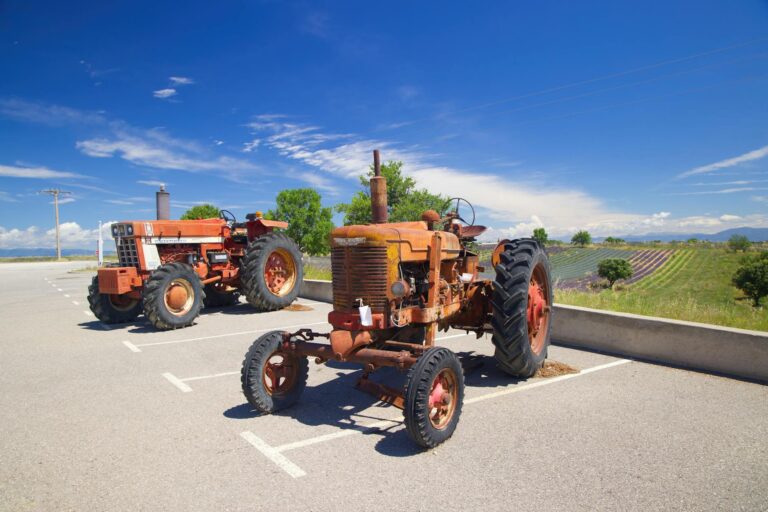
Fog light rules apply equally to tractors, self-propelled machines and agricultural trailers on Irish roads. The dense fog or falling snow rule applies to a tractor driver in the same way it applies to a car driver.
Three points apply specifically to tractors. The obligatory lighting system for tractors and self-propelled machines (side lamps, headlamps, rear lamps, stop lamps, indicators, amber beacon and number plate lighting) must be fitted and working at all times, and fog lamps are additional to that, not a replacement. Any fog lamp that is fitted should work. And the amber beacon must be on whenever the tractor is on a public road, fog or no fog.
Front fog lamps on tractors are optional. Where fitted, they must be white or selective yellow, meet ECE R19 type approval and mount within the position rules (250 mm to 800 mm above the ground, paired symmetrically).
Tractor drivers need to think harder about fog than most car drivers. A slow tractor on a road with an 80 or 100 km/h limit is at real risk of being run into from behind in fog, so dipped headlights, rear lamps, the beacon and (in dense fog) a rear fog lamp all help. Wide loads such as sprayers, mowers and balers need clear rear lighting, and a lighting board must be fitted if towed equipment hides the tractor’s lamps.
Common tractor fog light errors mirror car errors. Rear fog lamps left on after a road run in clear conditions. Front fog lamps used as makeshift work lights on the road (work lamps must be switched off on a public road anyway). Trailer rear fog lamps wired to the side lamp circuit, so they come on every time the side lamps do.
For the tractor-specific lighting law, see Tractor Road Legal Lights and Agricultural Trailer Lighting Requirements.
Common Misconceptions About Fog Lights
Five misconceptions about fog light use cause most of the problems. Each is wrong on the rules, the safety, or both.
Misconception 1. “Fog lights help me be seen in rain.” False. Rain is not dense fog or falling snow. The rear fog lamp masks brake lights and the front fog lamp dazzles oncoming drivers. Use dipped headlights instead.
Misconception 2. “Front fog lights replace dipped beam in fog.” False. The front fog lamp supplements dipped beam, it does not replace it. The Rules of the Road advises dipped headlights plus fog lamps in fog, and type approval allows front fog lamps to work only with dipped or main beam on.
Misconception 3. “Rear fog lamps are like brake lights, the brighter the better.” False. Rear fog lamps mask brake lights when conditions are clear. The driver behind cannot see the brake light through the rear fog lamp’s higher intensity, which is exactly why use is limited to fog and snow.
Misconception 4. “I can use fog lights at night for extra visibility.” False. A clear night is not dense fog or falling snow. Headlights and rear lamps are the right lighting at night in clear conditions.
Misconception 5. “It is fine to keep rear fog on when towing a trailer in heavy rain.” False. The rule applies to towing the same way it applies to solo driving. The trailer’s rear fog lamp follows the same rule as the tractor’s.
The principle is simple. Fog lights are visibility tools for dense fog and falling snow. They have no legitimate use outside those conditions.
Quick Reference: Fog Light Rules at a Glance
The Irish fog light rules come down to seven facts.
When allowed: Dense fog or falling snow only.
Source: Rules of the Road and RSA fog lights guidance, under the Road Traffic (Lighting of Vehicles) Regulations 1963, as amended.
Rain: Not named in the rule. Use dipped headlights, not fog lamps.
Switch off: You must turn fog lights off at all other times.
Dashboard symbol: Green for front fog, amber for rear fog. Both symbols show three wavy lines.
Enforcement: An Garda Síochána. No set fixed charge for misuse; it can go to court. Fitted fog lamps that do not work fail the NCT or CVRT.
Tractors and farm vehicles: Same rules apply, on top of the full obligatory lighting system and the amber beacon.
For practical fog lamp choice, see Fog Lamps Explained and the rear fog lamp guidance at Rear Fog Lights Regulations. Browse current fog lamp options in the auxiliary lighting category on Agri Lighting.