LED Rear Lamp Clusters in Ireland: Benefits of Upgrading from Bulb to LED
In this guide
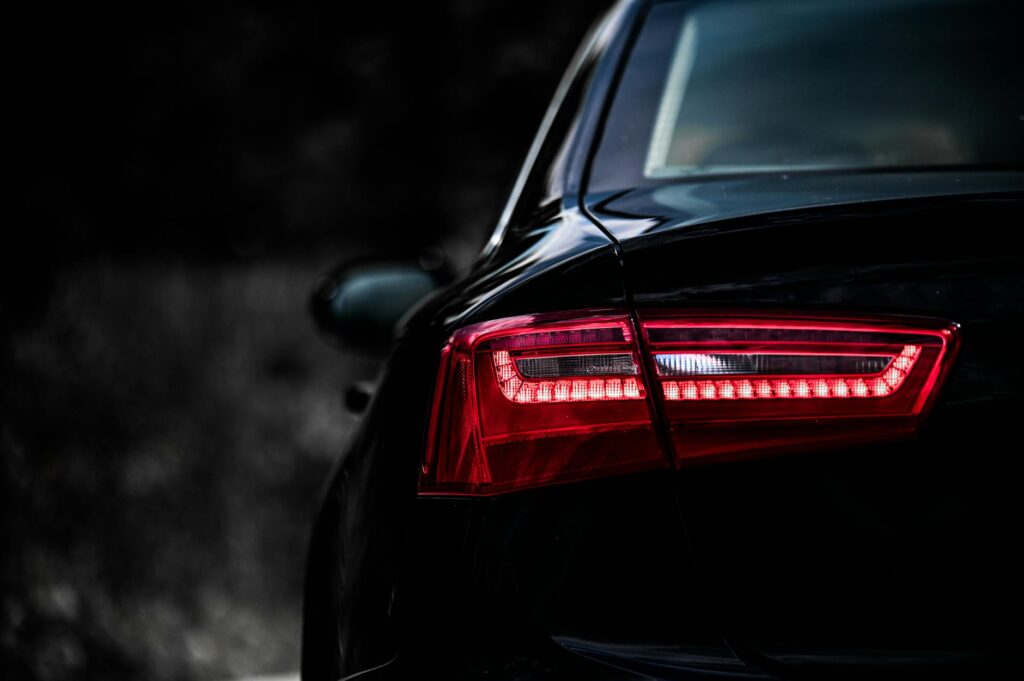
An LED rear lamp cluster is a single sealed assembly that combines multiple rear lighting functions (stop, tail, indicator, reverse, fog, and number plate) into one housing, with light emitting diodes as the light source rather than filament bulbs. The cluster fits to tractors, agricultural trailers, vans, and commercial vehicles and replaces the older filament-bulb cluster on a like-for-like footprint in most cases. In Ireland, RSA guidance is to replace lamps like for like with type-approved units showing an E or e mark, and since 1 January 2016 agricultural trailers must carry side lamps, rear lamps, stop lamps, direction indicators and number plate lighting. This article covers what a rear lamp cluster does, the functions inside a typical unit, the Irish legal requirements, the 12V and 24V compatibility rules, the practical benefits of LED over filament, the connector and fitment options, and the budget and timing for an upgrade.
What a Rear Lamp Cluster Does
A rear lamp cluster is the combined rear-light unit fitted to the back of a road-going vehicle that performs every legal rear lighting function from a single housing. The cluster bolts to the rear wing or to a rear lamp panel and connects to the vehicle wiring through a single multi-pin plug.
The cluster differs from a set of individual lamps in three ways.
- Single housing. One unit replaces 3 to 7 separate lamps that would otherwise need their own mounting holes and wiring.
- Single connector. A multi-pin plug (typically 5, 7, or 13 pins) carries every function on a single cable, which simplifies trailer wiring and reduces the places water can get in.
- Matched lens design. The lenses for stop, tail, indicator, and reverse sit in fixed positions to meet EU type approval geometry, with the manufacturer responsible for the layout.
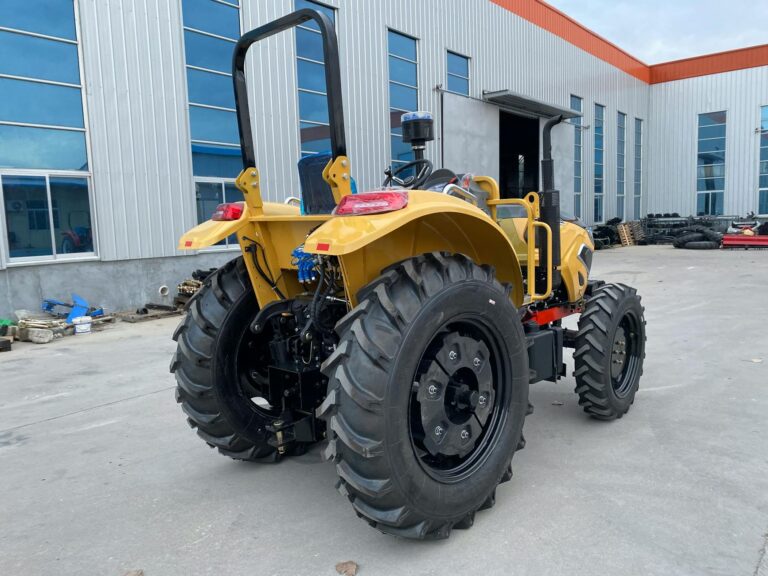
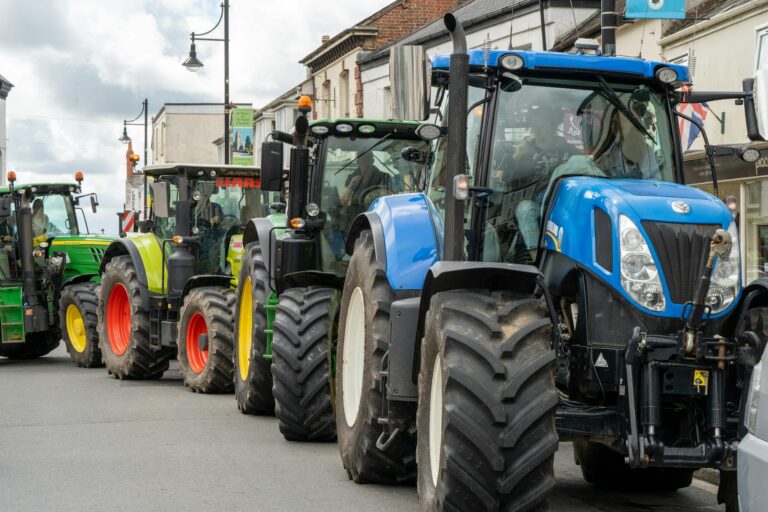
Rear lamp clusters appear on agricultural trailers, plant trailers, commercial vehicles, and tractor rear panels where space is too tight for individual lamps. On most agricultural trailers, the cluster is the only rear lighting fitted to the vehicle.
For trailer-specific lighting law, see Agricultural Trailer Lighting Requirements.
Functions Inside a Typical Rear Lamp Cluster
A typical rear lamp cluster combines five to seven separate lighting functions in one housing, each with its own LED segment, lens area, and circuit. The function mix depends on the vehicle type and the legal requirements for that vehicle category.
Seven functions appear in the full trailer and tractor cluster specification.
- Stop lamp. Red, lights when the brake pedal is pressed. Output is far brighter than the tail lamp (a single-level stop lamp gives 60 to 185 candela under ECE R7).
- Tail lamp. Red, lights with the headlights or sidelights. Provides low-level visibility from the rear at night.
- Indicator. Amber, flashes at 60 to 120 flashes per minute to signal a change of direction.
- Reverse lamp. White, lights when the reverse gear is engaged.
- Rear fog lamp. Red, for use only in dense fog or falling snow. Brighter than the tail lamp but distinguishable from the brake lamp by position.
- Number plate lamp. White, lights the rear registration plate. Irish law calls this identification mark lighting, and it is obligatory on tractors and agricultural trailers.
- Reflector. Red, passive (no electrical connection), reflects light from following headlights.
Under the Irish rules in force since 1 January 2016 (S.I. No. 249 of 2014), agricultural trailers and interchangeable towed equipment must have side lamps, rear lamps, stop lamps, direction indicators and number plate lighting. Unlike the UK, stop lamps and indicators are not optional on farm trailers here. Reversing lamps and rear fog lamps are not on the obligatory list, but any lamp that is fitted must work. Agricultural trailers over 3,500 kg design gross vehicle weight also need rear reflective markings, with side markings and a “LONG VEHICLE” board on longer combinations.
For a function-by-function breakdown, see the related articles on Rear Fog Lights, Reverse Lights, and Rear Brake Light Bulbs.
Irish Legal Requirements for LED Rear Clusters
Vehicle lighting in Ireland is governed by the Road Traffic (Lighting of Vehicles) Regulations 1963 (S.I. No. 189 of 1963), as amended. New vehicles must also meet EU type approval, and as an EU member state Ireland recognises EU “e” marks and UNECE “E” marks. Ireland’s own number is 24, but lamps approved in any EU or UNECE country are valid here.
Six rules cover the legal fitment of an LED rear cluster on an Irish vehicle.
- Approval per function. The cluster lens carries approval codes for each function (S for stop, R for tail, 2a or 2b for indicator, AR for reverse, F for rear fog). RSA guidance advises replacing lamps with type-approved units showing an E or e mark.
- Mounting position. Fit the cluster in the same position as the original, or where the vehicle or trailer maker specifies, so the installation still matches its type approval. Avoid moving lamps inboard or higher on the panel without checking.
- Colour. Stop, tail and fog red, indicator amber, reverse white, number plate white. Article 41 of the 1963 Regulations allows no light to the rear except red, with exceptions for indicators, number plate lamps and reversing lamps. The RSA’s lighting colour guidance, citing UN ECE R48, says the same.
- Light intensity. Each function meets minimum and maximum intensity limits set by its UNECE Regulation. LED clusters generally exceed minima but must not breach maxima, and no lamp may dazzle (Article 48).
- Operating wiring. The cluster wiring must switch each function on the correct existing circuit (brake pedal switch, sidelight feed, indicator stalk, reverse switch, fog switch). Reversing lamps may only light when reversing.
- Reflector. Red rear reflectors are part of the obligatory equipment. Most clusters include the reflector as part of the housing.
The approval code structure is the simplest visual check before purchase. A multi-function lamp usually carries one E-mark circle with a group of function codes beside it, so count the function codes, not the circles. A lamp whose marking lists only one function code is approved for that function only. A lamp with five or six codes is the correct specification for a full agricultural trailer or tractor rear assembly.
A trailer missing its prescribed lamps or number plate lighting carries a €60 fixed charge, and faulty brake lights are among the most common dangerous defects found at roadside checks. On cars and commercial vehicles, a fitted lamp that does not work is a failure item at the NCT or CVRT.
For the full law on rear lighting, see tractor lighting regulations: what farmers need to know.
12V and 24V Compatibility
Most modern LED rear lamp clusters work on both 12V and 24V supply voltage without modification, because the LEDs are driven by an internal constant-current driver that accepts the wide voltage range. The cluster carries a 12V to 24V marking on the housing or in the product code, and the same physical unit fits a 12V tractor, a 24V tractor, or a commercial trailer.
Three voltage scenarios cover most installations.
- 12V tractor or trailer. Standard on the great majority of tractors, large and small. The cluster connects to the existing 12V loom through the trailer plug.
- 24V tractor or commercial truck. Standard for heavy commercial use and for some larger agricultural machines. The cluster accepts 24V from the same internal driver.
- 12V and 24V mixed fleet. A multi-voltage cluster (12V to 24V on the same unit) saves stock and allows the trailer to follow either tractor type.
Older filament rear clusters required a separate 24V part number from the 12V version because the bulb wattage and voltage rating had to match the supply. LED clusters remove that distinction on most modern models, which is one of the biggest practical benefits of the upgrade for contractors running mixed fleets.
For a wider look at the voltage question, see 12V vs 24V Lighting Systems: What Your Tractor Uses and Why It Matters.
Benefits of LED Over Filament Rear Lamps
LED rear lamp clusters offer six practical advantages over filament rear clusters that justify the higher purchase price for most agricultural and commercial operators. The advantages cover safety, running cost, and lifespan.
- Faster response time. An LED reaches full brightness almost instantly, against around 200 milliseconds for a filament bulb. On a tractor and trailer combination travelling at 40 km/h, that head start gives the following driver roughly 2 metres more warning.
- Longer lifespan. A typical LED rear cluster carries a service life of 30,000 to 50,000 hours, against 1,000 to 2,000 hours for a filament bulb. Replacement frequency drops from once per season to once per decade for most operators.
- Lower power draw. A full LED cluster draws 0.5 to 1.5 amps on 12V with all functions active, against 3 to 6 amps for the same filament cluster. On a tractor with high alternator load, the saving frees electrical capacity for work lights or implement controllers.
- Vibration resistance. LEDs have no filament to break under shock or vibration, which is a significant gain on agricultural trailers that work on rough field surfaces.
- Sealed housing. Most LED clusters are factory-sealed with epoxy potting and a polycarbonate lens to IP67 or IP69K ingress protection. The unit survives pressure washing without water entry, which matters after a day drawing slurry.
- Reduced wiring complexity. Multi-voltage clusters remove the need for separate 12V and 24V part numbers, and the lower current draw allows thinner trailer cable on long agricultural rigs.
The purchase cost is higher: a full LED rear cluster pair costs roughly €70 to €290, against roughly €30 to €95 for a filament equivalent. The cost difference is usually recovered within 2 to 4 years on a working trailer through reduced bulb replacement, lower battery load, and fewer roadside failures.
For the wider comparison between LED and filament technology, see LED vs Halogen Tractor Lights: Performance, Cost, and Lifespan Compared.
Connectors and Fitment Options
LED rear lamp clusters connect to vehicle wiring through one of four standard plugs, with the choice driven by the vehicle type and the number of separate functions on the trailer side. The plug type is the most important compatibility check before purchase.
| Plug | Pins | Standard use |
|---|---|---|
| 5-pin DIN | 5 | Small agricultural trailers, basic 5-function lighting |
| 7-pin 12N (ISO 1724) | 7 | Standard road trailer plug for cars, light commercials, and agricultural trailers (the usual 12V tractor socket) |
| 7-pin 12S (ISO 3732) | 7 | Auxiliary plug used in combination with 12N for heavier trailers (reverse, internal lights) |
| 13-pin Jaeger (ISO 11446) | 13 | Modern combined plug, single connection for all functions including reverse and battery feed |
Most new caravans and many car trailers built since 2008 use the 13-pin ISO 11446 plug because the single connector simplifies coupling and removes the need for a separate 12N and 12S socket pair. Tractors and agricultural trailers mostly still use the 7-pin 12N (ISO 1724) plug, and older road trailers use the 7-pin 12N (sometimes with a 7-pin 12S for reverse and interior power).
Three fitment options exist for the cluster itself.
- Bolt-on with plug-in connector. The cluster bolts to the trailer rear panel or wing through 2 to 4 mounting holes and plugs into the existing loom through a flying lead with a multi-pin connector at the end.
- Bolt-on with flying leads. The cluster carries 5 to 7 wires (one per function plus an earth) terminated as bare wires. The installer wires each function to the existing trailer cable using crimp connectors.
- Direct replacement. The cluster matches the exact footprint of the original filament cluster and uses the same mounting holes and the same connector. Common on universal trailer lamps such as those from LED Autolamps and Britax.
For the broader context of trailer plug standards, see Agricultural Trailer Lighting Requirements.
When to Upgrade and What to Budget
The right time to upgrade to LED rear clusters is at the point of next filament cluster failure, before silage or harvest starts, or when the trailer changes ownership. The decision turns on three factors: the cost of the upgrade, the value of the trailer or tractor, and the operating hours per year.
Three budget tiers cover the aftermarket. Prices below are rough guides in euro.
- Universal LED cluster pair, basic. Roughly €70 to €115 per pair. Includes stop, tail, indicator, reverse, fog, number plate, and reflector. Brands include LED Autolamps and Britax universal range. Fits most trailers and tractors.
- Premium universal cluster pair. Roughly €175 to €290 per pair. Includes the same functions with IP69K sealing, dynamic indicator sweep on some models, and matched 12V to 24V driver. Brands include Hella and Wesem.
- OEM replacement clusters. Roughly €115 to €700 per side, vehicle-specific. Required for tractors and trailers where the body design integrates the lamp into the panel work.
The labour cost for replacement is low on most fitments: 30 to 60 minutes per cluster for an experienced operator, including testing each function on the trailer plug. Allow roughly €45 to €95 in workshop labour for a typical agricultural trailer.
The upgrade pays back fastest on trailers that work more than 200 hours per year, because the reduced bulb replacement and the freedom from in-season roadside failures save more than the price difference within the second year of operation. For low-use trailers (under 100 hours per year), a filament cluster remains the cheaper option on a 5-year total cost basis.
To browse universal rear lamp options, visit the rear lamp range on the Agri Lighting shop. Orders ship from Lincolnshire, with free delivery to Ireland over €150. For fitment advice, call +44 1522 440522 or email [email protected].
Frequently Asked Questions
Are LED rear lights legal in Ireland?
Yes, provided the cluster is type-approved for each function it performs (stop, tail, indicator, reverse, fog), shows the right colours and is fitted in the correct position. RSA guidance advises replacing lamps with type-approved units showing an E or e mark.
How do you fit an LED rear lamp cluster?
Unbolt the original cluster, disconnect the plug, fit the new cluster in the same mounting holes, plug in the matching connector, and test each function with the vehicle running. Most fitments take 30 to 60 minutes per side.
Will LED rear lights work with my trailer board?
Yes, if the LED cluster carries an LED-compatible specification and the trailer uses a standard 7-pin or 13-pin plug. On older tractors the flasher unit may not suit LED indicators: a thermal flasher can flash slowly or not at all, and a load-dependent electronic flasher flashes fast (hyperflash). Fit an LED-compatible flasher unit or load resistors to fix it.
Do LED rear lights save fuel?
Yes, marginally. An LED cluster draws around 75 per cent less current than a filament cluster, which reduces alternator load and saves a small amount of fuel over high annual hours. The fuel saving is measurable on commercial fleets but trivial on low-hours agricultural use.
Are LED rear clusters waterproof?
Most modern LED rear clusters are sealed to IP67 or IP69K, which means full immersion resistance and pressure-wash resistance. The sealing is part of the manufacturer rating and the housing is not user-serviceable.