LED Light Bars: Are They Road Legal in Ireland? E-Marks, the NCT and Tractors
In this guide
- Are light bars legal in Ireland? The short answer
- How Irish law sees a light bar
- E-mark and approval table for light bars
- Using a light bar as a driving lamp
- Covering or disabling an off-road light bar
- How the NCT treats light bars and lighting changes
- Light bars on tractors and farm vehicles
- Work lamps vs driving lamps: which light bar to buy
- Frequently asked questions
LED light bars can be fitted to a vehicle in Ireland, but on a public road a light bar falls under the same general lighting rules as any other lamp: it must show a permitted colour, it must not dazzle, it must not mislead other traffic, and work lamps must be switched off before you go on the road. Most light bars are sold as work lamps, so for most bars that means off whenever you are driving on a public road.
There is no specific Irish rule on roof-mounted LED light bars. The rules come from the Road Traffic (Lighting of Vehicles) Regulations 1963, as amended, and from RSA guidance. This guide explains how those rules apply to a light bar, which approval marks to look for, how a driving lamp should be wired, why covering an off-road bar makes sense, how the NCT treats lighting changes, and how it all applies to tractors.
Are light bars legal in Ireland? The short answer
- Fitting a light bar is not banned, as long as it is securely mounted. The Rules of the Road notes that fitting optional lighting is controlled by law, and advises getting professional advice and telling your insurer before you fit extras.
- Using it as a driving lamp on the road is only sensible if it carries an approval mark for a driving beam function, is wired to switch off when the headlamps are dipped, and does not dazzle.
- Using a work-lamp light bar on the road is not allowed. The RSA says work or ploughing lamps may be used on private land but must be switched off before using the public road.
- Covering an unapproved bar with an opaque cover is the clearest way to show it is not in use.
- Dazzle is not allowed with any lamp, approved or not (Article 48 of the 1963 Regulations).
How Irish law sees a light bar
Irish lighting law has no category called “light bar”. What matters is what the lamp is being used for, and whether it breaks one of the general rules:
- Colour: under Article 41, no light may be shown to the front except white or yellow, and no light to the rear except red (with exceptions such as indicators, number plate lamps and reversing lamps).
- Dazzle and misleading lamps: under Article 48, no lamp capable of misleading other traffic may be fitted, and lamps must not be capable of dazzling.
- Work and ploughing lamps: Article 49(6) says ploughing lamps shall not be used while the vehicle is on a public road, and RSA guidance says work lamps must be switched off before using the public road.
- Rear white light: the RSA says rear white lights are banned on the road because they can look like an approaching vehicle. A rear-facing light bar used for reversing or loading must be off on the road.
Most light bars on the market have no road approval, so they can only be used as work lamps on private land. Driving along a road with a work-lamp bar lit breaks the work lamp rule and very likely the dazzle rule as well. For the wider difference between these lamp types, see work lights vs driving lights vs fog lights.
E-mark and approval table for light bars
An E-mark is a capital E in a circle (or a small e in a rectangle for an EU approval) followed by a country number, moulded into the lens or printed on the housing, with an approval number that shows which UN regulation the lamp was tested to. Ireland’s number is 24, but most lamps sold here carry other countries’ marks, which are equally valid. The regulation number tells you what the lamp is approved to do. Newer lamps may be approved under UN Regulation 149 (road illumination devices, in force from November 2019) or UN Regulation 148 (light-signalling devices), which took over from the older separate regulations.
| Function | UN regulation | What to look for | Can it be lit while driving? |
|---|---|---|---|
| Driving lamp (main beam) | R112, R113 or R98 (older), R149 (newer) | E-mark with the regulation number and a driving beam (R) class code | Yes, on main beam only, switching off when you dip |
| Front fog lamp | R19 (older), R149 (newer) | E-mark with a front fog class code such as B or F3 | Only in dense fog or falling snow |
| Daytime running lamp | R87 (older), R148 (newer) | E-mark with RL | Yes, in daylight as a DRL, not as a headlamp |
| Front position lamp | R7 (older), R148 (newer) | E-mark with A | Yes, as a sidelight only |
| Amber warning light bar | R65 | E-mark with R65 approval | As a warning beacon, on vehicles allowed to show amber (including tractors) |
| Work lamp | No road lighting approval; may carry R10 (EMC) | Often an E-mark with 10R in the number | No; switch off before using the public road |
One mark causes more confusion than any other. Many light bars carry an E-mark with “10R” in the approval number. That is an R10 electromagnetic compatibility approval: it means the bar’s electronics have been tested for radio interference. It says nothing about the beam, so an R10 mark on its own does not make a light bar road legal. Our guide to E-mark approval explains how to read the full approval number.
Check 3 things before using a light bar on the road: an E-mark on the lens or housing, a regulation number that matches the job (driving beam, not just R10), and a product description that says what it is approved as. A “road legal” claim on a listing with no visible approval mark is marketing, not law. The RSA’s general advice on lamps is the same: use type-approved units showing the E or e mark.
Using a light bar as a driving lamp
An approved driving lamp is a main-beam lamp, so it should behave like one:
- Colour: white or yellow, as for any front lamp under Article 41.
- Switching: wired so it only works with main beam selected and goes off when you dip your headlamps.
- Aim: set so the beam lights the road without throwing light into the eyes of other drivers.
- Approval: E-marked for a driving beam function, not just R10.
- No dazzle: switched off for oncoming traffic, when following another vehicle and in towns and villages.
Irish guidance does not set out a separate list of rules for auxiliary driving lamps the way the UK regulations do, so the general rules on colour, dazzle and misleading lamps are what apply. If in doubt, take professional advice and tell your insurer, as the Rules of the Road suggests.
How to wire a light bar to main beam
The right way to wire a driving lamp is through a relay triggered by the main-beam feed. The relay’s coil takes its feed from the main-beam circuit, and its contacts switch a fused supply from the battery to the light bar. A separate dashboard switch in the relay coil feed lets you choose when the bar comes on, but it can only work with main beam selected. When you dip, the coil loses its feed and the bar goes off.
Don’t take the light bar’s current straight from the headlamp wiring. A 100W bar draws over 8A at 12V, more than many headlamp circuits are designed to carry. Use a relay rated well above the bar’s current and a fuse sized for the cable. Our 12V relays suit most installations.
Covering or disabling an off-road light bar
An unapproved light bar does not have to come off the vehicle. It can stay fitted as a work lamp for use on private land, provided it is switched off on the public road.
Irish guidance does not say a covered lamp stops counting as a lamp, but a cover is still the simplest way to show a Garda that the bar is not in use. A good cover is opaque, fits tightly enough that it can’t blow off at speed, and is easy to remove for off-road use. A bar left uncovered but switched off invites questions at a checkpoint, especially when it is wired to a switch the driver can reach. Covering it, or disconnecting it, removes the doubt.
How the NCT treats light bars and lighting changes
Ireland has no MOT. Cars are tested through the NCT and commercial vehicles through the CVRT, both run by the RSA. Lights are checked, and any lamp that is fitted, including optional ones, must work.
Passing the NCT does not make a light bar legal to use on the road. The lighting regulations are enforced at the roadside by the Gardaí, whatever the test result.
Light bar fitting often goes hand in hand with headlamp bulb changes, and here the RSA is clear. Retrofit HID or LED bulbs are not always compatible with the vehicle or headlamp. LED bulbs are legal only if type-approved, fitted to a compatible vehicle, and the beam does not dazzle. The NCT fails an approved kit on an incompatible vehicle, an unapproved kit, and HID bulbs retrofitted into ordinary halogen headlamps.
Light bars on tractors and farm vehicles
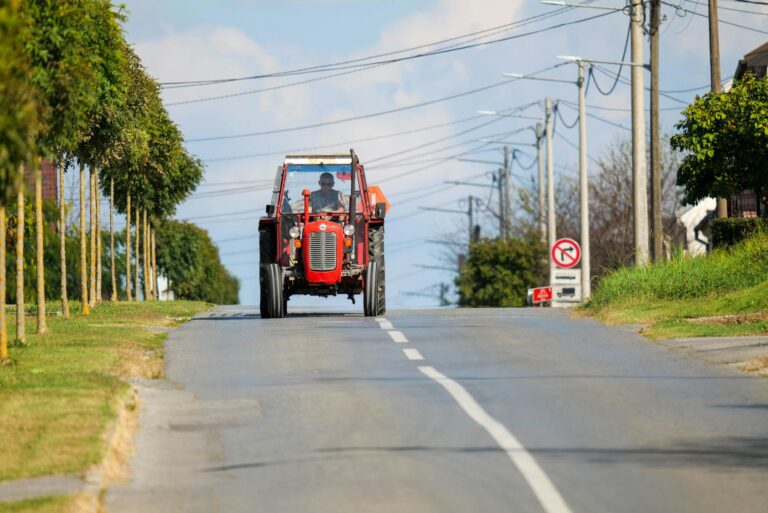
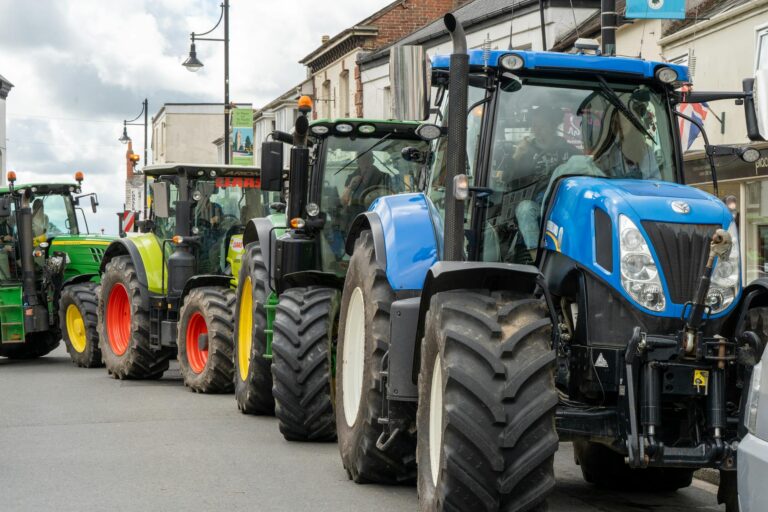
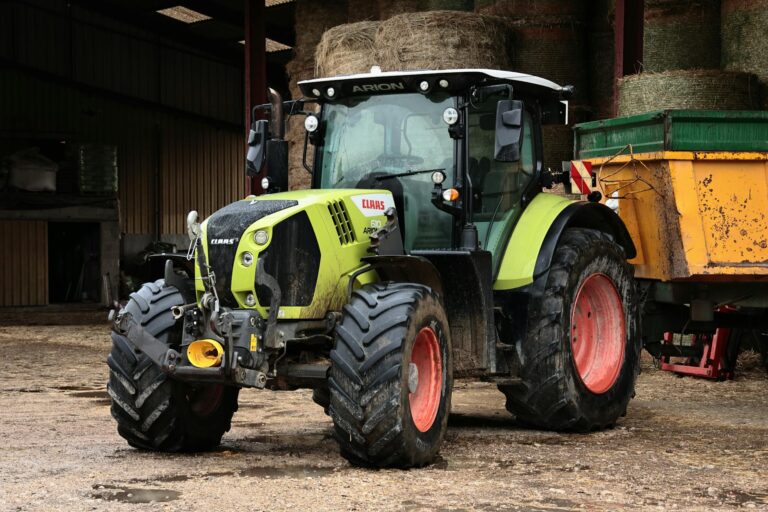
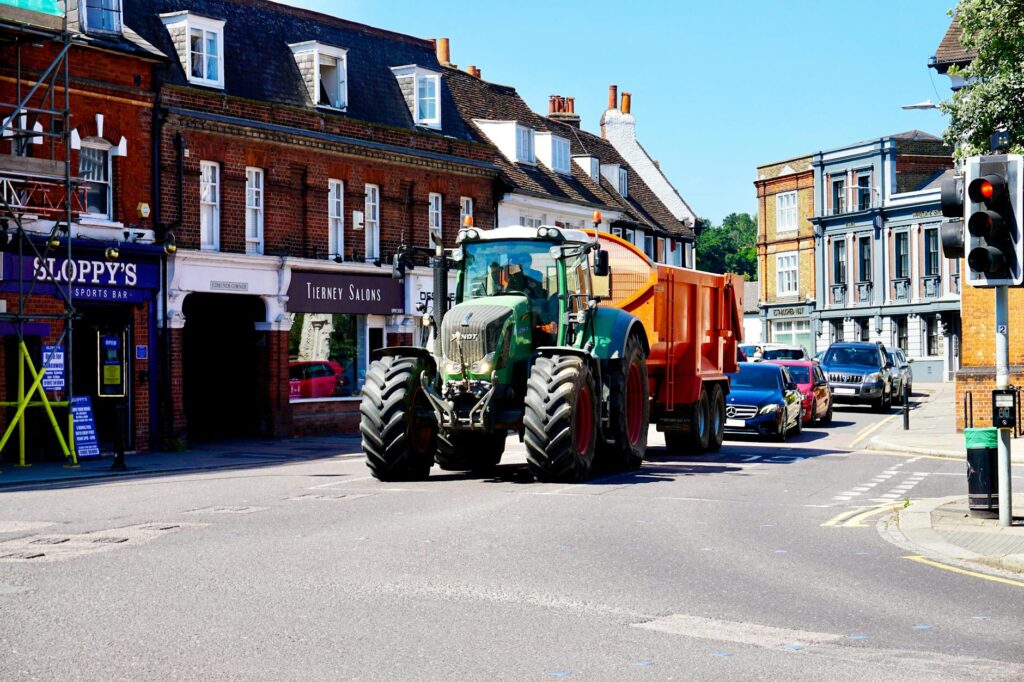
The same rules apply to a tractor on the public road. A light bar used to light the road ahead must be an approved driving lamp, wired to main beam and not dazzling. A work-lamp light bar must be switched off before the tractor goes on the road. The difference for farm vehicles is how much of the work happens off the road.
- In the field and the yard: on private land, work lamps may be used, so a large work-lamp bar on the cab roof is fine for night work at silage, slurry or harvest.
- At the gate: switch work-lamp bars off before you pull onto the public road. A cab switch with a tell-tale helps drivers remember.
- Working at the roadside: RSA guidance says work lamps must be off on the public road. If you are hedge cutting or dealing with a breakdown on the road after dark, keep work lamps aimed away from traffic and check the current RSA guidance.
- Rear-facing bars: rear white lights are banned on the road, so reversing or loading bars must be off.
- Testing: ordinary tractors (40 km/h or less) do not need a periodic test but must be roadworthy at all times. Fast tractors over 40 km/h used for non-exempt work need a CVRT test. Either way, enforcement of how lamps are used is at the roadside by the Gardaí and RSA Vehicle Inspectors.
Amber warning light bars are a different product. In Ireland every tractor and self-propelled agricultural machine must have a flashing amber beacon switched on whenever it is on a public road. A roof-mounted amber light bar approved under UN R65 can do that job, but check it against the Irish mounting rules: where possible on the roof on the centre line, no part of the lit surface lower than 1.27 m from the ground, the light-emitting area within a 230 mm square, and no more than 36 watts. A long amber bar may not fit within the 230 mm square rule. For choosing and fitting a work-lamp bar on a tractor, see our guide to tractor light bars.
Work lamps vs driving lamps: which light bar to buy
The right bar depends on where you will use it:
- Off-road and fieldwork only: a work-lamp bar with a flood or combo beam gives the widest light for the money. It needs no road approval, but should carry R10 EMC approval to limit radio interference. Browse our tractor light bars.
- Night driving on unlit roads: an E-marked driving lamp, either a slim approved bar or round driving lamps, wired to main beam. See our auxiliary lamps.
- Both: fit an approved driving lamp for the road and a separate work-lamp bar for the field, on separate switches.
On tractors with GPS guidance, check the bar’s EMC performance as well as its beam. Our guide to EMC compliant LED work lights explains why some bars interfere with radio and satellite reception.
Frequently asked questions
Is it illegal to have a light bar on your car in Ireland?
Fitting one is not banned, but how you use it is controlled. An unapproved bar is a work lamp and must be off on the public road. Any lamp used on the road must show a permitted colour and must not dazzle or mislead other traffic. Tell your insurer about any lighting you add.
Do light bars fail the NCT?
The NCT checks that fitted lamps work and fails incorrect HID and LED headlamp conversions. Passing the test does not make a light bar legal to use on the road; the lighting regulations still apply and are enforced at the roadside by the Gardaí. Check with NCTS if you are unsure how a particular fitting will be treated.
Do I have to cover my light bar in Ireland?
There is no Irish rule that every light bar must be covered, but an unapproved bar must not be lit on the public road. A cover is the clearest way to show it is not in use.
How many driving lamps can I fit?
Irish guidance does not set a specific number. Each driving lamp should be E-marked, white or yellow, switch off when you dip, and be aimed so it does not dazzle other road users. Take professional advice and tell your insurer before fitting extras.
Can I use a light bar on a tractor on the road?
Only if it is an approved driving lamp wired to main beam and used without dazzle. A work-lamp light bar must be switched off before the tractor goes onto the public road. An approved amber light bar can serve as the tractor’s mandatory beacon if it meets the Irish mounting and wattage rules.